

15 Middle Eastern Meat Dishes To Try Beyond Kebabs
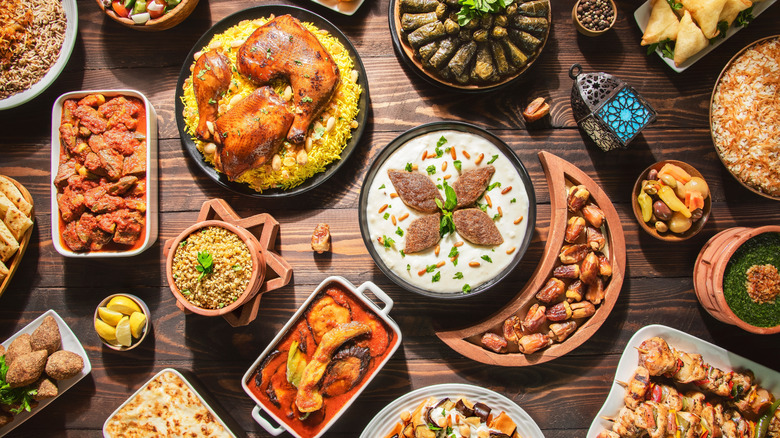
Middle Eastern cuisine covers such a vast range of territories that it can be difficult to define. The term "Middle East" has only been in use since the 20th century, and has, at times, included everywhere from Bosnia and Herzegovina to Nigeria and even India. For the most part, when we're talking about the cuisine, we're referring to food from Arabic countries, as well as Israel, Turkey, and Cyprus, among others. Some of the most popular Middle Eastern creations that are beloved around the world include hummus, falafel, shawarma, and kebabs, though the recipes can vary greatly between cultures.
Beyond the foods that are readily available on street corners and in restaurants across the globe, however, there are many other Middle Eastern specialties that deserve the spotlight. From mouth-watering koftas to the flavor powerhouse that is Persian fesenjan, we've rounded up some of the dishes from this world-renowned cuisine that you should try at least once. Chances are, you'll come back for seconds.
1. Hawawshi
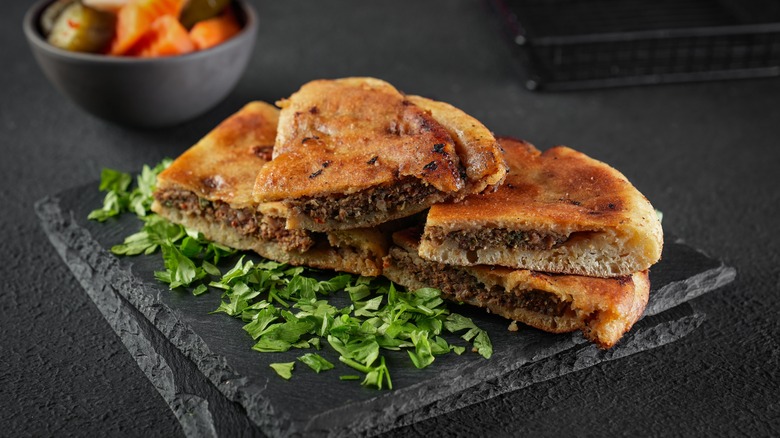
Hawawshi is a sandwich from Egypt that consists of whole wheat pita bread (called baladi) that is stuffed with spiced beef or lamb and baked. Sometimes, uncooked dough is used instead of pita bread so that it bakes with the meat. It's a popular street food in the major cities of Cairo and Alexandria, but you can make it at home, too. Hawawshi is very similar to Lebanese and Palestinian arayes, but with one key difference. Instead of thick, whole wheat baladi, arayes are made with standard pita bread or flatbread that has already been baked.
As is often the case with Middle Eastern cuisine, the key to hawawshi is not just the meat and bread, but the seasonings. In this case, that spice mixture includes such fragrant ingredients as paprika, coriander, cinnamon, black pepper, cumin, allspice, and cardamom. And even though that is more than enough flavor to make you start drooling, hawawshi is often served with even more flavorful condiments, such as pickled vegetables, tahini sauce, yogurt sauce, and preserved lemons, called lamoon ma'asfar.
2. Kibbeh
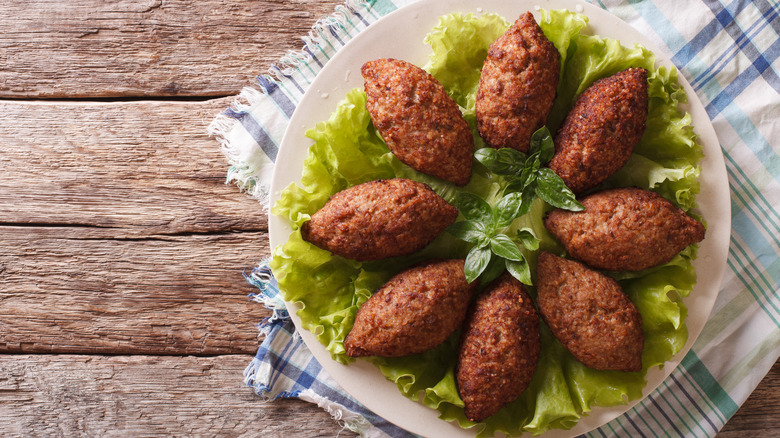
Kibbeh is a popular food throughout the Middle East, with versions in Iran, Egypt, Lebanon, Cyprus, Palestine, and Jordan, to name a few. They are either round or oblong, like footballs, and they are made of a paste comprised of meat, onions, and grain. Bulgur wheat is the most common of the grains used, though rice is also widely used. Some recipes contain pine nuts, too.
Spices are one of the ways that kibbeh differentiates itself from other items on the mezze platter. Though recipes vary, these little croquettes often include warm baking spices such as cinnamon and allspice. A quicker option is to use baharat. The word means "spices" in Arabic, but the product usually contains a combination of the same list of ingredients, including black pepper, cinnamon, cumin, cloves, allspice, paprika, coriander, and nutmeg. You can often baharat in the spice section at grocery stores, but you can also make it yourself. Kibbeh is not complete without condiments, so make sure that if you're making or buying them, you have some tahini sauce or tzatziki on hand. Our classic tzatziki sauce recipe is an excellent place to start.
3. Sfeeha
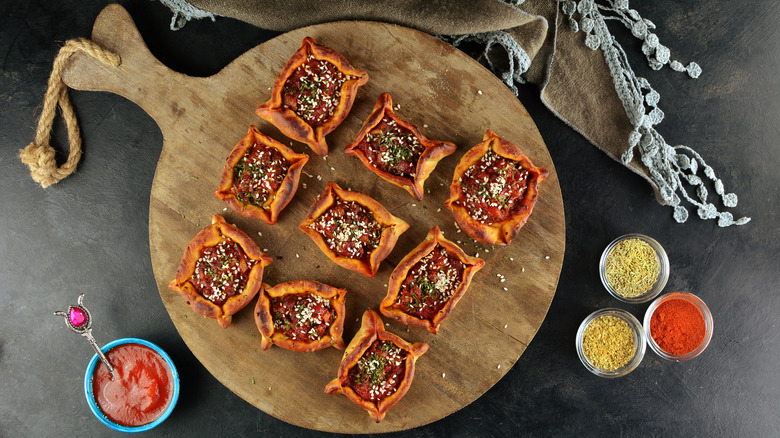
There are countless savory pies from around the world to add to your culinary bucket list, but one that should take a top spot is sfeeha (sometimes spelled sfiha), which hails from Lebanon. Palestine also has its own version of these mouthwatering pastries. They are a cross between a pie and a pizza, made by topping dough with a delicious meat mixture. Some are shaped like mini pizzas, while others are shaped into square parcels with sides high enough to hold extra filling. Beef and lamb are usually the meats of choice, and they are joined by onions, tomatoes, and spices.
To make the filling extra flavorful, some recipes include tomato paste or pomegranate molasses, the latter of which is a key ingredient in Middle Eastern food. There are many reasons to cook with pomegranate molasses, even if you don't have a recipe that calls for it. With its intensely tart, sweet flavor, it adds a whole new level of complexity to everything from cocktails to meat pies.
4. Tagine

Technically speaking, a tagine is a pot, not a type of food. Made of clay, a tagine has a conical lid that not only gives it its distinct shape but also allows condensation from the cooking food to drip back down and keep things moist. The pot was originally used by nomads in North Africa who used it as a portable oven, placing it over an open fire to cook their meals. Nowadays, it is associated so closely with one type of dish that the word is used interchangeably.
Tagine is a braised meat stew that attains its flavor from a myriad of spices and, often, from dried fruit as well. Unlike ragout, which gains most of its flavor from aromatics like herbs, the power of tagine is all in the spice mix. Fragrant and intense, it is a favorite Middle Eastern dish around the world for a reason. There are many different recipes for tagine. Our simple 1-pan chicken tagine recipe, for example, calls for (among other ingredients) honey, green olives, cinnamon, and preserved lemons. Lamb, dates, and chickpeas are other common ingredients. The key to most tagines, however, is the interplay between the savoriness of the meat and sweetness of the baking spices and fruit, so if you're trying to decide which recipe to use, make sure to pick one that has all those elements.
5. Kofta
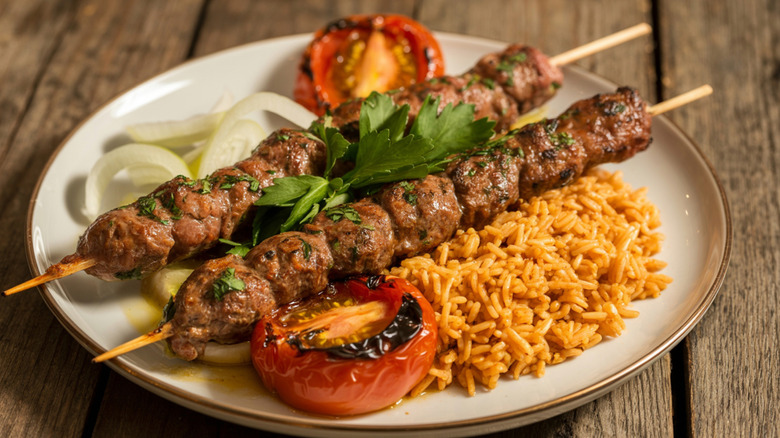
Whether it's grilling season or not, it's always worth making koftas. Grilling has been a traditional way of cooking in the Middle East for centuries and remains a popular cooking method for street food vendors and picnickers. One of the things that sets Middle Eastern grilled meat apart from traditional North American recipes is the flavor. Instead of just grilling up some ground beef and calling it a day, cooks add a blend of swoon-worthy spices so that you don't have to sandwich the meat between bread and smother it with fixings to make it palatable. Koftas are a prime example.
At minimum, kofta is made with meat, parsley, and onion minced so fine that they become almost a paste. Other variations include garlic, cardamom, and sumac, which has a powerfully citrusy, tangy flavor. Our spicy beef kofta recipe includes all of those spices and more, including fennel seeds, cumin, cinnamon, and chili flakes. You can eat them plain or serve them with tzatziki or your favorite Middle Eastern condiments.
6. Quzi
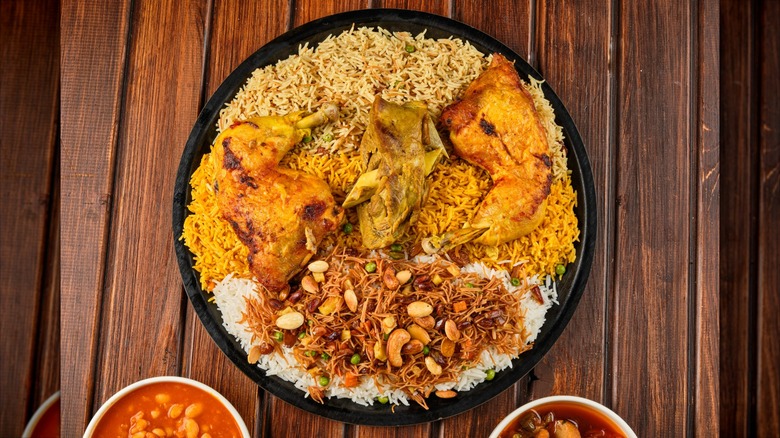
Quzi (also spelled quozi) is an Iraqi dish that, if made the traditional way, requires an entire lamb. But don't worry, home cooks who are preparing a meal for only a handful of eaters only need to purchase a modest amount of meat. The idea is that the lamb is stuffed with a mixture of minced lamb (yes, more of it), spices, dried fruit, nuts, and vegetables, and served on a bed of rice. To adapt for a more modest gathering, you simply need to use part of a lamb, such as lamb shanks or lamb shoulder.
When it comes to the rest of the ingredients, do not hold back. Quzi typically contains cinnamon, cardamom, raisins or currants, almonds, and bay leaves. To make the rice even more tasty and eye-catching, mix in some ground turmeric before cooking. Fragrant, decadent, and aesthetically pleasing, quzi is a special occasion meal that comes together surprisingly quickly.
7. Pastilla
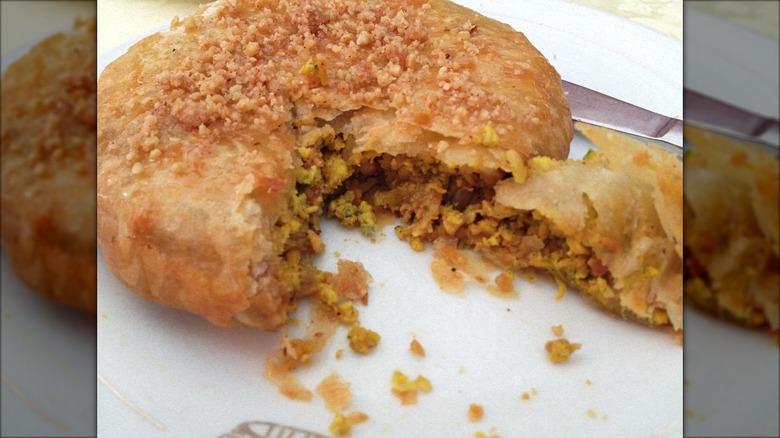
Sfeeha isn't the only savory Middle Eastern pie worth adding to your menu. Pastilla is a North African favorite made with flaky phyllo dough and shredded chicken. Like tagine, pastilla blends sweet and savory ingredients for an intense flavor. Although shredded chicken is common, you can also find plenty of recipes that call for other meats, including pigeon, duck, and even fish. For the sweet element, spices and fruit are a necessity. In the former category, you'll find recipes that call for turmeric, ginger, cinnamon, saffron, and ras el hanout, a spice blend of anywhere from 25 to 80 different spices. In the latter category, you'll find recipes calling for everything from dried apricots to medjool dates. One final element that crops up in most pastilla recipes is almonds, which provide a deliciously nutty garnish.
Thanks to store-bought phyllo pastry, making pastilla is remarkably simple, especially when considering what an impressive and flavorful dish it is. All you have to do is whip up the filling, put it into a dish lined with phyllo dough, cover it in another layer of phyllo, and bake. The results will make you feel like a Michelin-starred chef.
8. Manti
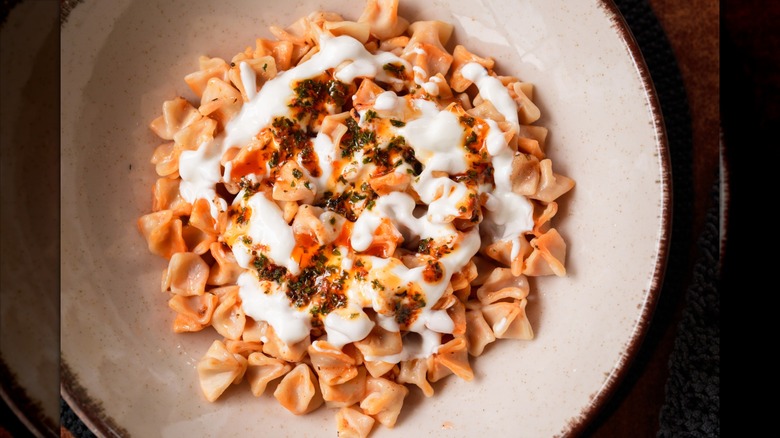
Just when you thought you knew every single type of dumpling out there, in walks manti, the most internationally underrated dish in Turkish cuisine (in our view, at least). Dumplings come in many forms, from Japanese gyoza and Polish pierogi to Tibetan momo and German knödel. All are comfort foods, but there is just something extra special about Turkish manti, which take the form of tiny parcels of dough filled with lamb and topped with yogurt sauce and a pungent, spiced red chilli oil. Size matters with manti, but in this case, smaller is better. This is not a recipe for a busy weeknight; it's one of those special occasion dishes that you make when you have time on your side.
When we say small, we mean that each little dumpling is made from squares of rolled out dough that are no more than 1 ½ inches wide. And again, smaller is even better. Once you've made the dough and the filling of lamb and onion, you have to muster all the patience and finesse you have to package them all up into uniform parcels. If you thought homemade ravioli was a challenge, manti is the next level up, but trust us when we say that all that effort is worth it.
9. Borek
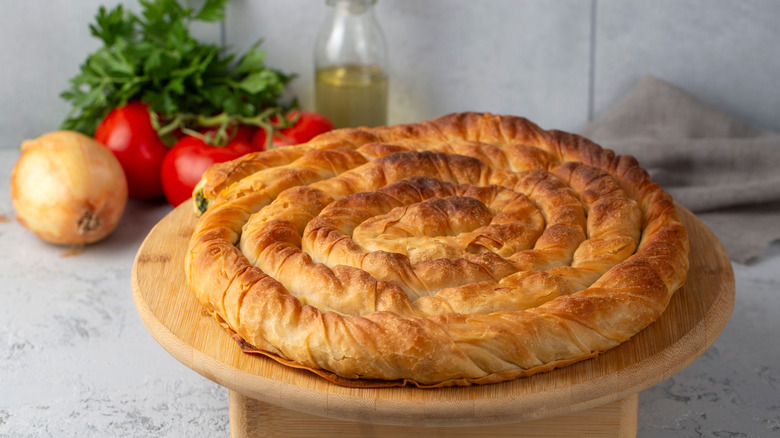
If you're looking for a show-stopping centerpiece for your next dinner party, look no further than borek, a Turkish meat pie shaped into a spiral that is both aesthetically pleasing and flavorful. It's made with phyllo pastry, which you can buy rather than make yourself. The rest of the dish hinges on the aromatic meat filling. Lamb is traditional, and it is usually accompanied by pine nuts, onions, garlic, passata or crushed tomatoes, and currants to provide little pockets of sweetness. The spice mixture is crucial, and usually includes such ingredients as paprika, cumin, coriander, and cinnamon.
Most of the recipe is straightforward, but any time you're working with pastry, there are pitfalls. In this case, you'll need to know how to keep phyllo dough from drying out, because if it does, it will crack and make it impossible to package up that delicious meat filling into a long tube. Luckily, it isn't difficult. All you need is a damp kitchen towel. You can serve borek on its own, or make it extra mouth-watering by whipping up a yogurt sauce on the side.
10. Maqluba
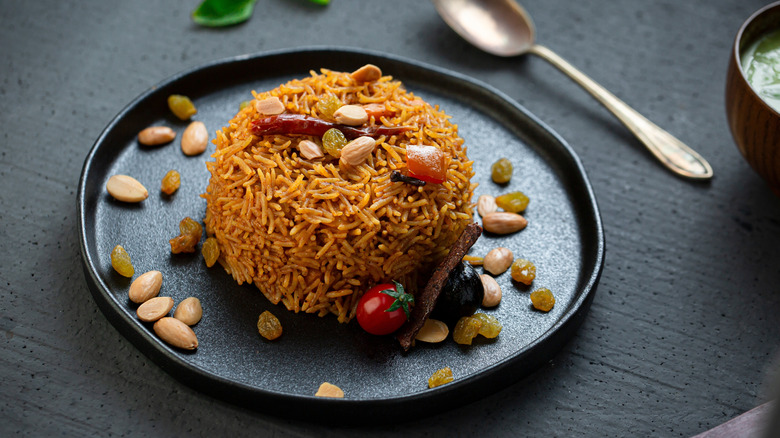
Upside-down cakes are a staple in many cuisines around the world, but the Palestinian dish maqluba brings that concept into savory territory. The word itself means upside down in Arabic, and the recipe involves layering uncooked rice over lamb and vegetables and simmering them in an aromatic, spiced broth until the rice is fully cooked. After letting it rest, you turn the maqluba upside down over a serving dish and voilà — you have a beautiful dome of flavored rice topped with buttery meat and vegetables.
The vegetables in question usually include eggplant, tomato, and cauliflower, but you don't have to stop there. Sweet peppers and potatoes make flavorful additions and bulk up the nutritional content. As for the broth, spices and aromatics such as allspice, bay leaves, onion, and cardamom do the heavy lifting and provide a tantalizing aroma while the dish cooks. Adding turmeric will give the rice some color, too. Last but not least, a sprinkling of roasted almonds gives the dish a nuttiness and crunch that is the proverbial icing on the cake.
11. Ghormeh sabzi

Many Middle Eastern recipes revolve around meat, but in the case of ghormeh sabzi, the meat is secondary. This Persian stew centers on kidney beans and dried limes, and if that's not a combination you've tried before, let us be the first to warn you that it might become your new favorite flavor duo. This is a recipe to make in the coldest months of the year when you need warmth, comfort, and nourishment in equal measure. Not only is it warm from a temperature standpoint, but its mixture of limes, turmeric, and lots of fenugreek will fill you with the sort of warmth that only spices can.
The lime doesn't come in the form of fresh lime juice, the way you might expect. This recipe calls specifically for dried limes. The difference in flavor is so profound that you will probably want to go out of your way to purchase them from a Middle Eastern store. They are made by brining fresh limes and then putting them out in the sun to dry and blacken. Their flavor is intensely citrusy, with hints of musk and bitterness. You can use preserved lemons in a pinch, but for the full effect of ghormeh sabzi, make sure to add dried limes to your shopping list.
12. Lahmacun
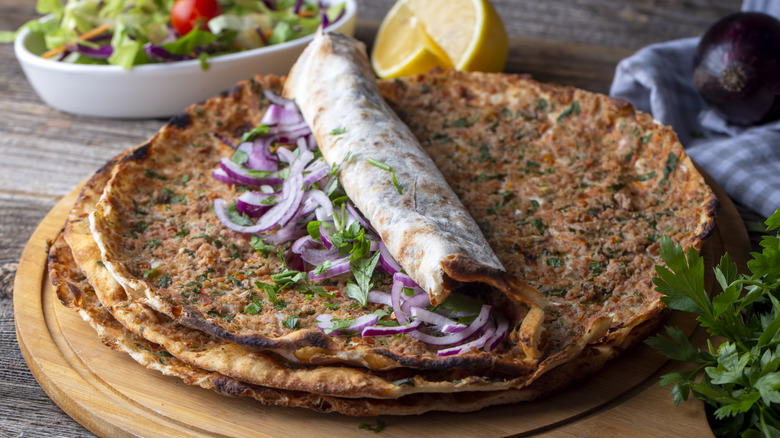
Lahmacun is Turkey's answer to pizza, and it also happens to be much easier to make at home than its Italian counterpart. Consisting of flatbread topped with a mixture of finely chopped lamb, onions, parsley, tomato paste, and red pepper paste, it is crunchy, spicy, and filling. Without cheese or thick, doughy bread, lahmacun is lighter than pizza, a fact that is only compounded by the inclusion of plenty of lemon juice. Full of flavor and capped off by the bright, citrusy zing of the lemon, this is a truly tasty snack, lunch food, or appetizer.
Although the most common version of lahmacun contains just those ingredients, there are, of course, many ways to make it. You can opt for a vegetarian option that uses eggplant in place of the meat, use beef instead of lamb, swap copious amounts of onions in place of the tomato paste, or go in a completely different direction by adding the ancient fruit quince to the mix for a hint of sweetness.
13. Hashweh
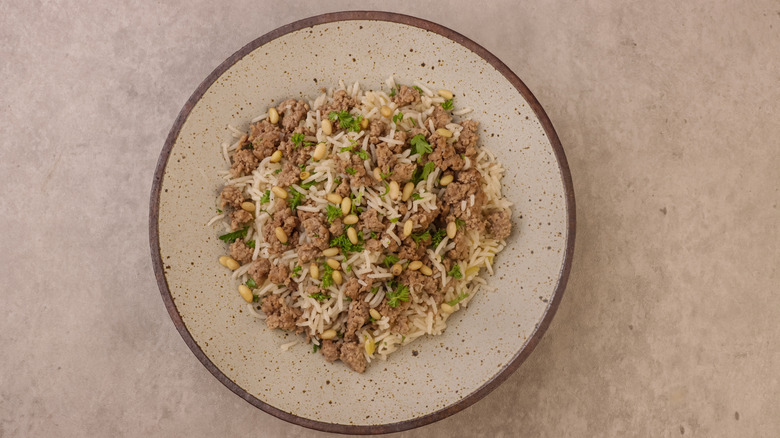
Rice dishes can be a godsend on busy nights when you need to get dinner on the table quickly. There are countless rice dishes from around the world that fit the bill, ranging from biryani in India to risotto in Italy. All of these offer new flavors to spice things up if you're getting tired of your go-to recipe, and it's worth adding hashweh to the list. This Middle Eastern dish is traditionally used as the stuffing for a whole lamb, but it makes an entire main course on its own, too. Made with finely diced meat, rice, loads of spices, and a garnish of toasted nuts, it is sure to exceed your standard stir-fry formula.
The spice blend is what makes hashweh really sing. You can opt for a relatively minimal combination of cinnamon, nutmeg, and allspice, or go all out by adding baharat, the so-called seven-spice mix that gives many Middle Eastern dishes their distinctively warm flavor.
14. Fesenjan
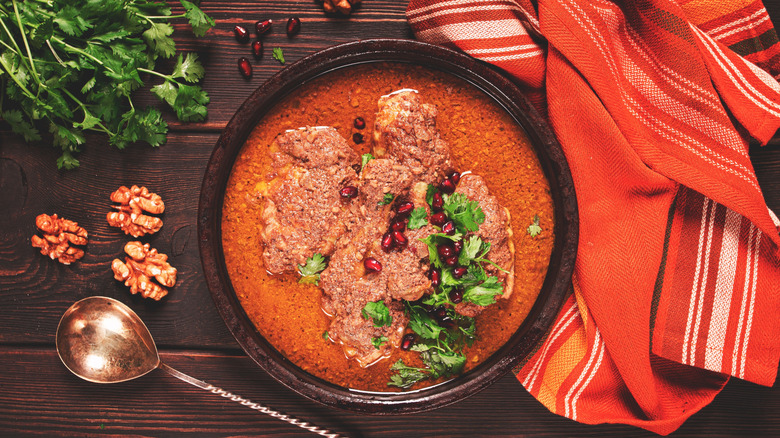
Another mouthwatering Persian stew to add to your menu is fesenjan, a rich, intensely flavored dish made with walnuts, pomegranate molasses, and slow-cooked chicken. The flavor of this recipe should not be underestimated. It's nothing like the old-fashioned beef stew recipe your grandparents used to cook or even a more adventurous variations that call for Guinness, chocolate, or coffee. Fesenjan has a uniquely sweet earthiness from its central ingredients that will take you into a whole new realm of flavor.
Despite its distinctiveness, this stew can be made in many different ways. The walnuts can be ground into a fine paste or left in larger pieces to provide a hint of texture. The pomegranate molasses can be on the sweeter side or the tangier side. Cinnamon and turmeric appear in most recipes, but you can go a step further by adding saffron, dill, nutmeg, and even rose petals. No matter which route you choose, though, do not skimp on the cooking time. To achieve the depth of flavor and tenderness of the chicken that defines the dish, it needs a good two hours or more.
15. Shish barak

If manti seem a bit too fussy, shish barak offer an excellent alternative. These Lebanese dumplings are larger than their Turkish counterparts, making them easier and faster to shape. And speaking of shape, these little guys look more like tortellini than pointed square parcels, but it's safe to say that no Italian tortellini recipe has ever tasted anything like them. The flavor is achieved partly through the meat filling and partly through the unique broth that the shish barak are cooked in.
The former is usually made with beef or lamb that has been cooked with onions and baharat. Some variations opt for a greener flavor involving garlic and cilantro rather than warming spices. The broth is yogurt-based, and usually includes cornstarch to thicken the texture and lots of garlic for flavor. Some recipes call for lemon juice and mint as well to dial up the complexity. Last but not least is a light sprinkling of toasted pine nuts for texture and a buttery, nutty flavor. Shish barak is the ultimate combination of comfort and elegance, and it makes for a great cooking challenge as well. If you enjoy making pasta or want to try it for the first time, this is a worthy place to start.