

The Easy Way To Freeze Seafood (Without A Vacuum Sealer)
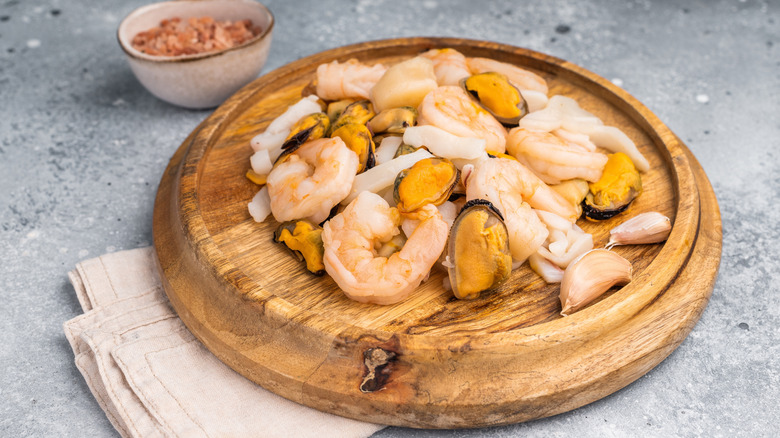
Buying good-quality fish is pricey, and you don't want to waste any, so it's important to know how to best freeze your seafood. With the right storage methods, you can freeze seafood to lock in its peak freshness for later. We've looked at the best ways for freezing fish and how long it can last if you do so properly, which can be about four to six months, depending on the type of fish. Often, vacuum-sealing comes up as the method to choose. But what if you don't have a vacuum sealer? We spoke to chef Daniel Le of Essex Pearl at this year's New York City Wine & Food Festival, who recommends the best way to freeze seafood so it lasts.
"A lot of people will typically just either put a fish on a plate and Saran-wrap it ... or they'll just Saran-wrap the fish," Le explains. "What I like to do is wrap my fish in a paper towel; it absorbs all the moisture." Le adds that the moisture released by the fish will start to degrade it over time. When seafood is frozen, its moisture solidifies into ice crystals, which can melt and release moisture with any temperature fluctuations. That moisture can then freeze back up and create more ice, damaging the fish's cell walls and changing its structure. Seafood that's been exposed to that much moisture can therefore take on a soggy, unappealing texture. "If you wrap it [in a paper towel]," Le notes, "it helps preserve it a little bit." After that, use Saran Wrap to seal it further.
Safely freezing and defrosting seafood
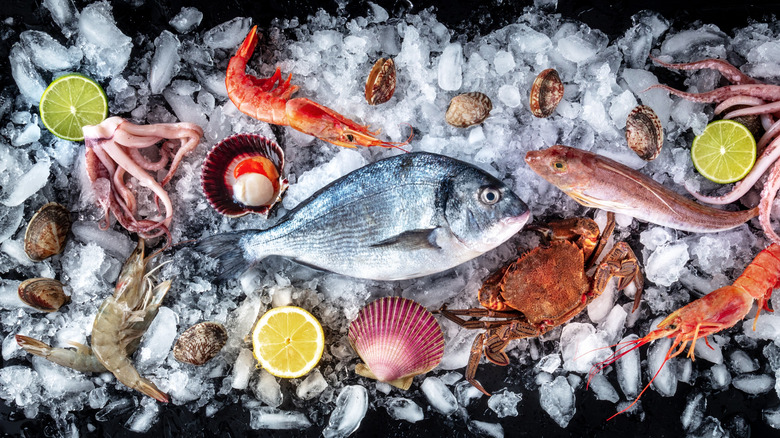
Once you've wrapped the fish in that paper towel to absorb moisture, place it in a freezer bag (which is better than plastic wrap) and push as much air out as possible before sealing. This ensures that no air gets in. In addition to moisture, oxygen is an enemy of preserving fish in the freezer, as it can negatively impact flavor compounds and texture. More importantly, it can expose the fish to dangerous bacteria. For an even more foolproof method that still doesn't require a vacuum sealer, once you place the towel-wrapped fish into the bag, close it except for an inch and slowly place it into a bowl of cold water. The cold water will push air out. If you seal the bag immediately, it's nearly as good as vacuum-sealed.
A paper towel, freezer bag, and knowing to avoid moisture and oxygen will ensure you always freeze your favorite seafood for optimal freshness. It's just as crucial, though, to know how to properly thaw fish and avoid the worst mistakes you can make when defrosting seafood. The toxin Clostridium botulinum — which has caused several deadly botulism outbreaks in United States history — thrives in warmer temperatures where there's no oxygen. So, while you need to keep oxygen out in the freezer, you want to let some in while thawing. Transfer the fish to a fresh bag and defrost in the refrigerator overnight, or for quicker results, place the fish into a bowl of cold water until it's thawed.