

Why You Should Be Cleaning Greasy Kitchen Cabinets With Cooking Oil
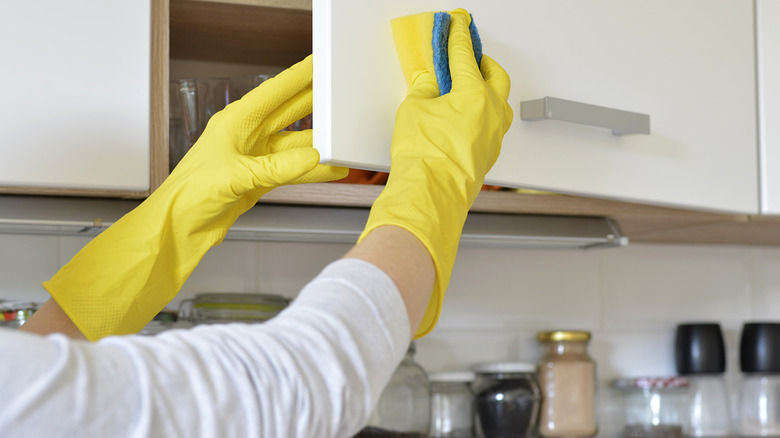
If you cook, your kitchen cabinets are probably covered in gunk. That sticky layer of grime forms because every time something on the stove simmers or sears, a fine mist of oil becomes airborne. That fog of aerosolized cooking vapor drifts upwards, carried by hot air, landing on cabinet surfaces, where it slowly dehydrates into a thin, tacky skin of concentrated fat. Then, over time, as the flotsam of dust bunnies inevitably float through the room, happily colonizing the sticky layer, it builds up, fortifying and refusing to budge with just a reasonable swipe of a sponge. In this case, you need to fight oil with oil; the very same oil you keep next to the stove (no need to use fancy olive oil for this). Oil-based grime bonds to itself, which is why the usual soap-and-water sometimes just smears it around without lifting it.
Fresh oil softens and loosens the old, oxidized grease because they're structurally similar. Instead of stripping or scratching the cabinet's finish the way harsh, toxic degreasers can, oil works as a gentle solvent, melting the residue so you can actually wipe it up. It also works on painted wood, vinyl laminate, and metal hardware, whereas strong cleaners risk damaging the surface or leaving streaks. For light buildup, a few drops of neutral cooking oil on a soft cloth are enough to break down the grime. Massage the oil into the sticky areas with small, steady circles; you'll feel the resistance disappear as the grease softens.
Gunk, be gone!
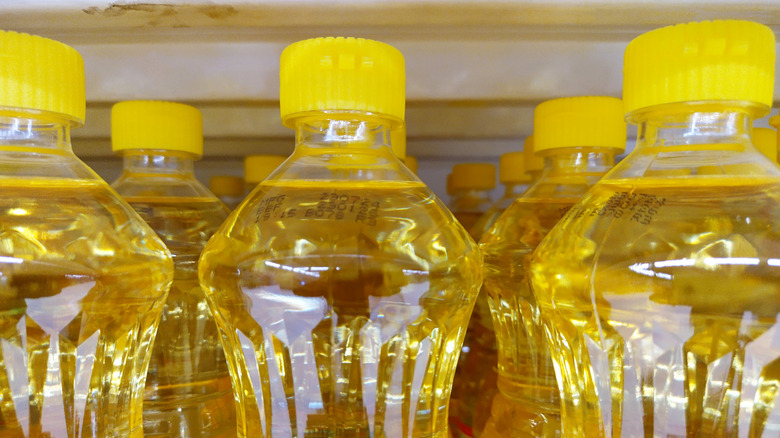
For tougher buildup that feels almost lacquered onto corners, plain oil sometimes needs a little reinforcement. That's where the classic DIY household cleaner ingredient, baking-soda paste, comes in. Mixing two parts baking soda with one part cooking oil creates a spreadable scrub that tackles the stubborn stuff without scratching the cabinet's finish. The oil keeps the paste glide-y and gentle, and the baking soda adds just enough gently abrasive grit to pull off the older, more polymerized layers of gunk that have hardened over time.
Use a soft cloth or even an old toothbrush to work the paste into tight seams and along the tops of cabinet doors, where residue tends to accumulate unnoticed. Let it sit for a minute or two if the goo is especially tenacious, then wipe clean. Hinges and handles benefit from this treatment as well, because the paste loosens whatever's lodged around the joinery and brings back the shine. In a food-prep area, it's nice to be able to use food-grade products instead of harsh or toxic ones, especially when they work just as well or better.
Once the grime is gone, make sure to rinse. Warm water and dish soap will emulsify whatever oil remains, so it doesn't leave behind a film of its own. And, always dry the surface thoroughly afterward, because leaving water on wood can warp it. As long as you finish with a full wash and dry, cleaning with cooking oil is a solid method that leaves cabinets clean and free of stubborn stickiness. You can do this when you notice the buildup building up, or just plan to give all the hard-to-reach surfaces in your kitchen a seasonal once-over, which is good for the Feng Shui of your kitchen, anyway.