

Why You Might Want To Think Twice Before Drinking 'Healthy' Sodas

Prebiotic sodas have become an incredibly popular way to enjoy a fizzy beverage while also (potentially) improving gut health. However, like any new dietary fad, it's important to do your research and explore each brand's ingredients before you take a sip. Many of the prebiotic sodas on the market contain high levels of added sugar, or could cause digestive issues if consumed in excess amounts. Before drinking, make sure you understand what prebiotic sodas are supposed to do and what benefits they may offer.
Some sodas include ingredients like apple cider vinegar, which contains prebiotics that can support the growth of healthy gut bacteria. They also contain fiber-rich additives like inulin, which is derived from agave plants or chicory root. Most adults should aim for getting about 25-38 grams of fiber each day, as it aids in digestion, reduces inflammation, and can lower blood sugar levels. Yet if you're not used to consuming that much fiber each day, even adding one or two prebiotic sodas to your diet can cause unwanted side effects.
Adding too much fiber to your daily diet all at once can cause unpleasant symptoms like bloating, constipation or diarrhea, gas, and abdominal pain. If you have a condition like IBD, IBS, or Crohn's disease, these symptoms may be even more disruptive to your life. And if you have diabetes, consuming too much inulin each day may increase your risk of inflammation and liver damage. Another concern with sodas that are branded as healthy is that they often contain high levels of sugar. Added sugar can increase your risk of weight gain, inflammation, fatty liver disease, high blood pressure, and heart disease.
What to consider before drinking prebiotic sodas
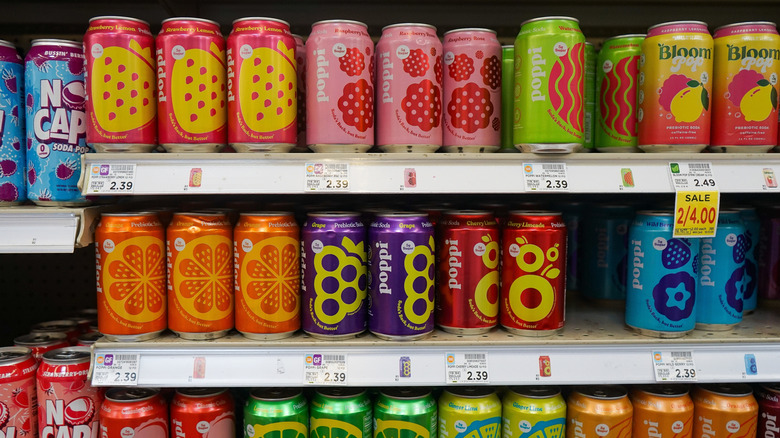
When looking for the best prebiotic soda brand, there are a few things you can do to protect your health and safety. Start by checking the nutrition label to see if the drink you've chosen has over 5 grams of added sugar. If it does, you should steer clear. Look out for ingredients other than just white sugar as well, such as honey, agave syrup, corn syrup, and dextrose. The American Heart Association recommends that men not consume more than nine teaspoons or 36 grams of added sugar and women no more than six teaspoons or 25 grams of added sugar each day. Sodas that are sweetened with Stevia rather than other sugar substitutes like aspartame and sucralose may be safer and healthier. Stevia can also have a probiotic effect on gut health.
If possible, choose a soda brand that contains both probiotics and prebiotics, like Caroline's Pre + Probiotic Soda. Like yogurt and kombucha, probiotic sodas contain live bacterial cultures that help you maintain a healthy balance of beneficial gut bacteria. Prebiotics feed these good bacteria, supporting proper digestion, immune system function, and overall health.
If you are drinking prebiotic soda as a way to discourage yourself from drinking traditional soda or diet soda, try to stick to just one can a day. If you are using it to address specific health concerns, or if you have a chronic health condition or follow a medical diet, it's best to consult with your doctor. They can help you determine what type of prebiotics you need, and whether a soda is the best way to introduce them to your body.