

What Turmeric Actually Does To Your Dishes
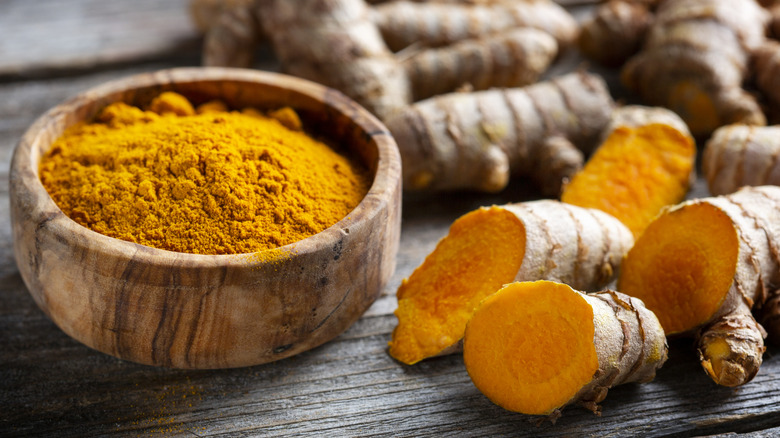
Turmeric makes the list of health food ingredients, evident by its use in a range of recipes from smoothies to juices to immunity shots. But in addition to its numerous possible health advantages, ranging from antioxidant, anti-inflammatory, and neurological health, turmeric adds several visual and taste benefits to your dishes. Widely popular across the globe, turmeric is used fresh or as a ground spice in a variety of cuisines — from Indian curries and daal to Moroccan tagine to Caribbean stews and jerk seasonings. Perhaps best known for its vibrant orange-yellow color derived from compounds called curcuminoids, the ingredient also provides an earthy, peppery taste, subtle savory notes, and hints of zest.
When cooking with turmeric, you may have heard that it's best to add black pepper to the dish to harness its full potential. This is true for adding the spice to oatmeal or to a stew, since black pepper increases the bioavailability of curcuminoids and their numerous health benefits. Since turmeric's compounds are lipophilic and readily soluble in fats and oils, you can bloom the fresh minced or raw ingredient in oil, ghee, or butter before adding it to a soup or stew to bring out its complex, earthy taste. Or cook turmeric rice with a healthy pat of butter for seriously tasty results.
More tips for cooking with turmeric
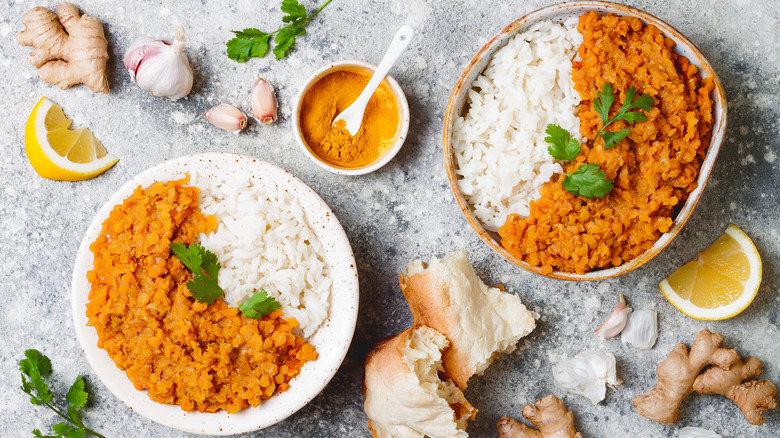
Turmeric can be a bit bitter, so it helps to round out the flavor of your dishes with creamy, acidic, or sweet ingredients. That means, adding it in with rich coconut milk and lime when making a Thai curry or swirling it into a golden milk with sugar or honey. If you're wondering whether to use fresh vs. ground turmeric in a recipe, it really comes down to your desired flavor goals for the dish. If you want to impart a more piquant taste to your juice or smoothie, grate in a bit of the fresh root. If your Singapore chicken curry laksa recipe calls for fresh turmeric, add it in. For subtler savory notes and ease of distribution in recipes like lentil daal, the dried spice works great, too. You can also get creative and add ground turmeric as a garnish or to spice up granola, cookies, or dressings.
The versatile dried spice stores well in the pantry for up to a couple years, so you can keep turmeric on hand for a variety of uses. Just like turmeric adds bright color to your dishes, it can also cling to the fibers of your dish towels and stain wooden spoons. And according to science, the ingredient's fat solubility makes its stain harder to remove. So, enjoy turmeric's array of taste, color, and health benefits, but just be mindful to keep things tidy when working with it in the kitchen.