

10 Biggest Costco Controversies Of All Time
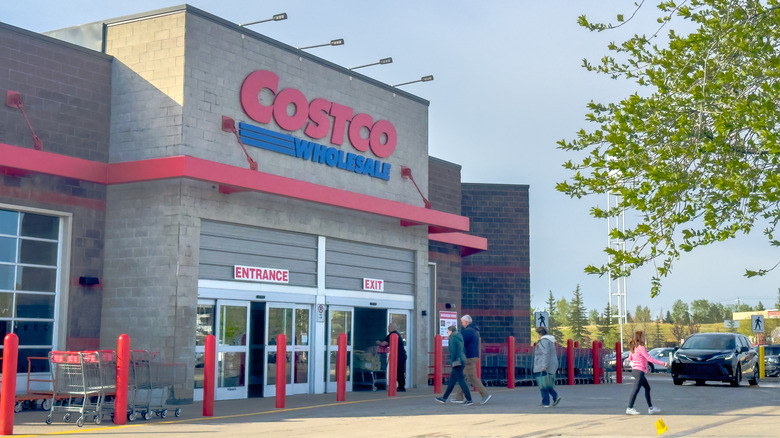
While Costco tends to keep its customers happy with its low prices and cheap rotisserie chicken, it's had its fair share of controversies over the years. With so many employees, customers, and suppliers, you'd expect a few things to crop up every now and then. However, some of Costco's biggest controversies may shock you as much as they did us. For the most part, the company has either responded favorably to the issues as they've arisen or been forced to do so through lawsuits.
Costco controversies fall into several categories. Several relate to the mistreatment of animals and workers involved in food production. Unfortunately, low prices sometimes come at a cost to the well-being of others. In most cases, Costco has been quick to act when its products were found to be violating human and animal rights, but in other instances, the general perception is that the controversies were dismissed. So, if you're curious about the biggest controversies surrounding Costco over the years, you'll want to keep reading.
Being sued for gender bias related to employment practices
Costco faced a major controversy in August 2024, and it was in relation to gender discrimination against its female employees. While women's rights in the workplace have come a long way, gender-based employment bias still exists, especially when it comes to their ability to break into upper management positions in certain companies.
In this class-action lawsuit, around 700 women who currently or formerly worked for the company claimed that women couldn't move into upper management jobs as easily and often as men. Previously, internal promotions seemed to often take place without the positions being advertised, allegedly making it harder for women to apply. With about half of Costco's employees being women, you'd expect about half of the chain's store managers to be female, rather than just 12%. The excuse that some Costco executives purportedly gave that women weren't interested in these jobs because of familial obligations simply didn't fly. Women did want these jobs; they just weren't given the opportunity to apply for them when they were available.
In the end, the gender bias lawsuit cost Costco $8 million in settlement money. The judge also declared that, going forward, Costco would be required to post its assistant general manager job openings, listing actual criteria for the position. Plus, it would have to accept applications for the position for at least 10 days.
Selling racially-offensive dolls
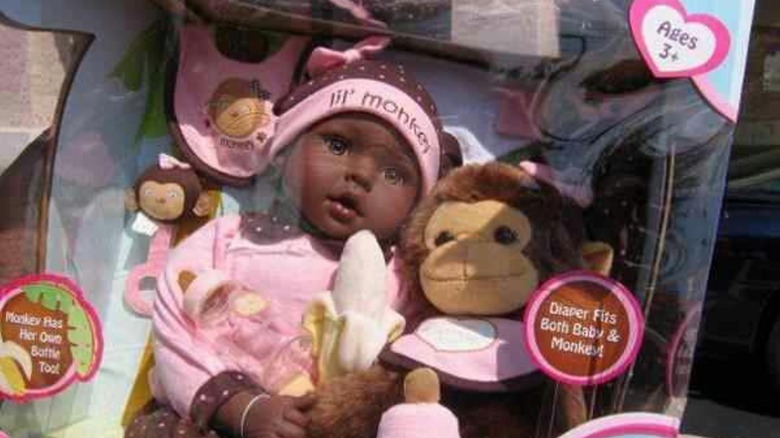
In 2009, Costco found itself under scrutiny for something you'd expect to never occur in the 2000s: Selling racially offensive dolls. The fact that this doll passed through the order process shows just how out of touch some people can still be in an era when companies like Aunt Jemima are actively removing racial stereotyping.
There was both a Black and white version of the Cuddle Me doll, and both came with pets. The white doll had a pet panda, and the doll was called Pretty Panda. Meanwhile, the Black doll had a pet monkey, and the doll was called Lil' Monkey, with that title stitched across her hat. After John Taylor, a Black customer in Greensboro, North Carolina, noticed it, he started a viral email campaign to get rid of it. Plenty of people agreed with Taylor's sentiments and were reportedly ready to boycott Costco over the issue.
According to the manager of the Greensboro store, there were purportedly both white and Black dolls with monkey pets, but none were located by the time the story blew up. Regardless of whether that was true or not, Costco was quick to offer an apology and pull the racist dolls from its shelves. The company that sold the dolls to Costco was a company called BrassKey Keepsakes, and Mary Gustaff, the CEO of that company, indicated that she had no idea she'd sold racially offensive dolls.
Getting sued for selling fake Tiffany engagement rings
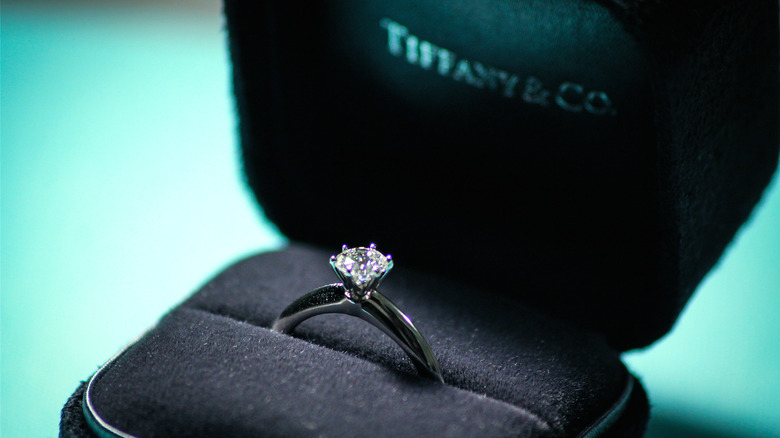
The next Costco scandal involved the company being sued in 2013 for selling fake Tiffany diamond engagement rings. You certainly expect that when you buy items like jewelry and perfume from Costco, you're getting the real thing, and being misled into thinking that you are can be disappointing, to say the least. In this instance, the Costco display case signs for its engagement rings used the word "Tiffany" as a generic way to describe the ring setting when it wasn't actually selling rings created by Tiffany & Co. The lawsuit that followed claimed trademark infringement.
Costco argued that the usage of the name "Tiffany" was only in reference to the ring's features resembling those of the iconic brand, and that what it did was 'consistent with decades of dictionary definitions." However, the problem was that, over the seven years that Costco had the display, some customers likely thought they were getting actual Tiffany & Co. engagement rings for their fiancées at rock bottom prices instead of just rings with Tiffany-style settings.
Ultimately, judges did see Costco's displays as being misleading and required the company to pay $19.4 million in 2017. The amount was three times the amount of Costco's profits plus punitive damages. After all, how many people would have bought their engagement rings there if they thought they were buying generic Costco rings instead of prestigious Tiffany & Co. ones?
Canadian Costco pharmacies receiving illegal advertising money from drug companies

One of Costco's many membership perks is having great pharmacy discounts, but the way it obtained those discounts was purportedly on the sketchy side. In 2019, Costco was found guilty of taking illegal advertising money as a kickback from a generic drug maker called Ranbaxy Pharmaceutical. Two of Costco's pharmacy executives pleaded guilty to the charge of demanding over $7.2 million in advertising payments from the drug company.
Allegedly, the executives in question requested a "rebate" in order to carry this particular brand of generic medicine. This affects customers, as medicine prices typically increase when pharmaceutical companies offer kickbacks. While this rebate kickback system has been an industry-wide practice, Ontario, Canada, outlawed it in 2013 to try to make generic drugs more affordable for its citizens. Confused about why Costco was still demanding kickbacks long after Ontario banned the practice, it was a salesman from Ranbaxy who finally filed a complaint with the Ontario College of Pharmacists in 2018.
While one of the pharmacy executives who had demanded the rebates swore that they thought they weren't doing anything illegal, ignorance of the law didn't save them. In the end, Costco was fined $7.2 million, which was fair since that was the amount that the Ministry found that Costco had received in kickbacks in the first place. Additionally, the pharmacists involved in the fraudulent scheme had to pay $50,000 each in fines and other costs.
Possibly selling shrimp connected to enslavement

A California lawsuit back in 2015 sought to force Costco to label its shrimp as being sourced through Thai slave labor. During the previous year, the United Nations and various organizations had uncovered the fact that the Thai fishing industry was rife with slave labor. The investigations revealed people enduring 20-hour shifts and not being allowed off the ship for years after brokers trafficked people who used them to find work, selling people into slavery instead. Punishments on the boats included not only beatings but sometimes even torture and executions. The lawsuit claimed that Costco was buying farmed shrimp that had been fed with fishmeal from suppliers who enslaved their workers
When the initial investigation occurred in 2014, Costco promised to make sure its shrimp supplier, Charoen Pokphand (CP) Foods, didn't continue to use feed that came from such sources. However, CP wanted to put the onus of responsibility upon the Thai government to crack down on slave labor in the fishing industry and said it would try to phase out using Thai fishmeal by 2021 if it was still being produced through forced labor by then.
The lawsuit against Costco came about as a result of ethical concerns regarding CP and its suppliers. However, since CP itself wasn't enslaving its workers and the shrimp couldn't be directly traced to the unethical suppliers, the judge dismissed the lawsuit. However, FishWise can help you find ethically- and sustainably caught fish brands.
Selling eggs from a farm that mistreated hens
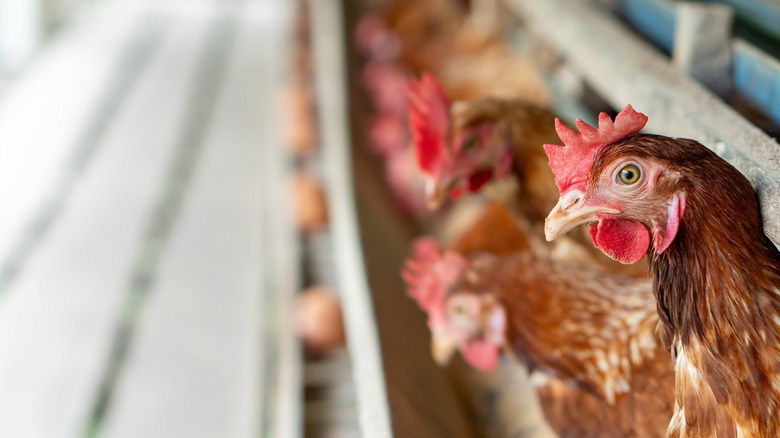
The Humane Society conducted an undercover investigation in 2015 that revealed how Hillandale Farms, one of the main companies Costco was getting its eggs from, was housing its laying hens in tiny cages in horrendous conditions. The videos the Humane Society took showed hens crowded into cages, sometimes with dead and even mummified birds inside. So, while the packages the eggs came in depicted hens roaming free, their reality was far from that image.
If Hillandale sounds familiar, it's because it was one of the companies responsible for the biggest egg recall in U.S. history five years earlier, in 2010, due to a Salmonella outbreak. With that inspection finding unsanitary production conditions, including rodent and maggot infestations, among other things, it's not terribly surprising that the company was also housing its laying hens in squalor.
Previously, in 2007, Costco had made a plan to switch to cage-free eggs. However, it took this hen debacle for the company to make a more concerted effort to follow through on its promise. Lots of people got involved in a "free the chickens" campaign after the Humane Society investigation, imploring Costco to stop selling eggs from caged hens. Some of the more famous people speaking out included actors Brad Pitt and Ryan Gosling, along with comedian Bill Maher. This campaign seemed to work, as these days, all of the eggs you'll see available in the store are from cage-free and free-range hens.
Being guilty of lax prescription-filling practices and recordkeeping
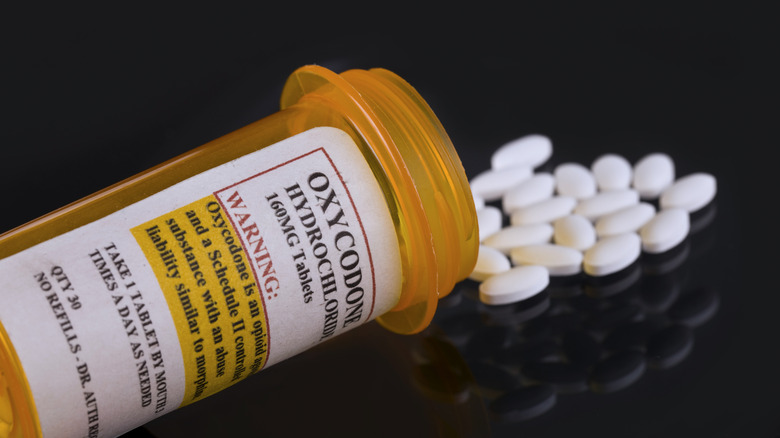
While it's nice to have pharmacists willing to go the extra mile to help their customers, Costco was accused in 2017 of filling prescriptions in ways that fell outside of the law. Los Angeles-area Costco pharmacies had lax policies that allowed pharmacists to fill prescriptions regardless of whether the prescription was complete or if the practitioner had a valid DEA number or not. Some of the prescriptions Costco pharmacists were letting slide through were even ones that weren't related to the doctor's area of expertise, and the pharmacies weren't keeping proper records of controlled substances either. All these prescription-filling and recordkeeping problems added together to allow prescription drugs (especially opioids) to make it to black markets out on the streets more easily. And not needing a membership to use a Costco pharmacy meant its lax policies could extend to the whole community.
The Drug Enforcement Administration (DEA) investigated these issues between 2012 and 2015. Over that time, it found that Costco had sold a lot of prescriptions it shouldn't have if tighter policies had been in place. Ultimately, it ended up having to pay $11.75 million in settlement claims for violating the Controlled Substances Act, as well as buying a new $127 million pharmacy management system. Plus, the DEA planned to drop in unannounced for the next three years to ensure that the Costco pharmacies were continuing to operate within regulatory guidelines. Plus, there would be both internal and external audits.
Having a longtime employee embezzle $290,000

Costco employee Robin G. Cline pleaded guilty in 2018 to embezzling nearly $290,000 from the company over five years. As an accounts receivable clerk who had been employed there for 20 years, she uncovered multiple ways to manipulate accounting information to steal money from both the company and customers.
Cline created a variety of fake credits and refunds on over 100 people's accounts and then sent the money back to various bank accounts, including hers and her son's. One option was to pretend someone had returned an item to credit their account. Another was to pretend someone had contacted Costco with a disputed charge. She also purportedly double-billed customers for items and processed refunds. In each case, she'd funnel the money from the credit to herself. She made over 290 of these fake transactions between 2011 and 2016, often hiding her actions by blaming her underlings for not being familiar with the accounting system. Her deceptions came to light when she was on an extended leave.
The FBI got involved once the wire fraud was uncovered, and a U.S. District Court in Tacoma, Washington, ultimately sentenced Cline to a year in prison for it. Plus, she was required to repay the money she embezzled. To try to undo the damage Cline had done to the company's reputation, Costco went on to refund each customer the amount stolen from them plus 10%.
Chaokoh coconut milk sales being stopped because of supposed monkey labor and abuse

You might not have suspected that the Chaokoh coconut milk sold on Costco shelves was produced with the help of trained monkeys. However, that's exactly what People for the Ethical Treatment of Animals (PETA) alleged when it looked into Chaokoh's production process in Thailand in 2020.
Of course, animals are used in the production of all sorts of food products, from honey to eggs. However, in this instance, the monkeys that were picking the coconuts for the company were also being abused. PETA indicated that the monkeys picked 400 to 1,000 coconuts a day and were chained during the process. The organization also claimed that the animals were forced to entertain tourists with "circus-style shows," and that they were under such stress that one monkey chewed off a limb to try to free itself. We don't want to imagine the conditions it must have faced to be that desperate.
After Costco learned of the monkey labor and abuse involved in the production of Chaokoh coconut milk, it stopped purchasing from the company. It insisted that any coconuts in the supply chain should come from human rather than monkey labor. If you look at Costco's website today, you won't find any Chaokoh coconut milk available anymore.
Being investigated for its rotisserie chickens living in poor conditions
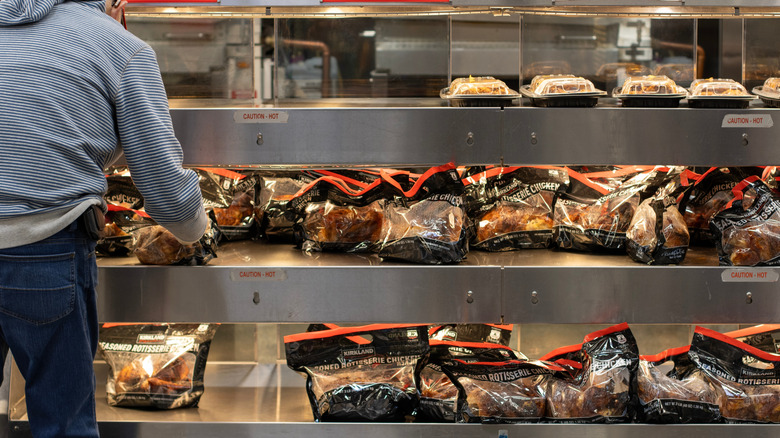
Many people think the $4.99 rotisserie chickens are worth the cost of a Costco Membership, but we're guessing few assume the chickens are being treated poorly. In 2019, Costco opened up a huge poultry complex in Nebraska to control production from the egg onward. Three years later, in 2022, two Costco shareholders filed a lawsuit alleging the birds were being mistreated at the poultry complex, breaking various animal welfare laws. Various animal rights groups like Mercy for Animals have gotten involved as well with undercover investigations that may have you rethinking your next rotisserie chicken purchase.
The conditions a worker revealed in a secret video included a dark and crowded facility covered in chicken excrement. Added to these conditions was how the process of selective breeding to produce ever larger chickens was resulting in deformed birds living abysmal lives. For many, their breasts were so large that their legs couldn't hold up the weight. Then, they'd be trampled to death or develop ammonia burns from being left on the ground in their own filth, ultimately dying from not being able to get up to feed themselves or having heart attacks.
When the lawsuit went to court, the judge dismissed the case. Costco's board went on to create a committee to look into the alleged problems, but ultimately rejected the shareholders' simple demands to ensure every bird had access to food and water.