

The Cutting Board Strategy Pros Use That Home Cooks Should Steal
We may receive a commission on purchases made from links.
Have you ever taken a bite of something you just cooked and realized it possesses a strange, lingering flavor of a different ingredient entirely? A hunk of fresh mozzarella, for example, with notes of ... salmon? This can be baffling, especially if the ingredient you're tasting doesn't even feature in the meal you're eating. But there's a pretty clear culprit: your cutting board. You can do everything you're supposed to do when it comes to keeping your cutting board clean, but all too often, unseen residue from different foods remains on the surface. Even juices can slip into the fibers of a wood cutting board. This not only means you're getting unwanted flavors mingling together, which can taint an entire meal; it also means the bacteria of various foods can cross-contaminate one another.
Fortunately, there's an easy fix for this. Of all the tips and tricks for best using cutting boards, this may be the most crucial, and it comes from restaurant pros: use a color-coded cutting board system. That's right, you want to stock up on a handful of different cutting boards and use a straightforward color-coded system to keep their uses separate, therefore keeping certain food groups to themselves and avoiding those undesirable flavors and, importantly, cross-contamination. That means individual cutting boards for various food categories like meat, fish, fruits, vegetables, cheeses, breads, and so on — and extras for washed versus unwashed or cooked foods versus raw.
How to color-code your cutting boards
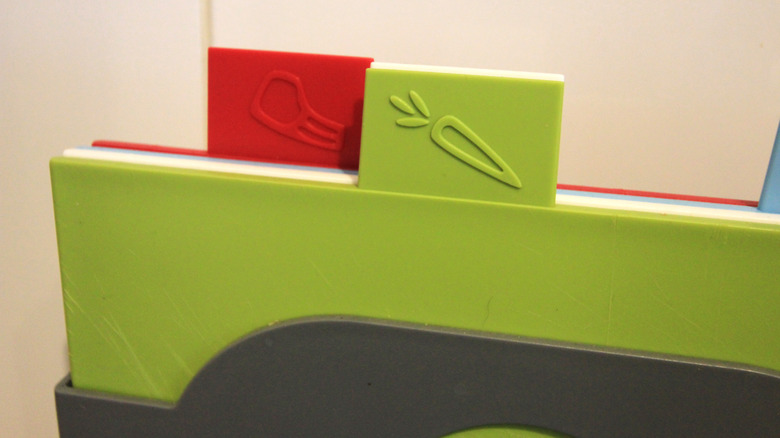
While you can assign colors that make sense to you, there's a handy industry standard: red for raw meat and poultry, blue for raw seafood, yellow for cooked meat and fish, green for washed produce, brown for unwashed produce, white for dairy items and baked goods, and purple for anti-allergen foods. Helpfully, much of this is pretty intuitive — red brings to mind meat, blue for seafood, etc. To ensure you always reach for the correct board, though, it's a good idea to make a chart and place it somewhere convenient — stick it on the inside of the cabinet door where you keep your cutting boards, for example. Or, you can get the whole family involved and decorate a chart on your kitchen whiteboard.
To make things even simpler, you can buy entire sets of color-coded cutting boards ready to go, like this Aichoof Plastic Cutting Board Set with a stand — some kind of stand with designated slots is an important part of this system so you can indeed keep the boards from touching each other. This Korrtfid Cutting Board Organizer is an easy fit for cabinets and pantry shelves. If you're tight on space, you could also try this Cooler Kitchen Bamboo Cutting Board with color-coded chopping mats you can swap according to what you're slicing. Remember, you'll still want to keep your color-coded cutting boards clean. Be sure to always rinse them and periodically scrub cutting boards with salt.