

9 Mistakes To Avoid With Your Homemade Gingerbread House
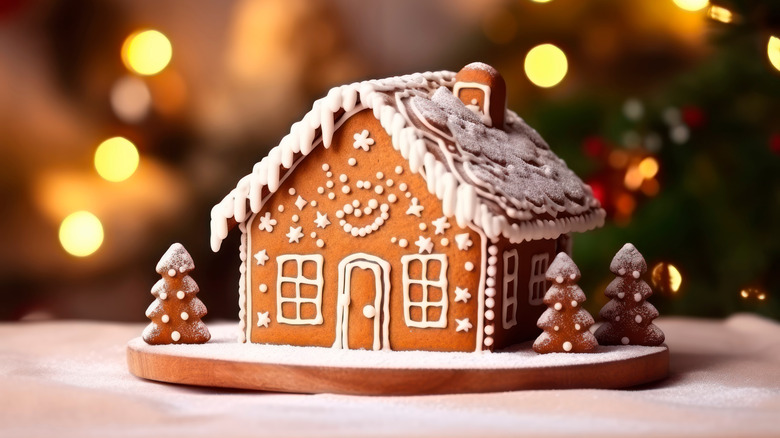
One of the most magical parts of the holiday season is getting a chance to spend more time with loved ones in the kitchen. Whipping up a Christmas dessert is a great way to reconnect with family and friends while creating something delicious in the process. And while cookies or grandma's favorite side dish are likely to be on the menu, making your own gingerbread house can be an especially fun way to enjoy the holiday season. Starting with a quality gingerbread house kit can be helpful, but it's worth considering making your own house from scratch.
But, as you might expect, many things can go wrong when crafting a gingerbread house. To help you avoid these mistakes, we spoke with two experts: Rena Awada, a food blogger and founder of Healthy Fitness Meals; and Katherine Sprung, an award-winning pastry chef and food podcaster who's hosted gingerbread house-making courses. By avoiding the mistakes they frequently see in the house-making process, you can ensure that yours not only looks impressive but tastes delicious too.
Using soft or warm icing
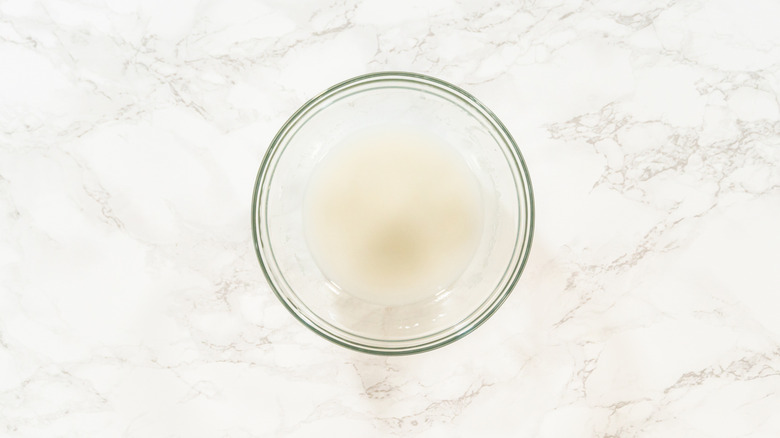
If you've ever started making a gingerbread house only to have it fall apart moments after assembly, you could've been committing a very common mistake that a lot of home cooks run into. Rena Awada says that using soft or warm icing can negatively impact the stability of your house. "Royal icing is used as the glue," she explains. "If it is too runny or does not set correctly, the entire structure will collapse."
Therefore, you should pay close attention to the consistency of your icing. If you notice that it's a bit too thin, put it in the refrigerator for a few minutes before you work with it. Then, you have to apply it correctly. "Make sure the icing is thick," suggests Awada, "and let each section dry completely before adding more. This will take a while to complete, but patience is important." Feel free to grab yourself a glass of eggnog or whip up some mulled wine while you're waiting for your icing to chill or set.
Not letting the gingerbread pieces dry completely
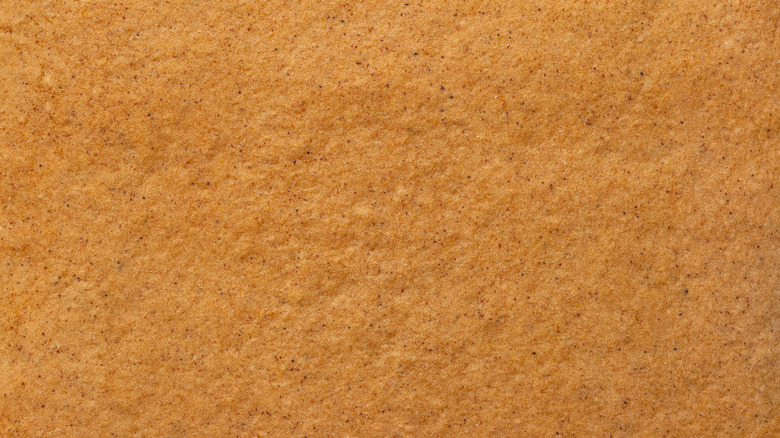
If you've only made a gingerbread house from a store-bought kit, you may not have had to work with fresh gingerbread before. When you're baking the pieces from scratch, it can be easy to mess them up without previous experience. One of the biggest mistakes you can make is not allowing the gingerbread to dry fully before you start the assembly process.
You're probably excited to start construction as soon as the gingerbread comes out of the oven, but at that point, it's still quite fragile and prone to breaking. You don't want all your hard work to go to waste, so always allow plenty of time for the gingerbread to settle and harden before building the house. Ideally, you'll want at least a few hours to allow that gingerbread to cool and dry, but for best results, you should wait overnight before you begin gluing the sections together. That way, you can better ensure that the gingerbread won't crack once you start adding decorations.
Using a gingerbread cookie recipe
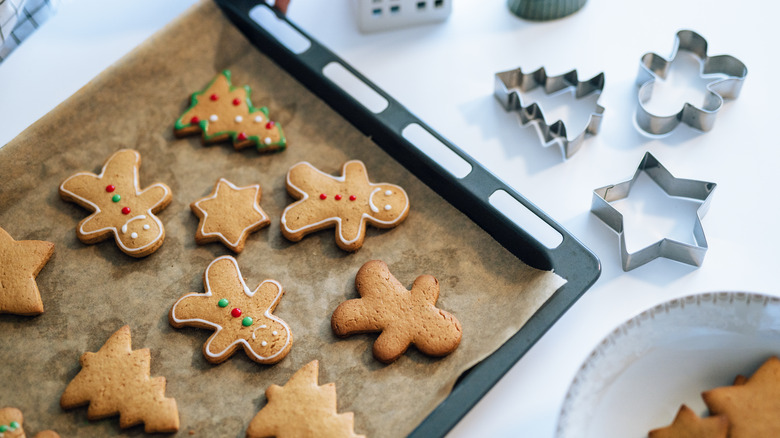
When you're making your own gingerbread house, it's important to choose the right recipe to follow. According to Katherine Sprung, you'll want to look for one that's specifically tailored for a gingerbread house, not for gingerbread cookies. "Some might think the recipes would be interchangeable, but they're not," she explains.
Gingerbread cookie recipes really focus on the flavor of the baked goods. "A gingerbread cookie is going to be softer and more flavorful, since those are really meant to be eaten," says Sprung. Gingerbread house recipes, on the other hand, are designed to give the pieces a strong structure, allowing you to pile on all the festive toppings you can dream of. So, find yourself a great gingerbread house recipe online or from your favorite holiday cookbook, then read up on some helpful gingerbread house decorating tips while your pieces bake in the oven.
Using the wrong kind of icing
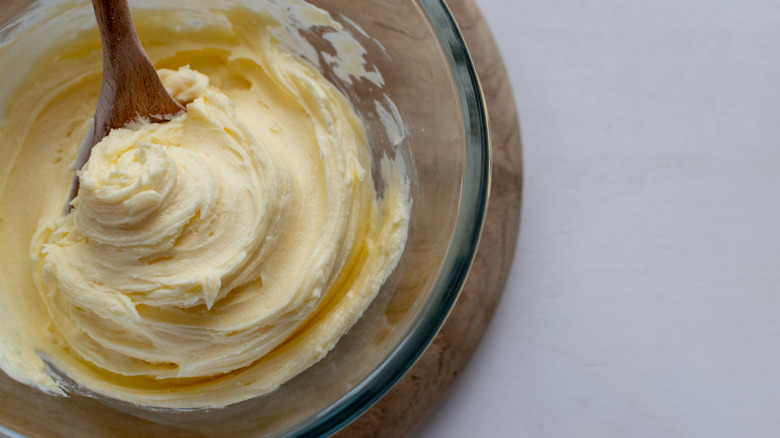
When you look at gingerbread house recipes, you'll find that most specifically call for royal icing. But if you've never made one before (or don't have much baking experience in general), then you may not know what sets royal icing apart from other types.
If you go to the baking aisle of your local grocery store, you'll probably see a lot of buttercream icing. This is the kind of icing you'd put on cakes and cupcakes, and although it's sweet and delicious, it doesn't set hard, so it won't provide a sturdy structure for your creation. Royal icing is much more solid once it sets and will help your gingerbread pieces stick together, making it ideal for building a house. It's fairly simple to make your own royal icing, but a store-bought version will also work just as well.
Overloading the roof with decorative elements
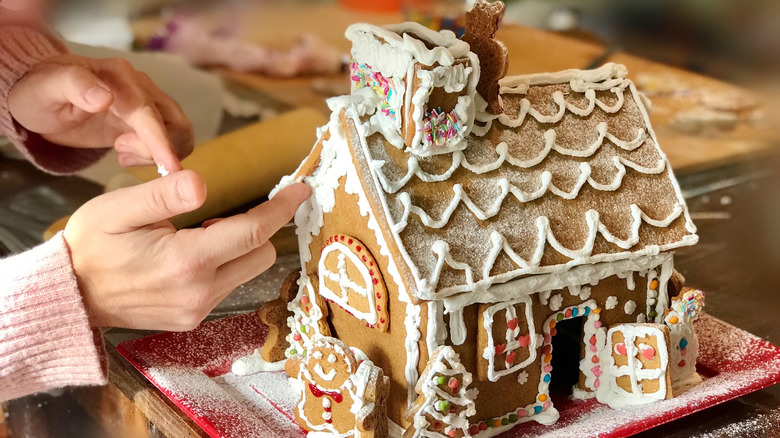
Assembling a gingerbread house is only a fraction of the fun. For most, the best part is the decorating: when you can really embrace your creativity and personalize the design. But just because this part of the task seems relatively simple compared to the actual construction of the structure, that doesn't mean you can't make mistakes here as well. "Overloading the roof with heavier decorations is yet another common pitfall," explains Rena Awada.
This is because a gingerbread house can still be fragile, even after the house sections and royal icing have dried completely. You don't want to place too much stress on the structure when you're doing your decorating. "While candy canes and gumdrops look fun," says Awada, "having too many can actually weigh down and collapse the roof." The solution? Select lighter candies and decorations, like sprinkles, for the roof, and place heavier candies closer to the base of the house. If you want to incorporate denser candies, like gumdrops, Lifesavers, Twizzlers, and candy canes, they make for great "yard" decorations.
Not accurately measuring your gingerbread house pieces
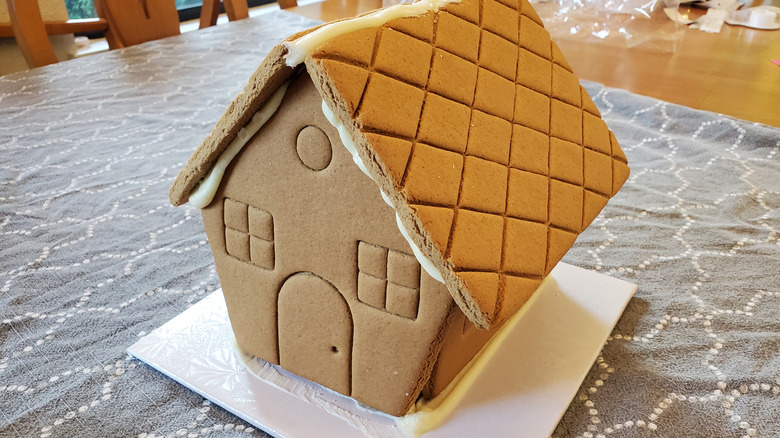
Yes, making a gingerbread house is a baking project, but it's more than that: it requires a bit of engineering as well. That's why it's so important to measure your gingerbread house pieces correctly, according to Katherine Sprung. "Even though it's technically food, this is architecture!" she says. "Your pieces need to fit together, so it's important to measure and cut them out properly."
This can be tricky if you don't know exactly what you're doing, but the good news is that you can find a lot of gingerbread house templates online, so it's not something you have to figure out on your own. Sprung has a suggestion that can make working with these templates even easier, especially if you're trying to adjust the size to make your house smaller or larger than what the original recipe calls for. "If you want to create your own custom size, I would suggest cutting out cardboard pieces first, in those dimensions, to see if they fit properly, before going through all the trouble of making dough, baking, and it not fitting right," she recommends.
Using a weak base for the gingerbread house
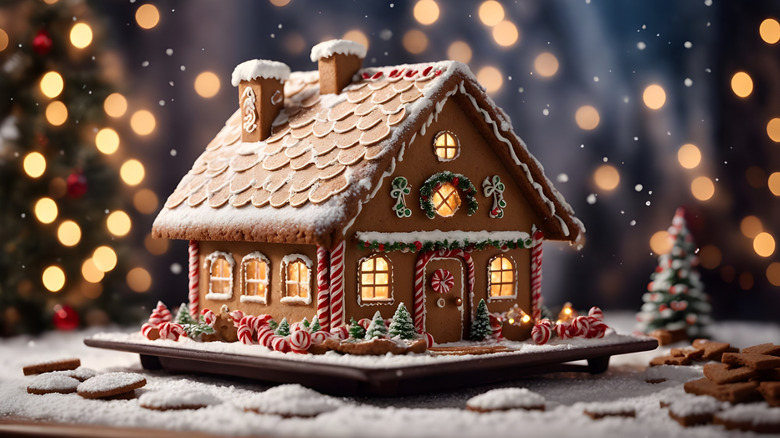
When it comes to making a gingerbread house, the structure must be strong enough to ensure that it doesn't collapse after you've spent so much time and effort constructing it. However, it's a mistake to overlook the base of the house, which can make or break its stability. "If the base of the house is too weak, the whole gingerbread house will collapse," explains Rena Awada.
There are several tools that can function as a base for your gingerbread house, and you probably already have a suitable option in your kitchen. A standard cutting board can work well, as can a disposable cardboard cake board. Cookie sheets, platters, and even cake stands can also be sturdy enough to hold up your gingerbread house — just make sure they're not flimsy. Once you've chosen the base, you just need to anchor the gingerbread to it. "You can use icing to secure the house in position," suggests Awada, "and adding more icing to the base can make the house more stable."
Keeping your gingerbread house in a warm or humid environment

You can do everything right when it comes to baking and building your gingerbread house, and it can still collapse after it spends some time in the kitchen. In this case, heat and humidity are probably your biggest challenges. These two factors can make your icing melt prematurely and soften the gingerbread pieces, which can lead to your house falling apart.
Don't let all of your hard work go to waste: Instead, find a cool, dry place in which to store your gingerbread house. If you don't have good ventilation in your kitchen and it tends to get hot (which is especially likely if you're spending a lot of time baking various holiday treats), then you should keep it elsewhere in your home. If you can't keep the gingerbread house away from heat and humidity, there are a few other steps you can take to prevent post-building structural issues. Slightly overbaking the gingerbread pieces will make them drier and more resistant to moisture, or you can protect the house with plastic wrap overnight.
Rolling out the dough too thick

Since structural issues are a common problem for gingerbread houses, you may assume that it's best to make your dough as thick as possible. That way, it'll hold up better after the house is constructed and weighed down with icing and candy, right? Well, maybe not.
According to Katherine Sprung, while you don't want your gingerbread dough to be too thin, it's a mistake to roll it out too thick, as the pieces can take too long to bake. In the amount of time it takes to get the inside of the dough as hard as it needs to be, you may end up with burned edges — probably not the look you're going for. "You want to make sure your dough is rolled out evenly, and, depending on the size of your house, somewhere between ⅛ inch to ¼ inch thick," says Sprung. Your best bet, though, is to simply follow your gingerbread house recipe to a T.