

7 US Presidents With The Most Bizarre Eating Habits
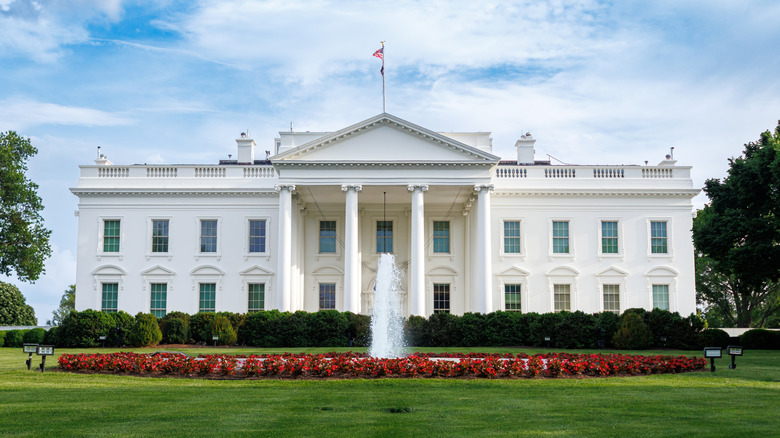
Few jobs on earth seem to twist a person's appetite in stranger ways than the U.S. presidency. Something about living under those bright lights and napping in 20-minute increments appears to warp even the most ordinary cravings. Over the centuries, commanders-in-chief have often clung to comfort food with a kind of desperate loyalty — odd sandwiches whipped up in the dead of night, condiments used with such abandon they veer into performance art, or entire meals consumed with the single-minded fervor of a man attempting to outrun his own briefings. Some leaders chugged their way through stress, others preferred food that could survive both a motorcade and a mood swing, and at least one relied on a store of soda that would concern any modern doctor.
Some presidents treated their digestive systems like informal science experiments, testing the limits of what the human body can endure in the name of keeping the republic afloat. And then there were those whose "quirks" were really just dramatic versions of habits many frazzled Americans have. We've heard of things like fast food binges, chaotic snacking, and the occasional questionable pairing of coffee and pickles.
It's easy to imagine aides quietly panicking as yet another bizarre request wafted through the West Wing kitchen, but it's also strangely charming. These eccentric presidential eating habits remind us that beneath the gravitas and the speeches and the carefully staged photographs sits a human being, clinging to whatever edible comfort will make the next impossible day feel a little easier.
George Washington
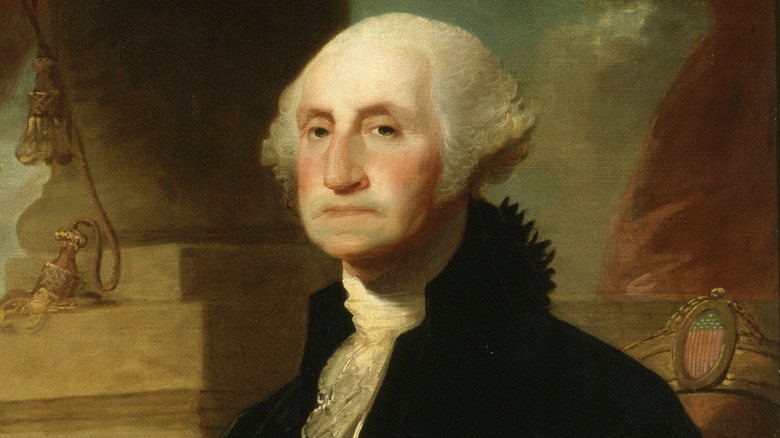
During his youth, George Washington had a peculiar, almost signature, eating habit: cracking walnuts with his own teeth. This habit is believed to account for the nearly total loss of his teeth by the time he was inaugurated in 1789. To accommodate his worsening dental condition, the first U.S. president famously employed several sets of false teeth — and no, they weren't made of wood.
Washington grew up on plantations in rural Virginia. Hands-on work and practical shortcuts were part of daily life, and using one's teeth to crack open walnuts was likely seen as convenient. His fondness for walnuts persisted into adulthood, and he made sure to keep them in abundance at Mount Vernon, cultivating black and English walnut trees at the estate. Guest accounts and household records indicate that Washington snacked on walnuts after meals, sometimes spending long stretches enjoying them while conversation carried on around him. His walnut-cracking habit tracks with the mix of practicality and stubbornness which characterized both his youth and later life, though, as mentioned, it probably contributed to the loss of his teeth.
Thomas Jefferson
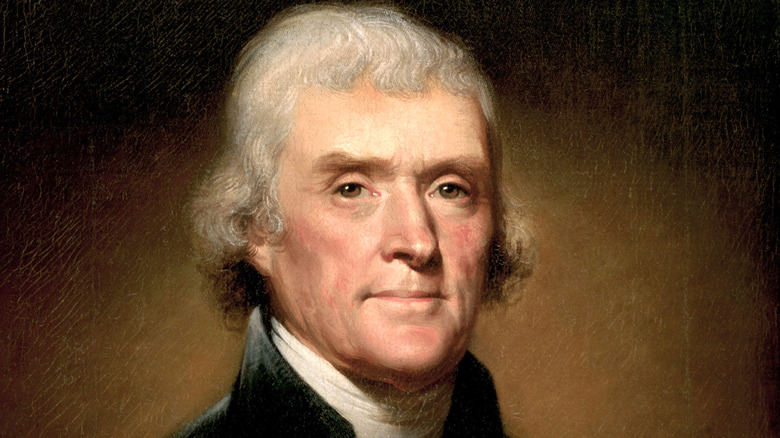
Loving ice cream might not seem too odd today, but long before freezers were even a thing, Thomas Jefferson was determined to keep it consistently on hand through Virginia's muggy summers. His personal handwritten recipe survives today in the Library of Congress. To support his ice cream habit (among other uses), Jefferson maintained an ice house at Monticello. It was a deep, insulated pit where winter ice was stored under layers of straw and wood in the hope that it would last through the warmer months. The habit wasn't especially practical, but it does show how committed he was to having the dessert readily available.
Guests at Jefferson's presidential dinners were served ice cream, sometimes tucked inside a warm pastry. (Yes, warm.) The preparation was an impressive trick for an era in which most Americans rarely encountered ice cream in any form. Historians and culinary writers generally credit Jefferson with helping to popularize the dessert in the United States simply by normalizing it at these presidential dinners, where political elites gathered.
Ulysses S. Grant
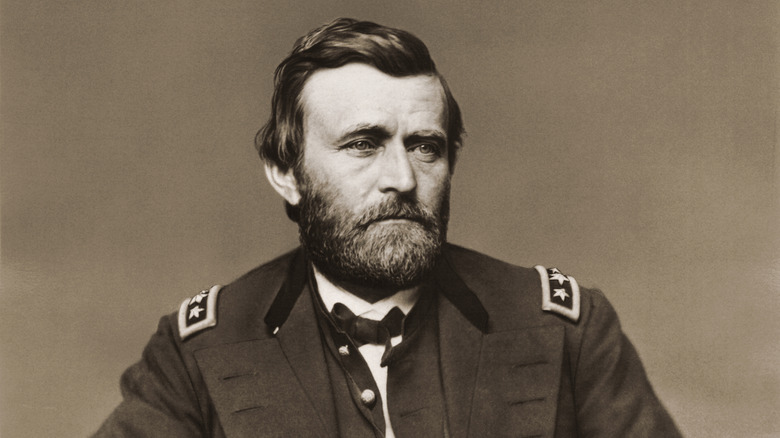
Before he became the 18th president of the United States, Ulysses S. Grant would begin his day in a resolutely heartburn-inducing but pragmatic manner: with a cucumber soaked in vinegar and a cup of black coffee. In other words, his preferred breakfast was more or less a very simple quick pickle.
Pickling cucumbers — or, more broadly, preserving them in an acidic brine — has quite a long history. The technique is several thousand years old, and ancient populations used vinegar or a salty brine to pickle the vegetables. (Cucumbers are vegetables in a culinary sense.) During the Civil War, supply lines were unpredictable, and fresh produce quickly disappeared once an army had settled into a campaign. Preserved vegetables, soaked in vinegar or brine, held up far better in transport and storage, making them a practical substitute when nothing fresh was available. They offered a little brightness and acidity in a diet that was otherwise heavy and bland. Grant's vinegar-soaked cucumber breakfast worked well in these circumstances.
Once Grant settled into the White House, however, his morning routine shifted away from the spartan cucumber and coffee of his military years. His presidential breakfasts became a little more refined, built around fare including apple pancakes, bacon, and rice puddings. Grant no longer had to eat like a man on campaign.
Lyndon B. Johnson
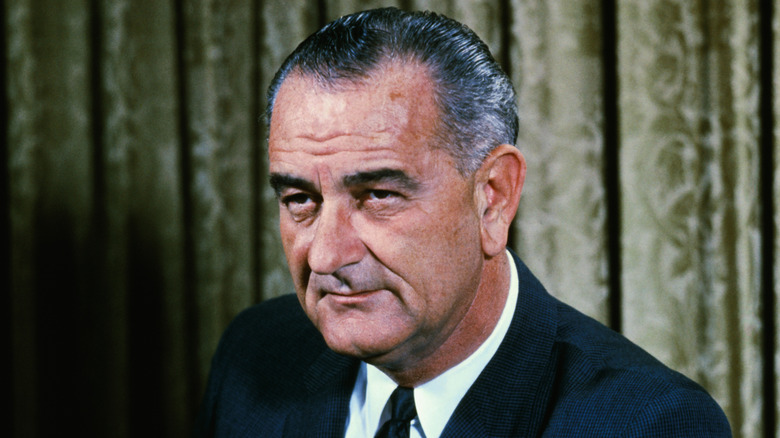
Lyndon B. Johnson's attachment to Fresca was less of a casual fondness and more of a defining feature of his daily routine. He reportedly drank large amounts of the grapefruit-flavored soda throughout the day, enough so that he had a dedicated "Fresca button" installed in his Oval Office desk. When pressed, an aide appeared with a bottle, just as they would for his other favorite beverages, like coffee, tea, or Coca-Cola. Contemporary accounts note that Johnson used Fresca almost like a conversational tool, always offering it to guests in meetings (sometimes insistently) to put them at ease or, in typical political fashion, unsettle them ever so slightly.
The call buttons themselves weren't new, and Johnson didn't invent the idea. Earlier presidents had service systems in the Oval Office to summon aides or request refreshments, and the button panel has evolved alongside the personalities of those who used it. Harry Truman, for example, is said to have never got into the habit of using buzzers; later, Barack Obama reportedly removed the beverage-specific labels in favor of a simpler setup. More recently, Donald Trump became widely known for using the same Resolute Desk call button to request Diet Cokes on demand.
The drink — mild, caffeine-free, and always at arm's length for LBJ — became part of the backdrop against which he governed. And his Fresca button wasn't just a matter of convenience; it was a visual reminder of how even the most powerful office in the world bends around the daily habits of the man occupying it.
Richard Nixon
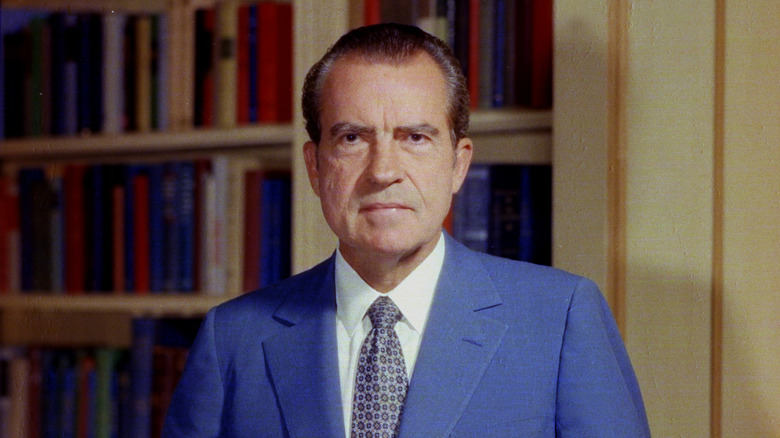
Prone to documented quirky eating habits (and none more so than his preferred breakfast), Richard Nixon liked to start his day with cottage cheese drizzled with ketchup. His physician had encouraged him to incorporate this dairy food into his diet for weight-management purposes, with cottage cheese offering a lean, protein-heavy, filling option. The combination may strike today's readers as odd and unappetizing, but for Nixon it was a nutritious choice. Adding ketchup, a habit he attributed to his grandmother, was his personal twist. It was a familiar taste to make the otherwise plain food more palatable.
Though that may sound bizarre now, Nixon's culinary tastes were part of a broader American trend in the mid-20th century toward unexpected food combinations. Recipes common in that era combined gelatin salads with both fruit and mayonnaise, as well as savory-sweet casseroles, among other pairings that today raise eyebrows. In that context, cottage cheese with ketchup was unusual, but not wildly out of step with what many Americans were eating.
White House staff remembered serving the combination frequently, highlighting that it was a small but constant fixture of Nixon's routine. Even at the infamous end of his presidency, Nixon's taste for this simple dish remained constant, though he did sometimes replace ketchup with pineapple. All in all, Nixon's cottage-cheese-with-ketchup habit speaks less to a kind of comedic bit than to a man seeking some healthy habits and efficiency in a presidency characterized by stress and scrutiny.
Gerald Ford
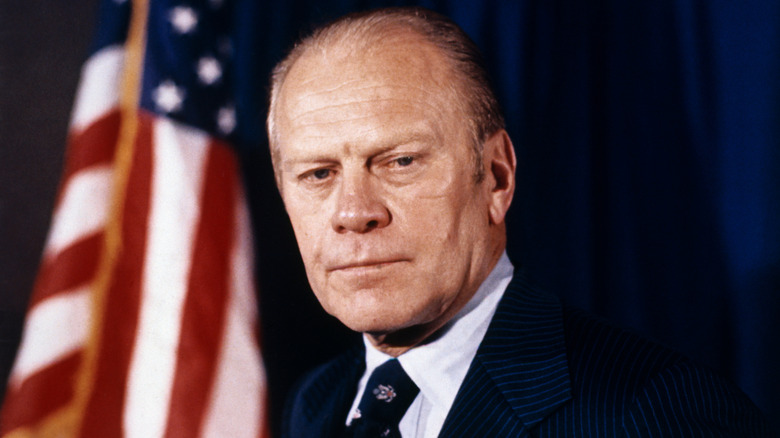
Gerald Ford had a humble, reassuring Sunday routine that spoke to the tastes of mid-1970s America: waffles with strawberries and sour cream. Although the combination (like many of the habits mentioned above) might strike us as strange, sour cream on top of a sweet breakfast item was consistent with certain culinary trends of the era — a time when Americans often played with toppings and textures by mixing savory and sweet in ways that seem a little eccentric today.
Ford's breakfasts were a family affair eaten in a more private setting than the highly orchestrated White House meals, and the waffles-and-sour-cream routine was a predictable weekly fixture. Ford cherished his scheduled Sunday breakfasts, and this simple, somewhat unconventional dish was part of the ritual that helped him recharge before a week of public duties.
At the time, sour cream as a breakfast topping may have raised some eyebrows, but as mentioned, it wasn't wholly out of step with American cooking habits of the 1960s to the '80s. Trendy cookbooks and homemaker magazines from the decade often suggested dairy-based toppings for pancakes and waffles, or even fruit, to provide a puckering counterpoint to sweet pastries. Ultimately, Ford's waffle-and-sour-cream Sundays speak to a presidency based on routine, and a quiet need for the comforts of home — even if those comforts came with a slight twist.
George H.W. Bush
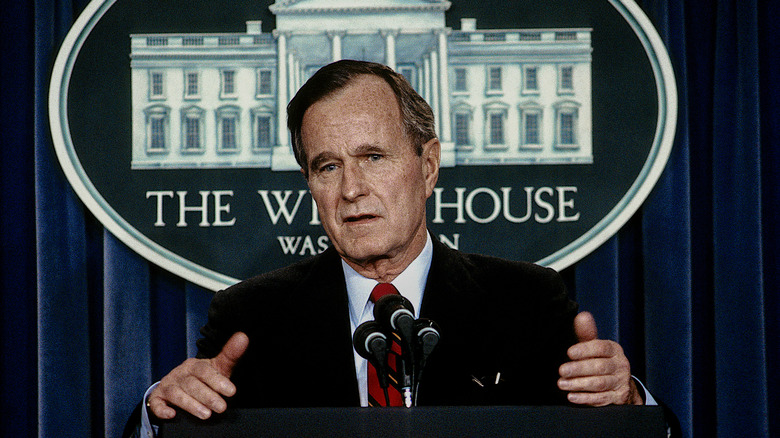
Rarely has a presidential quirk captured quite as much public humor as the outright refusal of George H.W. Bush to eat broccoli. In 1990, he did an odd thing for a politician: he announced this preference publicly in a White House press conference, famously saying, "I do not like broccoli, and I haven't liked it since I was a little kid, and my mother made me eat it. And I'm president of the United States, and I'm not going to eat any more broccoli." The candid announcement instantly caught media attention and made the first president in decades to openly ban a common vegetable from the White House the subject of both humor and cultural commentary at the time.
Bush's position was not simply a secretive indulgence, but a self-conscious, performatively comedic gesture. In announcing his dislike, the dry, self-deprecating humor opened him to ridicule from the public, playing the formality of the presidency against a relatable, albeit childish preference. The announcement also generated broad discussion of American dietary habits and the seriousness of political office. The bit ended up revealing both cultural imperatives for healthy eating and the peculiar weight that presidential opinions bear on public discussion ... which is just common knowledge today.
While avoiding certain vegetables is nothing unusual for a picky eater, Bush's refusal and personal taste made headlines, sparking discourse and a collective conversation. It's a demonstration that even admissions lacking in substance are magnified when coming from a national leader.