

You Can Freeze Eggnog, But Keep This In Mind If You Do
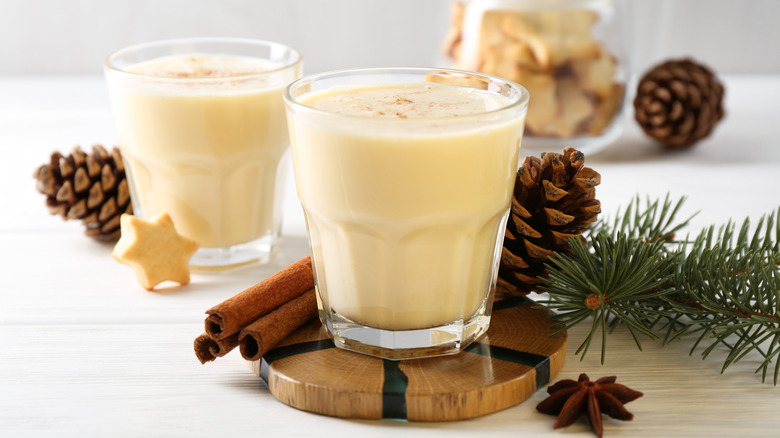
The holidays present us with a smorgasbord of sweet treats and goodies. Come the end of the year, we're basking in cookies, cakes, and pies galore. What's more, cozy seasonal beverages start to resurface. You begin to see glasses filled with hot cocoa, mulled wine, festive cranberry cocktails, and, of course, eggnog.
Traditionally made from milk, cream, sugar, and eggs, eggnog is essentially a creamy, drinkable custard — an aromatic sprinkle of nutmeg or other spices on top and a splash of brandy or bourbon are optional. No matter how it's enjoyed, though, it's synonymous with the holiday season. For many of us, it conjures up visions of Clark and Cousin Eddie enjoying their own swig of eggnog out of reindeer antler glasses in the hit movie "National Lampoon's Christmas Vacation." The thing is, eggnog doesn't have to be saved for just wintertime special occasions. If you've ever craved it in the offseason, boy, do we have good news: It can, in fact, be frozen to enjoy at a later date.
You can freeze your eggnog just as you would anything else and store it for up to six months. To ensure more quality, though, consume it within two to three months. Of course, there is one small caveat to this eggnog hack: You may not get that same rich and creamy texture back after the freezing process. It's a sacrifice many of us are willing to make, but it's still something to keep in mind.
Tips for freezing your eggnog
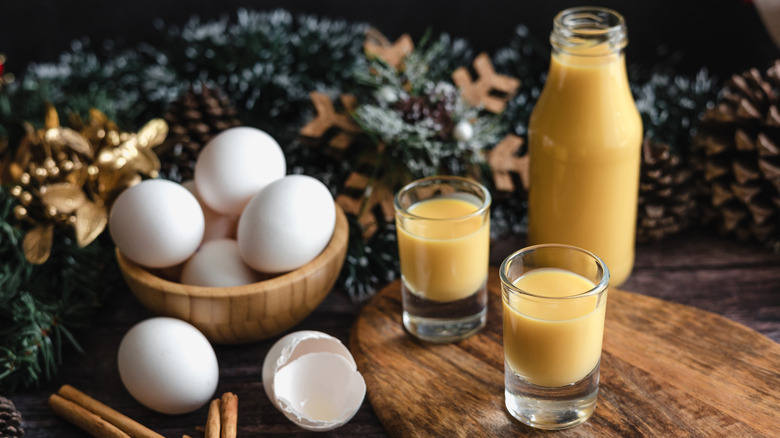
Like most foods or drinks that have been frozen, the texture of eggnog may differ slightly once it's thawed. This is primarily due to the separation of ingredients that naturally occurs, as well as the formation of ice crystals. As a result, your defrosted eggnog may appear grainy, watery, or even clumpy. Some of this may be unavoidable, but there are a few tips you can follow to get the most out of your frozen eggnog.
For commercial or store-bought eggnog, freeze it before it's been opened and before its expiration date. Additionally, stand the cartons upright when freezing the liquid initially, then place the set carton in a plastic freezer bag. When it comes time to thaw, always do it in the refrigerator rather than at room temperature to avoid bacterial growth and excess separation. Use a similar approach for homemade eggnog; just make sure to pour it into an airtight container and don't overfill it.
If you end up with a lot of separation or lumps, that can typically be remedied by shaking, stirring, or even a quick trip through the blender. If the texture still bothers you, you can always use frozen eggnog in recipes instead of drinking it straight. Try using it in rice pudding, swapping it for milk in a pumpkin pie, or turning it into an eggnog crème brûlée. There are plenty of ways to make the most of that frozen eggnog without ever noticing those pesky texture changes.