

Your Vintage Set Of Christmas Cookie Cutters Might Not Be Safe To Use. Here's How To Tell
We may receive a commission on purchases made from links.
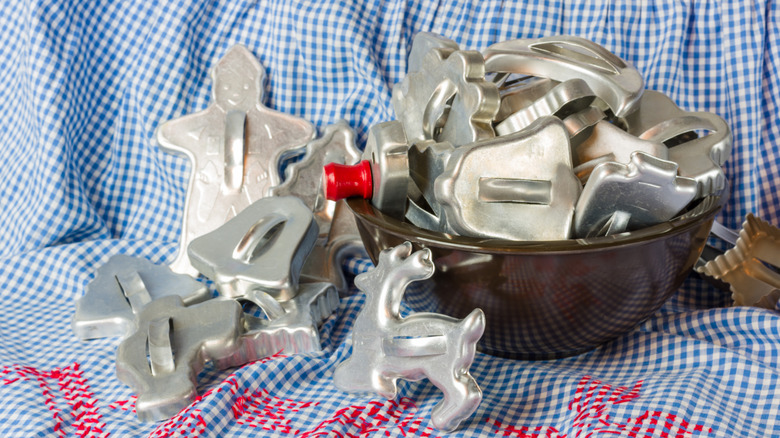
Christmas cooking is steeped in tradition. Whether that's the family recipe for stuffing or a dessert handed down from Grandma, there's a lot of history involved. Part of that includes baking Christmas cookies. While gingerbread men are a staple of the Christmas treat lineup, cookies shaped like snowmen, reindeer, and snowflakes can be just as popular. Cookie cutters are often handed down for generations, but unfortunately, some of those cookie cutters might no longer be safe to use. Before this year's batch of cookies rolls out, give your cutters a thorough inspection to make sure they're okay.
The main thing to check for with vintage cookie cutters is rust. Cookie cutters can be made from a variety of materials, and while modern ones are often plastic, others might be aluminum, tin, or stainless steel. Neither one of those rusts easily, but aluminum can tarnish and stainless steel can rust if it has not been cleaned and stored properly.
Because of the way the metal is bent in many vintage cookie cutters with their tiny corners and angles, these tools can be more vulnerable to rust than other kitchen utensils. If they weren't cleaned and dried carefully the last time they were used, some residue could have been left behind and allowed the metal to tarnish. Since you usually only use these once a year, they might have had a long time to develop rust.
The danger of rusty cookie cutters
If your cookie cutters have substantial rust on them, particles can come loose in the dough. A bigger risk is that all those little crags and crevices can hold on to bacteria. They make it difficult to clean and sanitize properly, which could put your health at risk. Small amounts of rust can be scrubbed and cleaned away if you're careful. You can even clean rust with a potato. However, if they are too rusty to fully clean, you may want to avoid using them altogether.
Another thing to look out for with vintage cookie cutters is solder joints. Old tin cookie cutters may have been soldered with lead solder joints. If that's the case, these should not be used at all. Unlike rusty cookie cutters, which could be salvaged with a good cleaning, lead solder is a major health hazard. No amount of lead consumption is safe. You could save them as a decorative memento, but they should never be used for food someone's going to eat.
There are plenty of vintage cookie cutters made of plastic as opposed to metal. These are still safe to use. Plastic started replacing metal in the 1940s, and while they may not be as valuable to a collector, there are still plenty of fun shapes that have far less risk associated with their use. You may be able to find secondhand cookie cutters on eBay and also ones like this set of 26 designs from Crethinkaty on Amazon for a reasonable price.