

9 Iconic Regional Steaks Worth Trying At Least Once
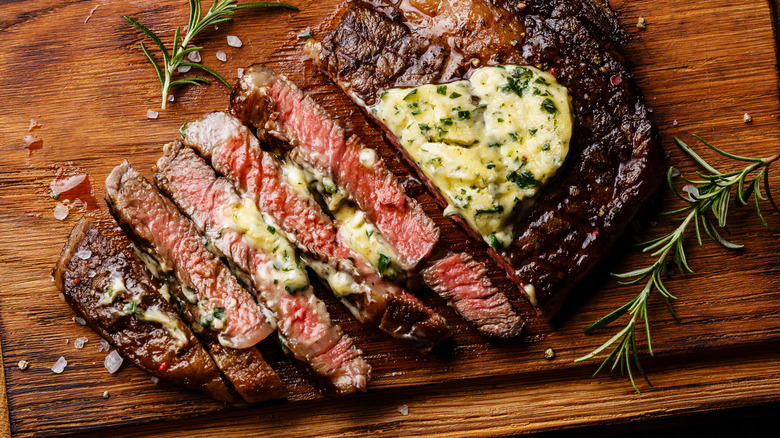
A great steak is a celebration unto itself, whether you're firing one up for an at-home dinner party or heading to a white tablecloth steakhouse for a special occasion. That perfect bite of seared, crackly crust and tender, juicy interior always hits the spot. And while you may think a steak is pretty straightforward — just meat and seasoning — there are many regional variations on this protein that will have you itching to explore beyond a basic grilled ribeye.
From coast to coast, these regional delicacies have reimagined how beef should be prepared, seasoned, cut, and served. They perfectly reflect local tastes, international influences, fresh seasonal ingredients, and culinary creativity. Some involve special cuts that were once considered throwaway, while others have unique cooking techniques or special sauces popular in the region. Behind every preparation method is a historically rich narrative that reflects the people who created it and defines how people today consume it. They aren't simply different renditions of steak; they're edible testaments to American cultural diversity, economic influence, and creativity.
If we've made you curious, here are some of the most iconic regional steaks from across America that every steak lover should experience at least once. Each tells a story about where it comes from, and each delivers flavors you absolutely have to experience for yourself.
Delmonico steak
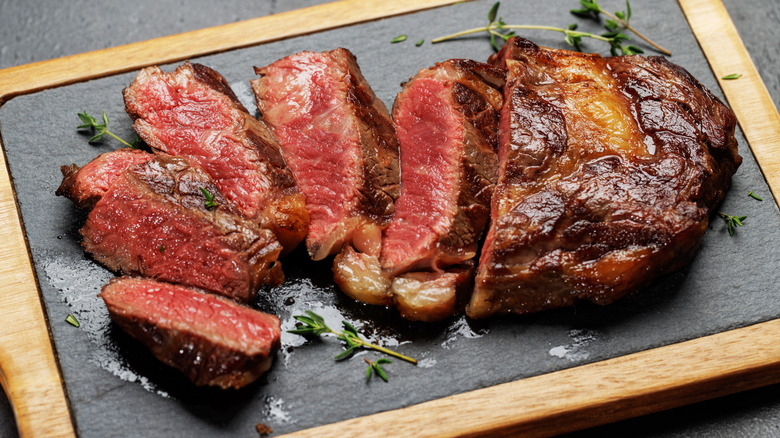
The Delmonico steak might be America's most mysterious cut of beef, and that's apt for a steak born in the country's first fine dining restaurant. Italian-Swiss immigrants John and Peter Delmonico first opened a pastry café in 1827, but it wasn't until 1837 that they opened what would become America's first fine dining restaurant at the intersection of Beaver, William, and South William Streets in New York City. The restaurant introduced refined European dining standards to America and was a significant departure from the taverns and boarding houses that dominated American dining at the time.
The Delmonico steak has remained the restaurant's signature dish, though exactly which cut is used is a hotly debated topic. While there are original recipes from Delmonico's chefs Alessandro Filippini and Charles Ranhofer, the latter of whom also created the Baked Alaska and Lobster Newberg, the restaurant's namesake steak remains a mystery. Some refer to a rib cut as the Delmonico cut, but through the years, the name has also been attached to other cuts of meat, such as a strip steak or some version of a chuck-eye.
What remains consistent is how the Delmonico steak is prepared: Thick-cut (at least 2 inches), seasoned simply with salt and pepper, broiled according to preference, and topped with herbed butter. The steak often comes with Delmonico potatoes, or lightly mashed potatoes with some cheese on top. It's no surprise that the old-school NYC steakhouse was frequented by Marilyn Monroe and John F. Kennedy. The restaurant lives on at the intersection of Beaver and William Streets, and still serves the traditional rendition of the dish.
Philly cheesesteak
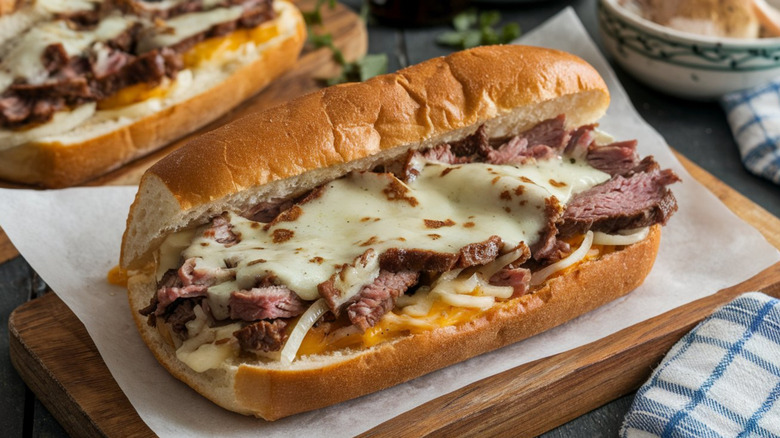
Some underdog steak recipes have transcended their cities to become worldwide culinary icons. The Philadelphia cheesesteak remains the undisputed king of this category. The story behind the Philly cheesesteak suggests that one afternoon in 1930, hot dog vendor Pat Olivieri decided to try something out-of-the-box for lunch. He switched up his regular order of wiener sausages for chopped beef and cooked it on his hot dog grill. It looked so delicious that a cab driver ordered one for himself. Word spread, and the rest, as they say, is history. The cheese came after — not until the 1940s or so — when the then-manager of Pat's King of Steaks on Ridge Avenue, Joe Lorenza, put provolone on the sandwich.
The technique behind making a classic cheesesteak is extremely straightforward. The steak, a thinly sliced ribeye or top round, is griddled and chopped on a flat-top until it is deliciously caramelized, creating those crispy, flavorful bits. Chopped grilled onions and peppers get added before the mix is stuffed between a hoagie roll and topped with melted provolone or American cheese.
Today, the modern-day Pat's King of Steaks and Geno's Steaks face off across the street from each other. If you're unsure of how iconic the restaurants are, even Sylvester Stallone's Rocky Balboa ate at Pat's in a brief scene from the franchise's first movie. Locals still debate about the best Philly cheesesteak in the city; some swear by Jim's on South Street or Dalessandro's in Roxborough in Philadelphia.
Carne asada
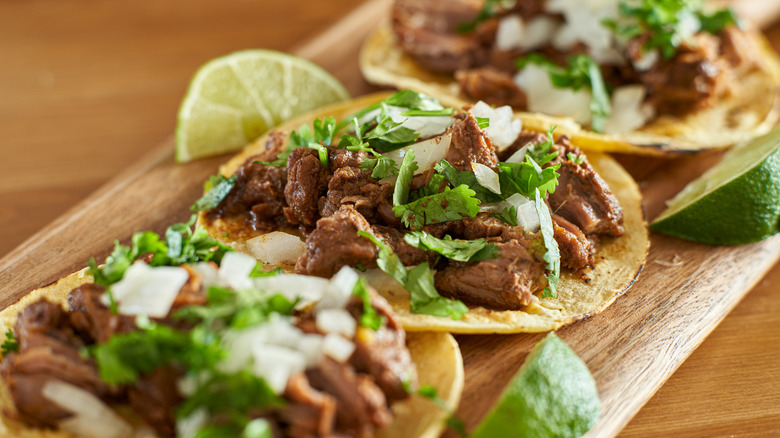
While not traditionally thought of as a "steak" dish in the classic American steakhouse sense, carne asada is by far one of the most beloved regional beef preparations in California and the Southwest. The name literally translates to "grilled meat" in Spanish and has roots in Mexico.
Carne asada uses flank or skirt steak. These tougher, affordable cuts become tender and flavorful when steeped in the delicious, acidic marinade. The meat should soak for hours, preferably overnight, in a mixture of citrus juices along with soy sauce, olive oil, and seasonings of your choice. This not only makes the meat juicy and tender, but also infuses it with bright, zesty flavors that feel fresh from the first bite.
The next step is to know how to grill the perfect carne asada. The meat needs high heat to char the exterior while keeping the interior juicy, according to your preference. That char is the charm of the dish; it adds a smoky, slightly bitter flavor that counters the freshness of the citrus. Once off the grill, the meat must rest before being sliced thin against the grain. Carne asada is particularly enjoyed stuffed in tacos or burritos, piled on a bed of nachos or fries, or even served with rice and beans.
Chicken fried steak
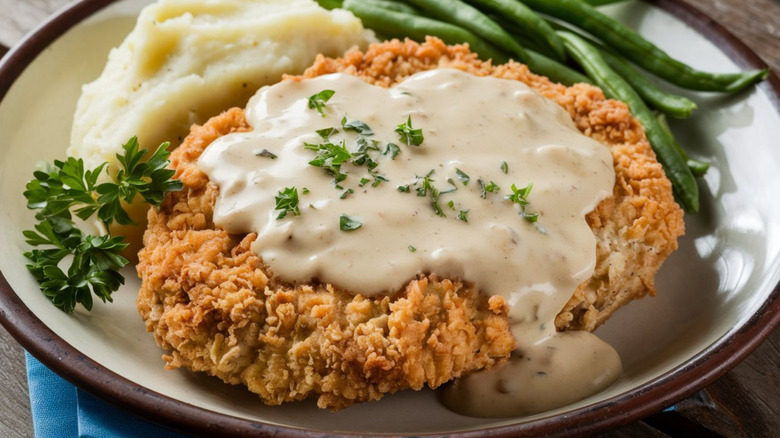
Don't let the name mislead you; there's never been any chicken in chicken fried steak. This Southern and Southwestern comfort staple is purely made with beef, but the breading that coats the exterior and the frying technique used are borrowed from classic fried chicken.
The history of chicken fried steak is somewhat murky, though most food historians agree it emerged in the late 19th century in Texas, likely adapted from German immigrants' wiener schnitzel recipes. The veal from the German recipe was replaced with a cut of tough beef, as it was easily available and affordable in the cattle country. Today, the best cut of beef for a chicken-fried steak is arguably the top sirloin.
The preparation is simple but requires a careful hand. The steak should be pounded thin, about ¼-inch thick, to tenderize it before it's dredged in seasoned flour, dipped in egg or buttermilk, dredged in flour again, and fried — just as you would do for chicken. The result is a crunchy exterior and a tender, meaty interior best served with Southern-style gravy. The thick sauce and the fried steak are an absolute match made in heaven, creating a dish that invokes regional pride. Some even enjoy serving this cowboy-happy meal with a side of mashed potatoes, biscuits, and eggs.
Porterhouse steak
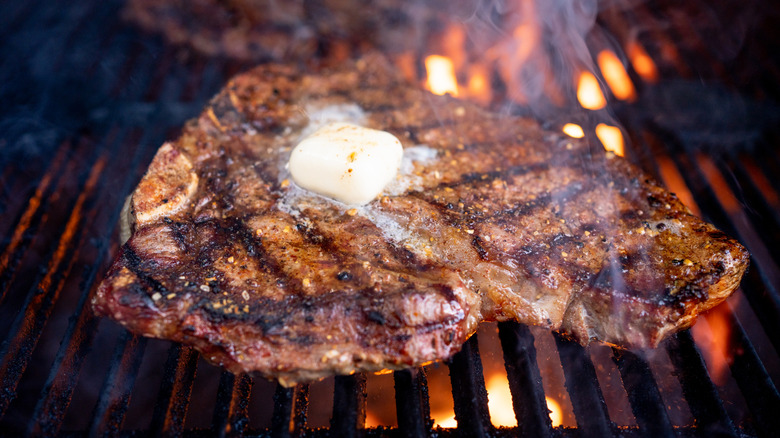
If you're looking for an indulgent meal, order the porterhouse steak. Described as the prized cut in the world of beef, this premium T-bone steak is essentially two steaks in one: a New York strip on one side of the bone and a generous portion of tenderloin on the other. It's a luxury, often weighing in at a whopping 24 ounces.
The origin of the porterhouse steak is appropriately dramatic. The most widely accepted tale dates back to 1814, in New York, where Martin Morrison operated a "porter house", which was essentially a tavern that served porter. One busy day, a hungry customer demanded his usual plate of steak, but Morrison was fresh out. The generous business owner cut a steak from the short loin he'd been saving and served it. The customer was floored by the steak, ordered another, and that's how the porterhouse steak was born.
Other cities wear the badge of the porterhouse, too. The city of Cambridge, Massachusetts, points to Zachariah B. Porter's establishment, while others believe it was named by Charles Dickens in Sandusky, Ohio.
But what makes a porterhouse different from a T-bone? It's all about the size of the tenderloin. USDA standards demand that a porterhouse have a tenderloin section of at least 1¼ inches wide at its widest point, while a T-bone's tenderloin can be as small as ½ inches. Clearly, the porterhouse is an indulgence, a luxurious one at that. If you're looking to indulge in this luxury at home, here's how to cook a porterhouse steak like Martha Stewart.
Santa Maria-style tri-tip
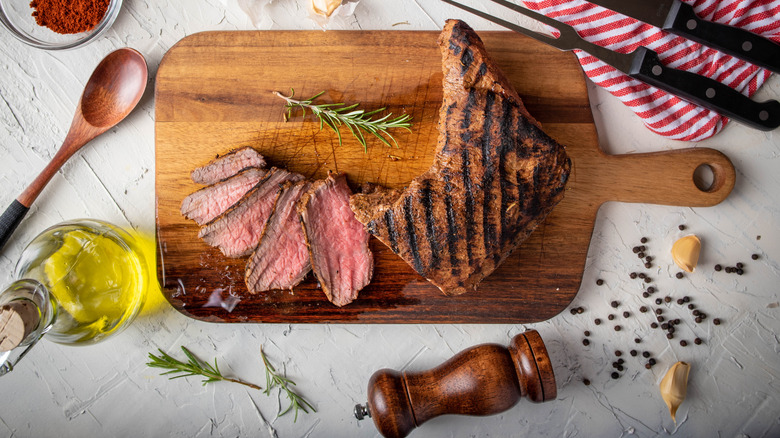
Santa Maria-style barbecue is California's submission for the most iconic steak to try. The tri-tip, a triangular cut from the bottom sirloin, was once considered a lesser cut that was often ground into hamburger meat or cut up for stew meat. But in the 1950s, California butcher Bob Schutz, decided to give this overlooked cut a chance, cooking it on the store's rotisserie. The result was nothing short of a revelation.
Tri-tip quickly became a crowd-pleaser on California's Central Coast, and for the right reasons. The recipe for the Santa Maria-style tri-tip has specific requirements, though. The meat is simply sprinkled with salt, pepper, and garlic powder; there's no need for sauce or complicated rubs. It's then grilled over red oak wood, which is crucial for that charred, smoky flavor. This native California wood burns hot and clean, imparting a robust, savory, and slightly sweet flavor that's become synonymous with Santa Maria barbecue. The meat gets a gorgeous char on the exterior while the insides stay succulent and pink — the perfect medium-rare, and the smoke complements rather than overpowers the beef. It's usually served along with a side of Santa Maria pinquito beans, pico de gallo, simple green salad, grilled vegetables, or beans, and garlic bread for that perfect California-born barbecue style meal.
Kansas City strip

The debate over whether it's a Kansas City strip or a New York strip has been around for decades, fostering both friendly and not-so-friendly arguments. But here's what most people miss: It's the same cut of beef. The Kansas City strip steak traditionally comes with the bone-in. The steak is cut from the short loin, served bone-in with a well-recognized fat cap and that thin, flat bone. The bone adds depth during the cooking process and, of course, serves as a dramatic presentation.
The Kansas City strip is classically well-marbled with a generous strip of fat lining the edge. It's often dry-aged for 21 to 28 days to deepen flavors and tenderize the meat. The traditional way to prepare it is simple: Salt, pepper, high heat on a grill or in a cast-iron skillet, and finish in an oven if needed. The bone-in steak cooks slightly differently than the boneless; the bone traps the heat, keeping the meat juicy and tender.
Kansas City, Missouri, emerged as one of America's largest meatpacking and cattle trading districts in the 20th century. As steakhouses spread eastward and slowly turned into New York City restaurants in the 1930s and 1940s, they rebranded it as the "New York strip" and served it boneless. Today, both names exist in the steak world, but call it what you want, depending on which side of the river you're on.
Baltimore pit beef
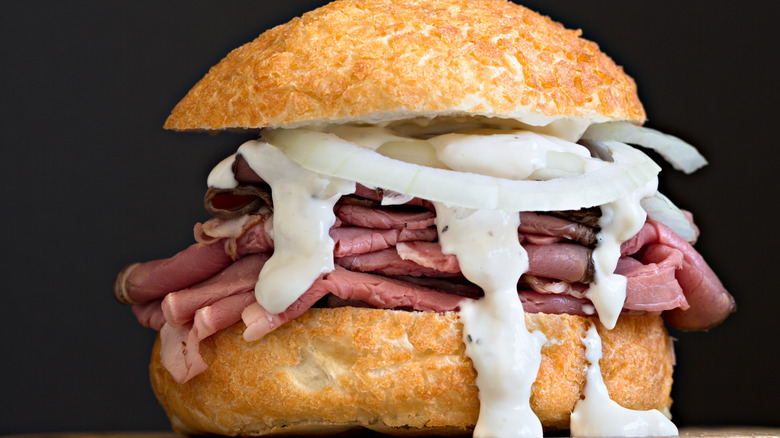
While the Baltimore pit beef isn't the most good-looking dish out there, it's still an iconic feature of roadside stands, humble shacks, and utilitarian dining rooms. Don't let the no-frills appearance fool you; this is some of the most flavorful beef you'll find in the country, and there's something very distinctly Baltimore about it.
It is said that the original pit beef emerged in the 1970s, particularly along Pulaski Highway — in the working-class neighborhoods of Baltimore. The beef cooks quickly over a hot charcoal grill, creating a distinctly charred, almost dark exterior while the insides remain pink.
The cut is essential for that traditional taste. This barbecue style uses lean cuts that would turn rubbery if cooked any other way, but the high-heat char technique builds flavor while the interior stays tender. After resting for a bit, the beef is then sliced thinly and piled high on a Kaiser roll or rye bread.
For the toppings, you absolutely must get the tiger sauce, a mixture of mayonnaise and horseradish that adds creaminess and a spicy kick, and raw white onions. Some places do barbecue sauce, too, but the classic condiment is the tiger sauce.
Miami churrasco
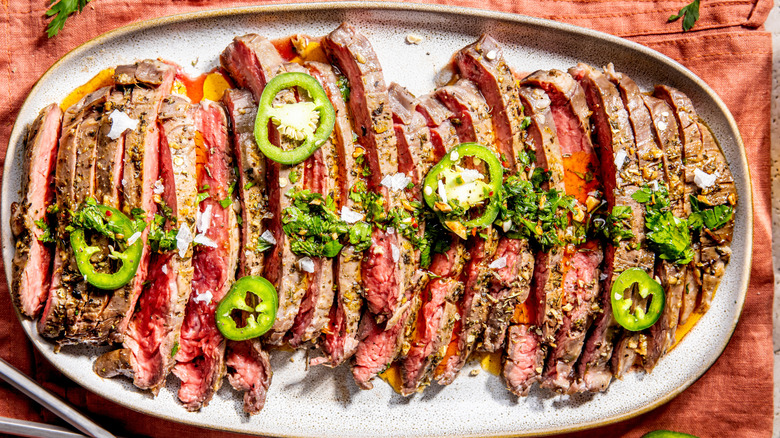
Miami's churrasco is the ultimate culinary marriage of the Brazilian churrasco and South Florida's vibrant Latin culture. It's an iconic, vital part of the city's dining scene. While churrasco translates to "grilled meat" in Spanish, they do it slightly differently in Miami, with a skirt steak prepared as the Nicaraguan immigrants would traditionally do in the 1950s.
The dish starts with a marinated grilled skirt steak; sometimes, the butcher calls it a "plate" steak. Essentially, this is a thin, flavorful cut with visible grain and great marbling. The classic Cuban-style marinade is called a mojo criollo, which features sour orange juice, garlic, cumin, and oregano that tenderizes the meat and infuses it with bright citrusy flavor.
The steak is grilled over high heat until the outside becomes nicely charred while the meat stays medium-rare. It's then sliced against the grain and served with chimichurri sauce. The popularity of the dish has transcended settings. You'll find it at restaurants like Españolita and El Toro Loco Steakhouse. The icon usually gets served with a side of yuca fries, sweet maduros (fried ripe plantains), tostones (fried green plantains), black beans and rice, and sometimes even a fried egg on top.