

7 Mistakes Everyone Makes At Salad Bars
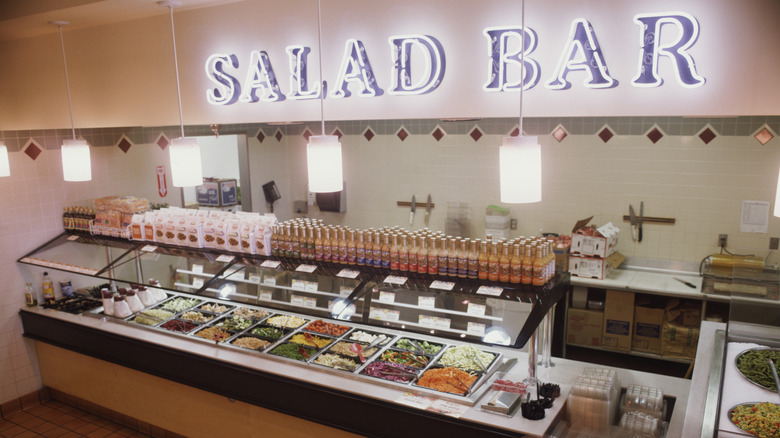
The salad bar can be many things. It can be your most nostalgic memory from a '90s Pizza Hut. It can be a vegetarian's oasis at the Brazilian steakhouse. It can be a hotel perk or the battleground for your lunchtime rush-hour Whole Foods experience. They range from tacky to elegant, and can contain almost any ingredient. COVID almost stamped out the family-style serving practice for good, but still, the salad bar has lived on. It is nothing short of an institution of the culinary world.
Most people have gone to a salad bar, or at least walk by one every few days. Whether you go to a restaurant salad bar or one at the grocery store, the process is simple enough; pick out what you would like from the ingredients displayed, add a dressing, pay up, eat, and that's the end. While the salad bar is a place of endless opportunity and choice, there are still some faux pas you may want to avoid. Those wrong answers can result in a disappointing salad, overpaying, or even someone getting sick. Here's what to avoid when you step up to the bar.
Moving tongs
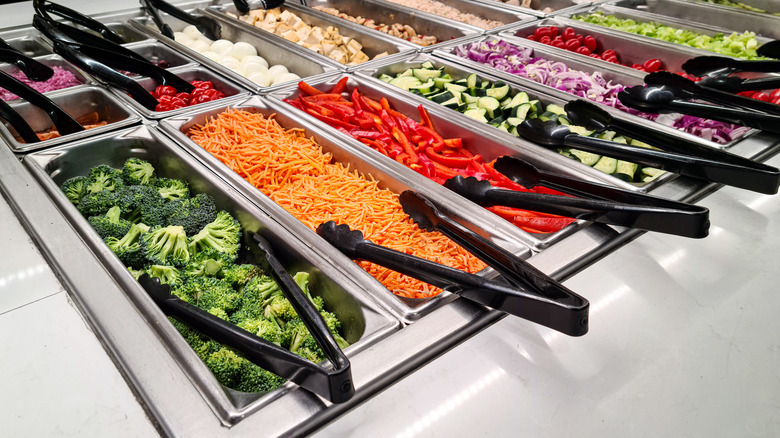
A lot is going on at a salad bar. Whether it's tongs or a serving spoon, all sections of the salad bar should, in theory, have their own vehicle for getting the food to your plate. But it's very rarely actually the case, and most of us have quickly borrowed a utensil from elsewhere. If tongs are missing from the arugula bin but there's a pair right next to them by the spinach, it may seem reasonable to just grab the arugula tongs, no harm done. But that's actually a serious health hazard, even when it comes to something as innocent as salad greens.
For every tong switch-up you do, it's essential to keep in mind just how many other people do the same thing, and they may not be doing the same swap. They may be taking the tongs from the cherry tomatoes, which were once grabbed by the egg tongs, and so on and so on. It's impossible to know what cross-contamination has occurred, which you may perpetuate and unwittingly cause foodborne illness or allergic reactions. If tongs or utensils are missing, it's best to just ask staff for a replacement serving utensil.
Cleaning up after yourself
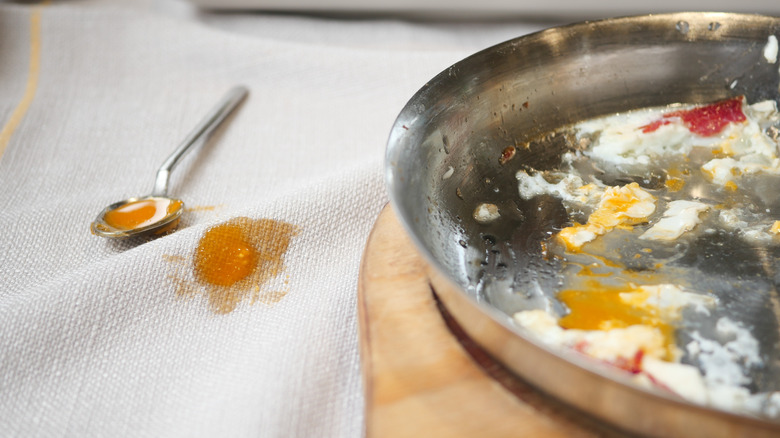
It seems polite to wipe up your own mess at the salad bar; after all, it's not a good look to drop food everywhere and walk away. But while the optics of not cleaning up yourself may seem bad, it's the more considerate thing to do—both for staff and fellow salad bar attendees.
When you clear away stray toppings or sop up spilled dressing, things only appear cleaner. The area still won't have been sanitized adequately according to the establishment's protocols. Not only that, but because it's been wiped away, staff won't know there is something to sanitize. You may also introduce cross-contamination risks based on how you clean up the mess. In the case of a salad bar spill, it's better to alert staff and let them handle it. They'll know how to properly clean and sanitize based on the spill and the surface itself.
Thinking that only animal products can get you sick
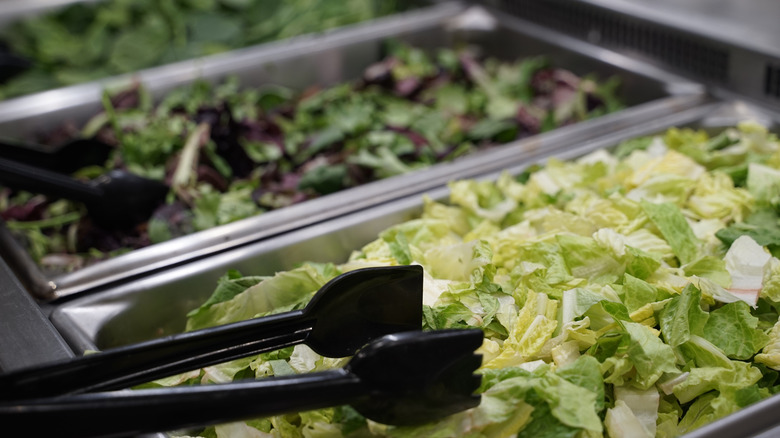
While animal proteins, eggs, and dairy are the riskiest items at the salad bar, it's a mistake to think that the risk stops there. Produce can accumulate the same harmful bacteria that causes foodborne illness. Fruits and veggies that end up at the salad bar may have been risky before they even got there; some of the biggest produce recalls have been for salad bar mainstays like salad greens and organic carrots. But produce is also susceptible to the same risks that plague meat and dairy; namely, ambient temperatures and cross-contamination. Veggies that grow in relatively warm environments, like Brussels sprouts, are especially friendly homes for illnesses like Salmonella or E. coli. Though whole tomatoes can be stored at room temperature, once cut, they should be held at cooler temperatures to prevent the growth of harmful bacteria. It's no reason to avoid the salad bar, but it's a good reason to check recall lists in advance of going out and exercising caution.
Not being strategic with the dressing
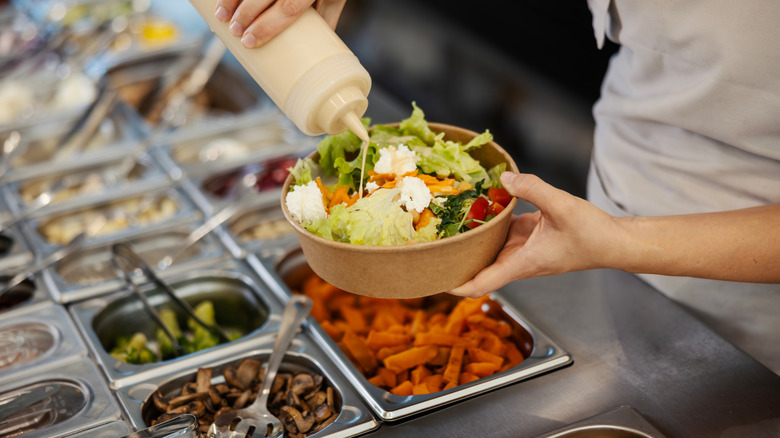
A salad is nothing without its dressing; it's what pulls the whole thing together into a decent meal instead of a vaguely unpleasant handful of leaves and veggies. But take care at any salad bar that charges you by weight: dressing can actually be one of the heaviest things on your plate. That's no reason to forgo the stuff, but it pays (literally) to be a little strategic.
If you are going to eat the salad at home, pass on the dressing at the bar and dress it there instead. If the salad bar offers little to-go containers for dressing on the side, use those; there's a chance that the cashier will not require you to add them to the scale for the final weigh-in. If you must dress the salad right then and there, go a bit sparingly to minimize how much you weigh the salad down. That being said, if a boatload of creamy Caesar is your jam, go for it. Just keep that in mind while selecting other weighty ingredients.
Adding eggs
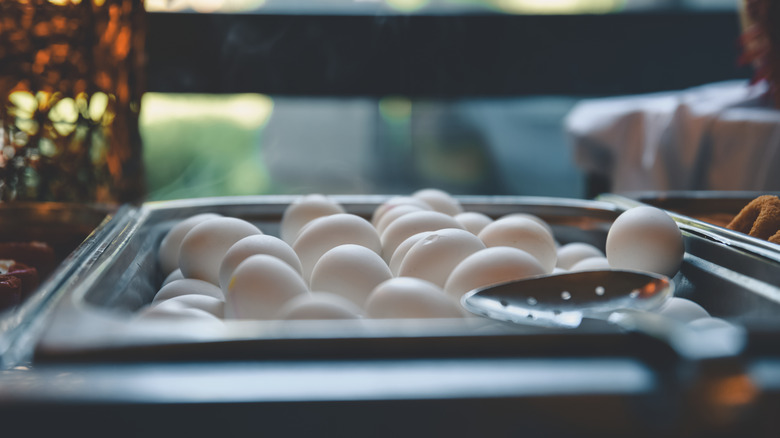
Speaking of getting the most bang for your buck at the scale, it's not an excellent idea to opt for the classic salad bar hard-boiled egg. Not exactly a hard sell already for many — even if you like eggs in your salad, a pile of eggs sitting around in a metal pan does get skeevy and increasingly unappealing over time. But even hard-boiled egg lovers should think carefully before grabbing one at any salad bar that is priced by weight.
That's because, while ingredients like beans and meats may come to mind when you think of weighty ingredients, eggs are surprisingly heavy additions. One large egg weighs about the same as 2 cups of spinach. Now, that's not to say a salad should include only the lightest ingredients; that's a one-way ticket to a sad, sad meal. Just keep in mind that while you may see a hard-boiled egg as more of a topping to your salad, it's got the weight of a star protein.
Going in without a plan
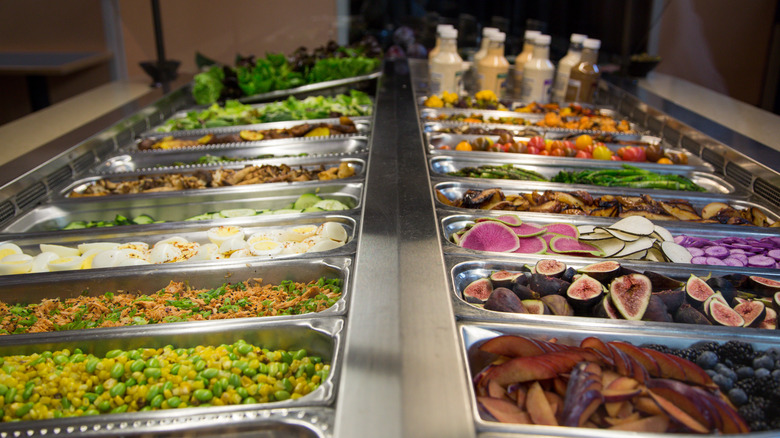
Part of the appeal of the salad bar is that it offers so much choice and variety. But the brain doesn't love that. An abundance of choice can be psychologically paralyzing, leading to more conservative ingredient choices and the neglect of new and exciting options. You may even end up abandoning the salad option altogether and going for a deli sub instead. So, while the idea of showing up and seeing what appeals to you in the moment sounds good, it may result in frustration.
How can you combat decision paralysis? Try to come up with a framework in advance. What kind of flavor profile do you want today, Greek or Italian? What's a salad you've had when you went out to eat that you loved; what was in it? You can even look up salad bar creations online for inspiration. Setting intentions in advance can really open up possibilities, and maybe next time it'll be easier to choose that radicchio mix you've always wondered about.
Not utilizing it for grocery shopping
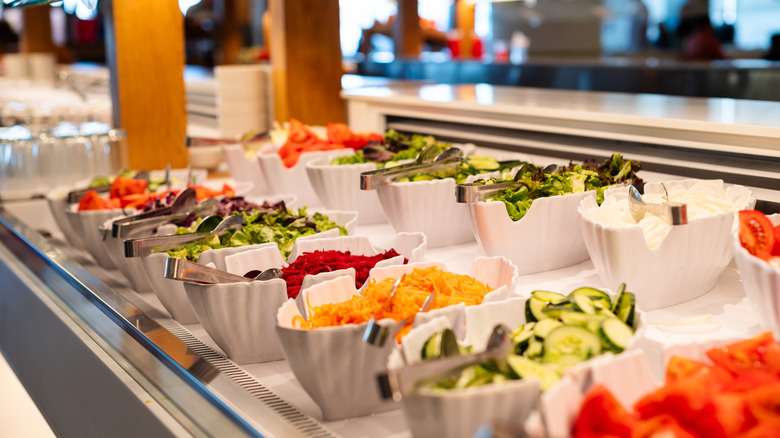
Fun fact: You don't actually need to make a salad when you use the salad bar. There's no reason why you can't use it as a way of grocery shopping for veggies; it allows you to actually choose how much of everything you want, instead of just being at the whim of the store's prepackaged options. It's a great way to waste less on ingredients.
Think about it; the greens at a salad bar are washed and refreshed multiple times a day. Compare that to a wilted bag of greens in the vegetable aisle. Which one makes sense to buy more of? It's not just the greens that are already washed and prepped. Tomatoes, onions, carrots, cheese, beets– all kinds of produce are already chopped up and ready to be tossed into whatever you are making for dinner. Not to mention all the other fare that's typically present at a salad bar: cooked grains and legumes, nuts, and meat. Shopping at the salad bar is particularly useful for buying things you need in small amounts; just make sure it doesn't end up costing more by weight than it would on the shelves.