

6 Underrated Champagne Brands You Need To Know, According To Sommeliers

Champagne is the ultimate festive splurge, but it's so much more nuanced than just a broad category of sparkling wines. Choosing between Blanc de Blancs or Blanc de Noirs, Vintage or Non Vintage, Brut or Extra Brut ... the choice can be a complex one. Plus, if you're spending more than your typical wine budget, you want to be sure you're getting something you'll like! Some people opt for the popular brands found at every shop, sticking with what they know. But just like every other type of wine, each Champagne producer has their own style (within the accepted regulations), making it well worth the effort to sample different brands.
If you don't have a reliable sales clerk at your local wine shop or the money to spend on a tasting experience and aren't sure where to start, we've got you covered. We asked some sommeliers for their favorite underrated Champagne brands to help guide your bubbly journey. Some are easier to track down, whereas others may require an online purchase, but no matter where you land, you'll make some delicious discoveries along the way. Read on for the Champagnes you should purchase the next time you're in the mood to pop open a bottle.
John Charles Ricciuti
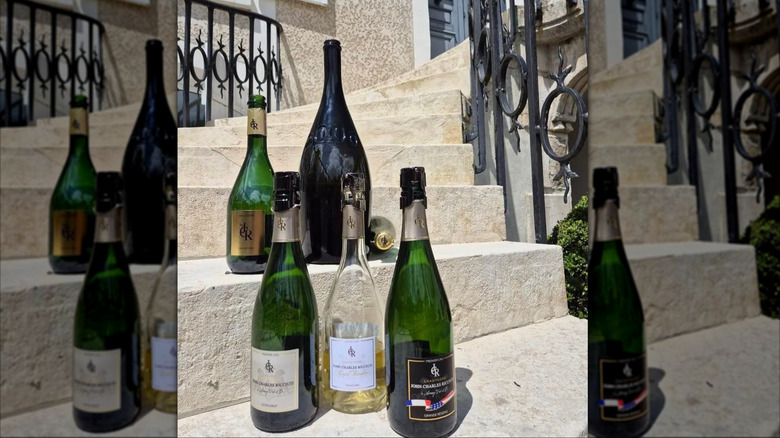
Based in New York City, Lee Musho is a sommelier with a Level 3 WSET certificate, as well as a wine (and cheese!) educator. She did not hesitate to name John Charles Ricciuti as one of her favorite underrated Champagne brands. Founded by an Italian-American immigrant in France and now run by the namesake's son, this Champagne house's legacy continues to thrive. The winery makes several cuvées, including a Brut Réserve, Brut Franco Américaine, Blanc de Blancs, Rosé, Prestige, and more, as well as bottles from select vintages.
Musho's bottle of choice is the 1er Cru Brut Réserve NV, made with equal parts pinot noir and chardonnay and the remainder pinot meunier. It's aged in stainless steel tanks and undergoes malolactic fermentation, which gives it a rich mouthfeel. Musho raves, "It's both fresh and creamy at the same time, which is a hallmark (for me) of a fab Champagne." She added that it displays notes of pear, lemon, pomelo, apple, quince, hazelnut, toasted bread, and dried apricot. It's the perfect option to serve as an aperitif or with a meal. If you need another reason to buy it, Musho notes "[it] punches well above its price."
Nicolas Feuillatte
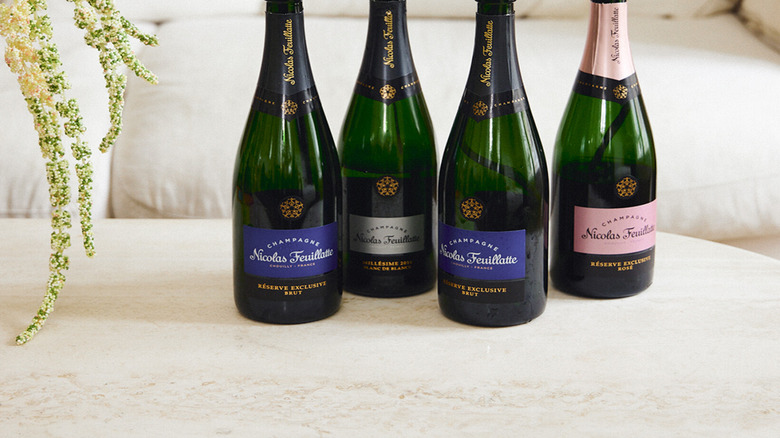
Numbers-wise, Champagne Nicolas Feuillatte is one of the top dogs in the game, with 5,000 wine growers helping to make it all happen. It's the third-largest producer by volume in the region, accounting for about half of Veuve Clicquot's production and a third of Moët et Chandon's. However, once exported to the U.S., the fraction drops considerably, accounting for about one-tenth of Veuve or Moët's U.S. sales. Next to those big players, it remains underrated, yet it offers value and consistency year after year.
Erick Ramirez, sommelier at La Cave at Wynn Las Vegas, is a fan. "When it comes to bubbles in the holiday season, I like to take a nice bottle of Nicolas Feuillatte to work parties or to family gatherings," he says. Thanks to the large number of growers, the fruit offers a diverse taste of the Champagne terroir. The brand has over a dozen different cuvées, with vintage, limited edition, and organic options among them.
"All of their wines are exceptional (especially the Tête de Cuvée Palmes d'Or), but their rosé is my go-to," Ramirez shared, "It's so versatile with food, but you can also enjoy it on its own and have a great time." It's one of the brand's iconic bottles, made with equal parts pinot noir and pinot meunier, and a splash of chardonnay. Hints of raspberries, strawberries, red currants, and blueberries are present, culminating in a fresh, clean palate.
Billecart-Salmon
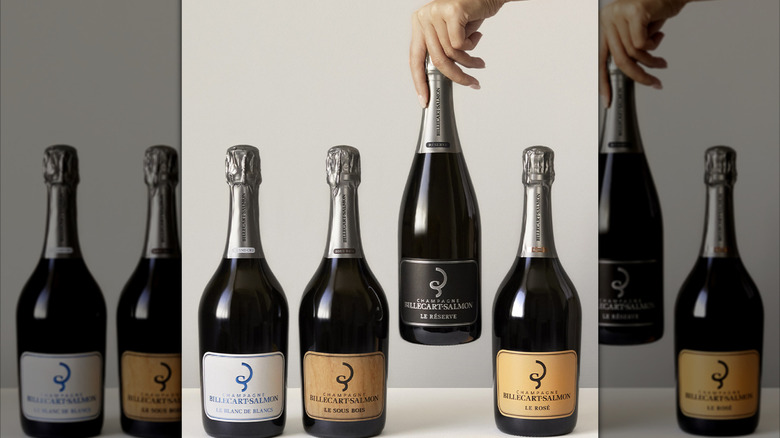
For rosé Champagne lovers in the know, Billecart-Salmon is a top choice for its refined and elegant nature. Nevertheless, Erick Ramirez comments, "I also think Billecart-Salmon is really underrated," and shares, "it's one of my favorites for celebrating something special." The Champagne house was founded in 1818, building its legacy over two centuries, and is now run by the family's seventh generation. Though not as commonplace as some of the flashier brands, Billecart-Salmon's excellence has been recognized on a global scale. Most notably, it was named as the Champagne of the Millennium in 1999 after a panel of experts tasted 150 different bottles.
"There are so many producers in Champagne that once you find one you enjoy, you tend to order it whenever you see it on a wine list," Ramirez noted. "Just like Feuillatte, I love their rosé, but their bruts are fantastic too." Indeed, the rosé cuvée is the brand's flagship wine, and well worth tasting to get a sense of the house style. It also ranked highly in Tasting Table's sommelier ranking of sparkling rosé wines. The Brut Rosé consists of a blend of chardonnay, pinot meunier, and pinot noir, resulting in a delicate, pale pink hue. It is creamy and smooth, with notes of strawberries and raspberries mingling on the palate. Hints of citrus zest add a vibrant touch, culminating in a floral taste that is endlessly pleasant to sip.
Rémy Massin
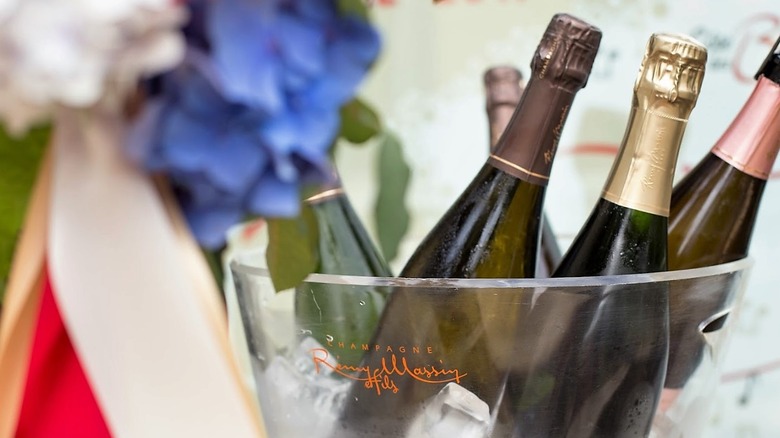
"I personally love Rémy Massin's wines," Erick Ramirez exclaims, in part because the producer makes Champagnes that are 100% pinot blanc. "Using pinot blanc as the sole grape is so underrated, but producers tend not to use this varietal because of its susceptibility to disease and its poor yield," he explains. Although pinot blanc is one of the permitted grape varieties in Champagne, it's usually just added in minimal amounts, if that. Ramirez notes, "Typically, producers stick to pinot noir, chardonnay, and pinot meunier since they perform better in the vineyard."
In a region focusing so heavily on one category of wine, novelty stands out. "Rémy Massin does such a great job using something different like pinot blanc that sometimes it may be overlooked simply because of its different choice of grape varietal," Ramirez concludes. Take his word for it, and discover this fifth-generation family-owned estate. Rémy Massin has an excellent lineup of Champagnes made with chardonnay and pinot noir, but the Champagne Club Pinot Blanc comes with Ramirez's additional seal of approval. Aromas of flowers and yellow and white fruits are present on the palate, which is lively and crisp thanks to the low dosage.
Saint-Chamant
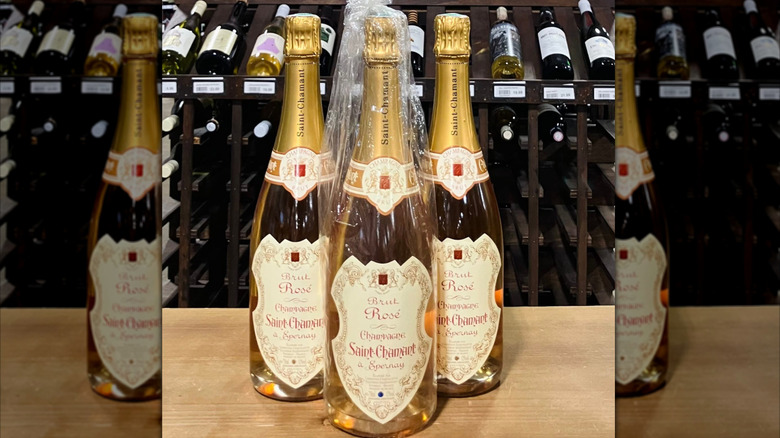
John Sumners has extensive experience in the wine industry, having worked as a sommelier, retailer, educator, consultant, writer, and more. "I ran a boutique retailer in San Francisco for many years focused almost exclusively on small-production wines of California, but I always made sure to have a little Champagne on hand," he shares, naming Saint-Chamant as one of his favorites. The Champagne house was founded in 1930, and 20 years later, it was taken over by the owners' son, Christian Coquillette, who ran the business for the next 70 years.
"In an unassuming maze of bottle-lined caves running under Épernay, Christian Coquillette produced old-school, luscious, chardonnay-centric cuvées for about 70 years," Sumners describes. In fact, around 90% of the plantings are dedicated to chardonnay. With so much chardonnay in the vineyards, the majority of the cuvées are Blanc de Blancs, though Saint-Chamant also bottles a Brut Rosé with a splash of pinot meunier.
"These wines, to me, are the epitome of Champagne as unapologetic pleasure," Sumners shared, adding, "in an age of transparency and precision, Christian's wines are a throwback to a bygone era of luxurious opulence." The winery is now run by Christian's son, Stéphane, who is loyal to his father's style and continues to uphold family tradition.
Stéphane Coquillette
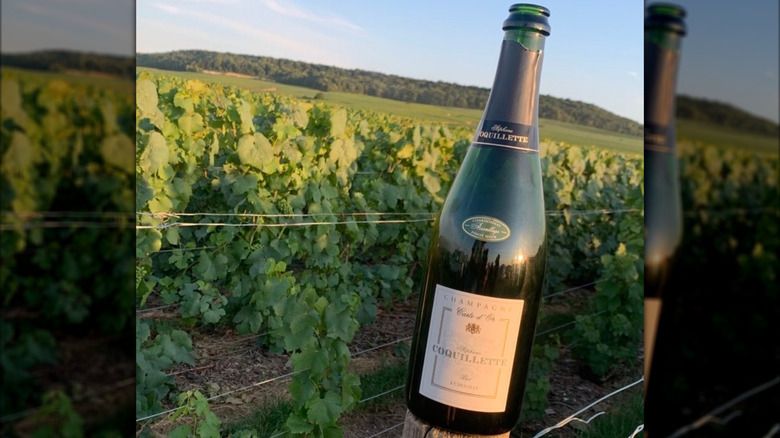
While Stéphane Coquillette continues to carry along his family legacy as part of the third generation running Saint-Chamant, he is also an independent wine grower and bottles his own brand of Champagne. John Sumners highly recommends it too, and comments, "I simply adore these wines, the family tradition, the meticulous viticulture involved, and the generational contrast in styles." He describes both brands as "'under-known' for their extraordinary quality, heritage, and contrasting styles under one family lineage," a careful balance that requires skill to master.
Stéphane Coquillette's Champagne lineup includes a Brut, Blanc de Blancs, Blanc de Noirs, Millesime, Brut Rosé, and Extra Brut cuvée, highlighting the diversity of his vineyards and the finesse of his touch in the cellar. L'Entrecoeur Brut is a great place to start your discovery of this Champagne house. Made with two parts pinot noir and one part chardonnay, it exudes elegance and freshness on the palate. It's delicate and lively, making it an excellent choice to serve at a party or as an aperitif.