

The Big Cookware Mistake That's Ruining The Taste Of Your Tomato Soup
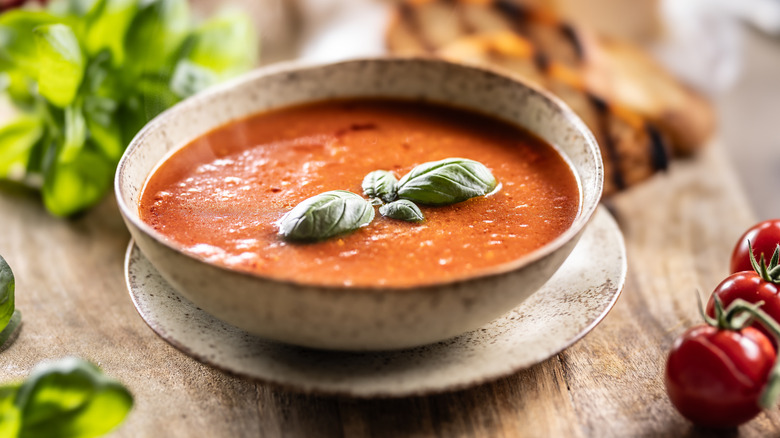
When your tomato-based dish has a slightly sharp flavor to it, it can be easy to blame the fact that the tomatoes are from a tin, or the particular brand that you're using. But if you're making a soup with fresh tomatoes and you end up with the same unpleasant tinny taste, the problem is more than likely down to the cookware that you're using.
Cookware falls broadly into two categories, reactive and non-reactive, and using reactive cookware is one of the biggest mistakes you can make when cooking with tomatoes. Tomatoes in all forms, be they fresh, tinned, pureed, or in concentrate, are highly acidic. While this acidity is what helps them bring a fresh element to your meal, it can also result in molecules of metal being released from the pan, giving your tomato soup a metallic taste.
So what counts as a non-reactive pan? This is anything made from non-reactive materials, such as stainless steel, glass, or ceramic. It also includes pans made of other materials that have been given a non-reactive coating, such as enameled cast iron or non-stick cookware. Steer clear of aluminum or copper, which are both highly reactive. Cooking tomatoes in cast iron is less black and white. Although cast iron itself is considered very reactive, a well-seasoned pan should be sufficiently protected, especially for shorter cooking times.
It's not just saucepans to consider for tomato soup
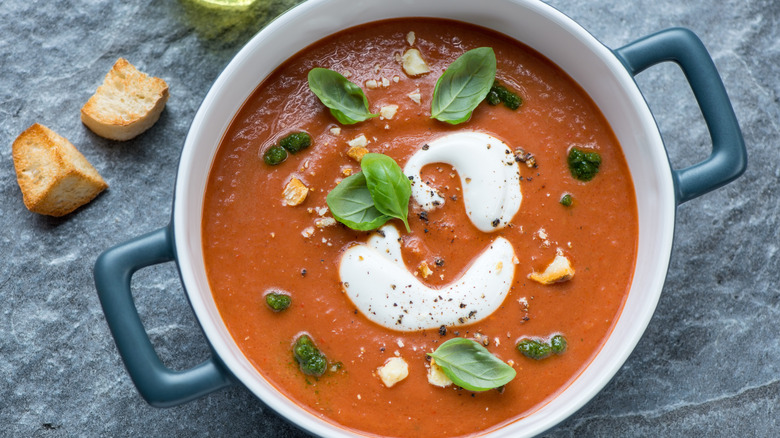
To ensure your tomato soup has the best taste, you need to consider all parts of the cooking process. If you opt for our cozy 3-ingredient tomato soup recipe for example, the tomatoes are slowly roasted in the oven before the soup comes together on the stove top.
In this case your choice of baking dish is just as important as the saucepan. Glass and ceramic oven dishes are an excellent choice for non-reactive cookware, but metal is a little trickier. Metal trays are frequently made from aluminum, due to its good heat conductivity, but this is not going to fare well with your tomatoes. If a metal tray is your only option, use parchment paper to protect the surface from the acidity. Even aluminum foil can react with tomatoes, so don't use it to line your baking sheet or cover the tomatoes while roasting.
If your tomato soup recipe requires more time on the stove top, stick to cookware that will hold up to longer exposure to acidity. Steer clear of cast iron, even if it has been seasoned, and check enamel or non-stick coatings for any chips or scratches.