

The Soil Trick That Keeps Basil Alive And Well All Throughout The Year
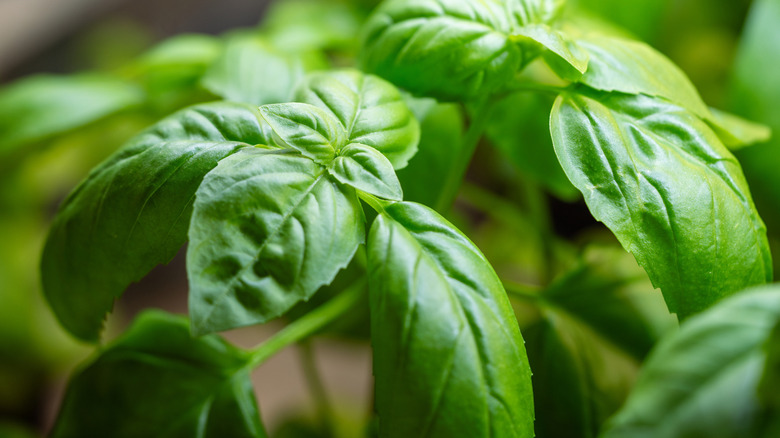
There's a certain joy in actually using the plants/herbs you've grown in your own garden during your culinary adventures. For some reason, that tomato that grew on the vine for months just tastes so much sweeter than the one you picked up on your last grocery store haul. Gardening can come with its own set of challenges, though, such as mint plants overtaking the garden bed or basil plants wilting long before you're ready to use them in your red sauce recipe. In a recent breakdown of 16 essential tips on growing basil all year round, our in-house expert Kenny Jarvis let us in on a basil-growing secret: refreshing the soil periodically.
While it can be tempting to stick new basil sprouts in a previously used pot of soil, it's important to refresh the soil for every new growth. Whether you want to grow basil in a pot or a raised garden box, begin by weeding, getting rid of any possible debris that might be inhibiting the soil. Next, use a fork or garden rake to gently reorient the top few inches of the soil before adding organic material, such as compost, worm castings, or aged animal manure. These simple actions will keep your basil extra happy all year round, even existing plants. For those herbs that have been around for a while, Jarvis recommends replacing "the top few inches of soil a few times a year if it starts looking dry and lifeless."
What refreshing the soil can do for your basil
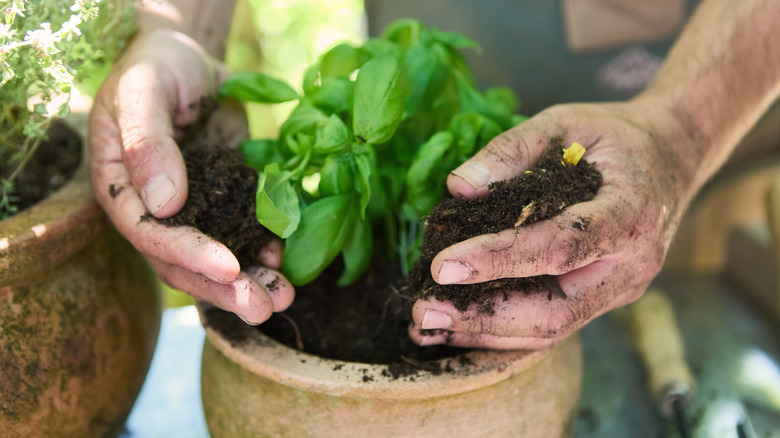
According to Jarvis, it's important to refresh your soil every now and then because "even with regular feeding, plants will eventually use up all the nutrients in the soil." Plus, soil can become compact and brittle over time, severely impacting its ability to hold water and oxygen, which leads to unhappy basil plants. Refreshing the soil in between uses is an almost guaranteed way to ensure that you can use the soil again for future planting needs and your basil plants will grow healthier than ever before. Just don't forget to trim and prune the plant regularly, which can help keep your basil from turning bitter.
Just because you're refreshing the soil doesn't necessarily mean you're wasting it or need to dispose of it. As long as the plants previously inhabiting the soil bed weren't riddled with pests or disease, you can add the old soil to a separate pile and prepare it for rejuvenation. Additionally, our expert likes to "put used soil in [the] compost pile so that it can rejuvenate once again," stronger and more nutrient-dense than when it began (here's our ultimate guide to composting at home). Healthy soil, plus a periodic refresh with new minerals, equals a nutrient-rich soil supply perfect for keeping basil thriving at any point in the year.