

A Convenient Way To Clean Your Kitchen Backsplash Is Sitting In Your Bathroom Right Now
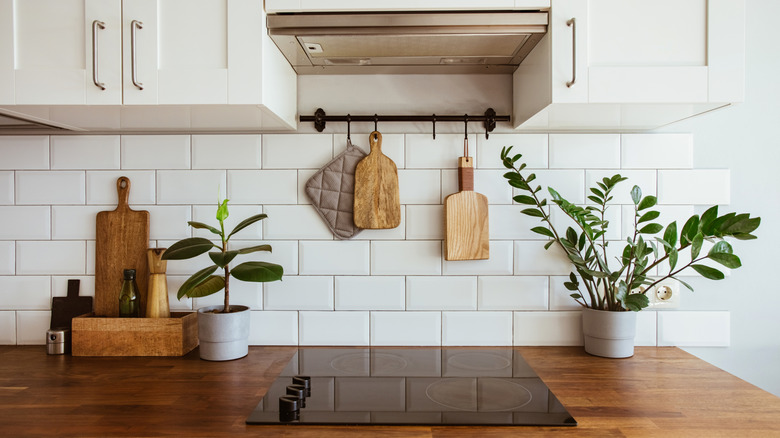
Bubbling stew and sputtering oil — no, that's not an incantation; it's just the nightmare existence of your poor, battered backsplash. Keeping this surface clean can feel like a never-ending battle, but there is a convenient solution on hand. In fact, it's already sitting in your bathroom as toothpaste may be the trick to a gleaming backsplash.
Armed with a tube of toothpaste and a toothbrush, targeting dirty tiles and grout is easy. The process is simple: Wipe the backsplash with a water-soaked cloth or sponge, apply toothpaste liberally, scrub with the toothbrush, then rinse. It's a strategy to nail before investing in the evolving trend of mosaic backsplashes. And, for extremely dirty surfaces? Amplify the grease-lifting results with a sneaky splash of white vinegar.
Forget complicated instructions and harsh chemicals. The bristles of a toothbrush — obviously a designated "cleaning" tool, not your own — are designed to remove stubborn items from awkward crevices. The paste itself contains mild abrasives, like calcium carbonate, which lift stains while removing grime. Check the ingredients label, too. Many toothpastes also contain baking soda (an alkaline notorious for its odor-eliminating properties) and the disinfectant, hydrogen peroxide. That's an impressive concoction for blitzing your backsplash clean.
Will any toothpaste do the trick?
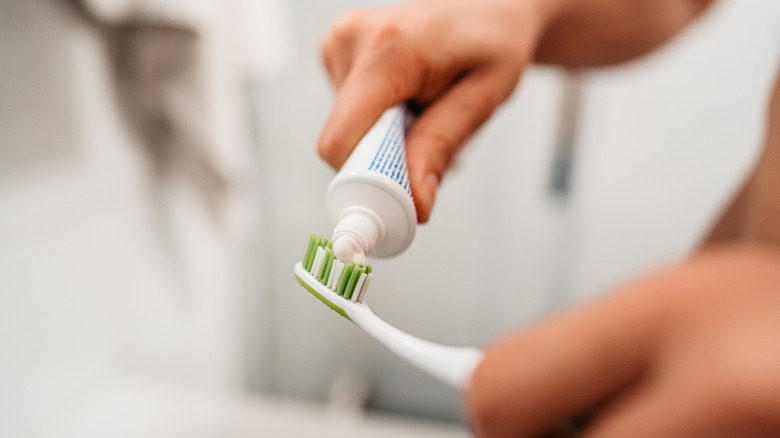
Grabbing any old toothpaste from your bathroom cupboard could spell disaster, so proceed with caution. Yes, some pastes perform better than others. Don't just scan the ingredients for baking soda and hydrogen peroxide, though. Color is an instant eliminator. To clean a backsplash, toothpaste must be white and non-gel. Anything colorful risks staining.
Unfortunately, there's another caveat for this hack. As toothpaste is an abrasive, it might scratch certain kitchen backsplash materials. Avoid using this trick on metal, glass, and natural stone – especially the latter, which is also sensitive to anything with a harsh pH. Instead, these surfaces benefit from material-specific cleaning products, or at least tools and solutions that are non-abrasive and pH-neutral. It's frustrating, but ultimately, it's the hidden drawback of some backsplash tiles that no one talks about. So, when planning a kitchen remodel, remember to thoroughly evaluate each material's pros and cons.
Everyone loves convenient cleaning hacks, but patience is key with this toothpaste trick. Conduct a small patch test before applying toothpaste to your entire backsplash, even if the material seems suitable. Damage is easier to fix (or live with) when it doesn't cover an entire wall. Ultimately, it's better to be safe than sorry.