

The Simple Mistake That Could Be Stunting The Growth Of Your Basil Plant
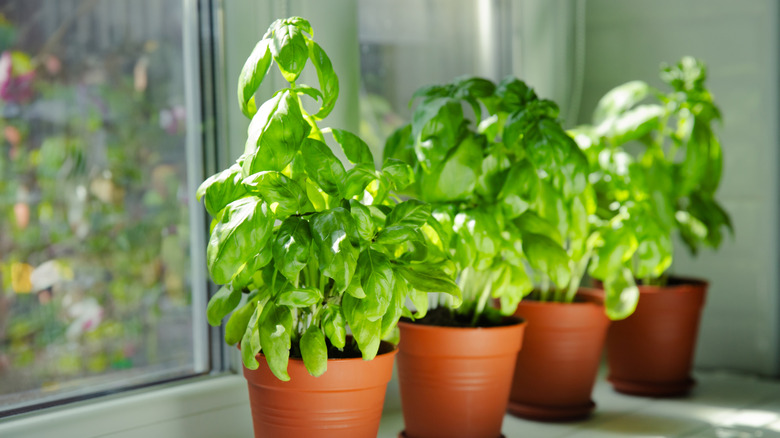
Every cook-turned-novice-gardener starts with the dream of plucking fresh basil whenever they need it, but quickly runs into all the mysterious difficulties of growing fresh herbs. Because it's the type of ingredient where you often only need a little bit at a time, basil is a perfect choice for starting your very own herb garden. However, people who are beginners to growing basil usually run into an issue where the plant looks fine, only it grows very slowly or produces small, barely-usable leaves. You might think it's not getting enough sunlight or water, but the problem is often much simpler than that. According to our expert Kenny Jarvis, a stunted basil plant just needs a bigger pot.
If you're committed to following all the essential steps for growing healthy basil all year round, you'll find the pot makes a world of difference in numerous ways. Basil plants need space for their root systems to develop, or else the plant won't grow to its fullest. If you are planting your herb in a pot, Jarvis shares that the absolute minimum size should be six inches in diameter — even bigger is better. If you are planting basil in a pot or planter with other herbs or multiple basil plants, you want a minimum of four inches of space between each plant, as well as a minimum depth of four inches of soil. With extra space and proper care your basil plant should be able to grow to at least a foot in height.
Small basil plants are often a sign your pot isn't big enough
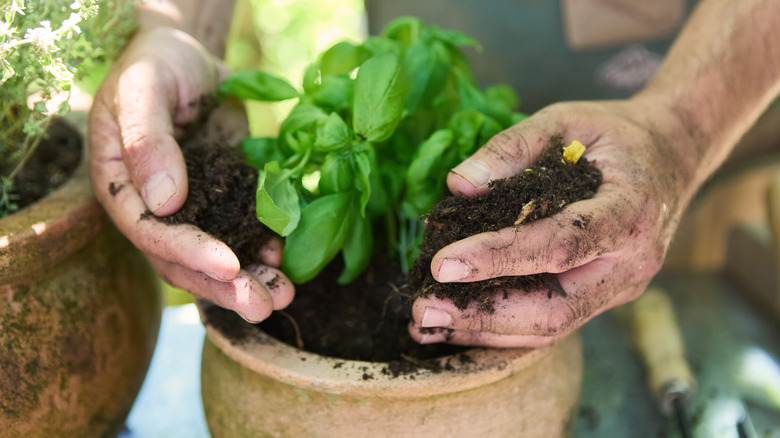
While plants full of large basil leaves are the biggest upside of using the right pot, it will also make caring for the plant easier. Basil likes moist soil, but it also needs to be well-drained. Using a large pot will help prevent the soil from getting soggy, and make sure moisture is more evenly dispersed. Large, hearty basil plants are also more resistant to problems than small, delicate ones. With larger and stronger stems, basil plants can survive stressful situations longer, so one mistake from a beginner won't risk ruining the basil.
Best of all, larger basil plants mean larger harvests. To keep your plant healthy you shouldn't be picking more than one-third of the leaves at a time. Of course, larger plants mean that modest fraction is going to yield a lot more basil. If you want to make a more basil-heavy recipe like pesto without compromising your plant, then you're going to need a pretty big one.
Finally, as your freshly repotted basil plant starts growing to its full potential, you're going to want to prune it so it produces more leaves. Once each stem grows to six inches in length they should be pared back, just above the lowest set of leaves. This will encourage branching, and provide you with even more delicious basil. With the right pot for your plant, you'll be amazed at just how much you can actually grow.