

'Surprise, It's Not $500' — This Old-School Juicer Made A Major Comeback In 2025
We may receive a commission on purchases made from links.
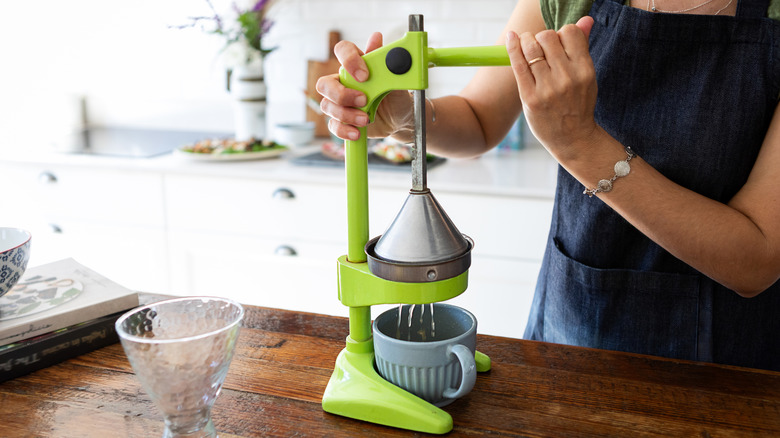
Manual juicers are making a major comeback in favor of their electric counterparts. This is in part because old-school kitchen gadgets are often much less expensive, as well as easier to use and clean. One vintage kitchen gadget that has taken social media by storm is an inexpensive cast iron juicer that allows you to juice several oranges in minutes.
Though called a cast iron juicer, professional manual juicers are actually typically made from cast aluminum. They are lightweight, easy to clean, and affordable. With fewer moving parts, they are also less likely to break down over time. And because this juicer is manual, you can use it anywhere, even if you don't have access to electricity.
Best of all, compared to electric juicers that have many intricate parts that need to be removed for cleaning, manual juicers are simple and streamlined. After you're done juicing, just take off the press and strainer and wash them by hand. While electric juicers or blenders can take 20-30 minutes for juicing and clean-up, with a manual juicer the whole process takes less than five minutes. As one person commented on Jordan Howlett's Instagram post about these old-school juicers, "surprise surprise, it's NOT $500! let me go get one."
The rise and fall of manual home juicers – and their comeback
Small citrus presses and manual juicers have been in use since the 16th century. By the 18th century, people were using small, handheld citrus presses made of clay or ceramic. In 1860, a patent was granted for a manual cast iron juicer that operated via a lever and fulcrum. This was more durable and powerful than a handheld press, but still small enough to be used in homes.
In the 1930s, the first home juicer was patented. The Norwalk featured two parts: a fruit grinder and a hydraulic fruit press. It remained popular until the '50s, when the electric centrifugal juicer was developed. This model used a rapidly spinning basket to forcefully mash fruit into pieces to extract the juice.
As home juicing took off and production methods became more advanced and machines less expensive to manufacture, more households turned to electric juicers. However, modern consumers are more budget-conscious and eco-friendly. Rather than investing in single-use appliances that just take up space and will end up in a landfill in a few years, they are turning to secondhand appliances and gadgets that are simpler and less expensive.
You can find genuine vintage manual juicers at thrift stores and yard sales. You can also buy them online on sites like ebay. They range in price from $24 to $75, which is half the price of many of the best cold press juicers. You can even buy a new professional juicer on Amazon. The Eurolux cast iron commercial grade manual citrus juicer is $99.99 and available in four colors.