

9 Ways To Sneak Protein Into Your Morning Coffee

At this stage, we've all probably heard that we should be eating more protein. In 2025, we have seen this essential macronutrient shoot to the top of the cultural consciousness, with influencers and food brands racing to align themselves with it. Protein is important; there's no arguing with that. To name just a few of its roles in the body, it maintains muscles, helps heal wounds, plays an instrumental role in creating and repairing cells, and makes sure our hormones are working properly. In other words, we'd be lost (and probably dead) without it. For obvious reasons, many of us try to incorporate it into our diets wherever we can, whether it's by eating more Greek yogurt or dumping protein powder into a daily smoothie. But one unexpected avenue to explore is your morning cup of coffee.
Everyone has their own way of imbibing this caffeinated beverage. Some of us line up each morning for an expertly crafted, artfully presented latte. Others just shake a tablespoon of instant granules into some hot water. But no matter how you drink it, there are sneaky ways to add some protein into the mix, some of which you'll hardly notice. It's worth noting that if you're already supplementing your diet with this wildly popular macronutrient, you may not need any more. If you're wondering how much protein is too much, you'll have to get a calculator and start doing some math, but chances are, a few extra grams in your coffee will help, not hurt.
Add your favorite protein powder
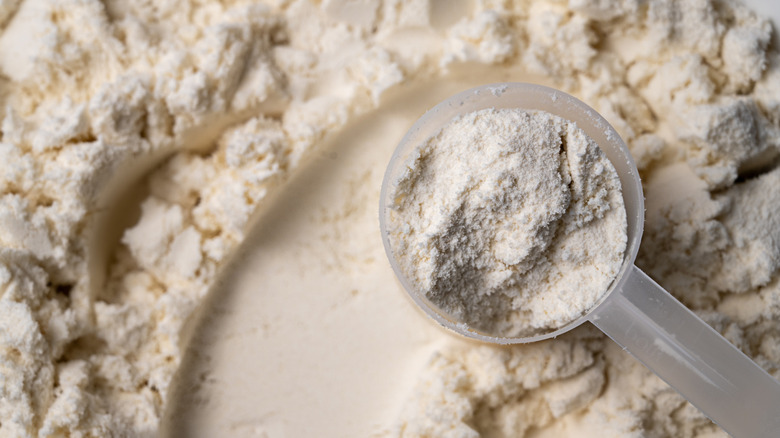
The easiest way to add a lot of protein to your coffee is to simply use protein powder. It's as simple as stirring it in. Depending on the type of protein powder you're using, this option could net you an extra 20 grams or more of protein, which, depending on your weight, sex, height, and activity level, could be nearly half of what you need in a whole day.
The downside of adding protein powder to your coffee is that there is no way to mask its presence. Unless you're chugging a liter of coffee at a time (which would present a whole other set of problems), there will be no way to hide the texture of the powder, let alone the flavor. Your coffee will thicken and maybe even have a grittiness to it, and for some, that could be a dealbreaker. If you like the idea of a thicker consistency and enjoy adding flavors to your cup of joe anyway, the sky is the limit. There are countless protein powder options out there, running the gamut from unflavored to salted caramel and birthday cake. If you're new to the whole thing, we've compiled a list of 16 protein powders that actually taste good to help you choose the one that's right for you.
Substitute other vegan milks with soy milk or pea milk
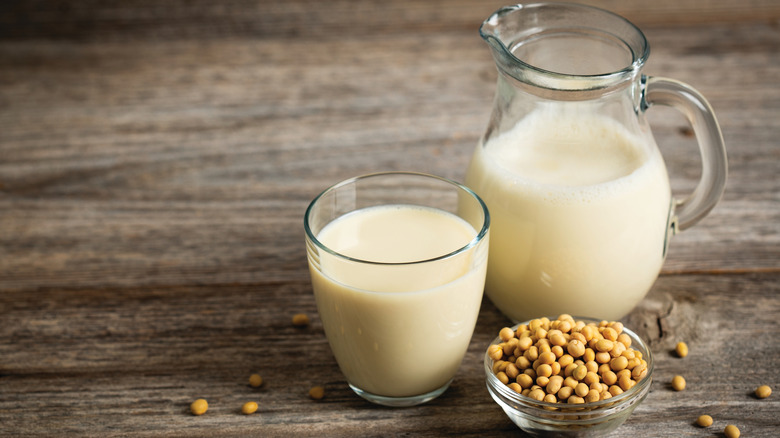
When it comes to protein in milk, regular cow's milk is tough to beat. One cup of whole milk contains about 8 grams of protein, which will put a significant dent into your recommended daily intake. However, if you don't like adding dairy to your coffee, whether it's for health reasons, ethical reasons, or you simply prefer the taste of non-dairy milks, there are ways to maximize how much protein you're getting. One cup of Oatly Barista milk only contains 3 grams of protein, while 1 cup of unsweetened Almond Breeze almond milk contains a scant 1 gram. Soy milk and pea milk are a different story, containing about 7 and 8 grams per cup, respectively.
Of course, protein is just one of the factors that you'll be considering when choosing a plant-based milk. Flavor and consistency are just as important. When we ranked the best and worst plant-based milks for coffee, soy milk ranked low because of its strong flavor, while pea milk ranked quite high due to its surprisingly subtle flavor and creamy texture. Ultimately, the choice should be based on your own preferences, but both of these plant-based milks will give you as much protein as cow's milk and significantly more than most plant-based alternatives.
Make Scandinavian egg coffee

Some cultures had high-protein coffee long before the macronutrient became all the rage. Since the 1800s, Scandinavians have been adding raw egg to their coffee, providing a boost of protein whether they intended to or not. The idea behind the technique was more about clarification than nutrition. The process involves mixing a raw egg with the coffee grounds before brewing, creating a slightly moist, clumpy mixture that doesn't form as much sediment at the bottom of your cup as it normally would.
One medium-sized egg contains about 6 grams of protein, which is more than a cup of most non-dairy milks. It's important to note that Scandinavian egg coffee is usually made in large quantities, meaning that the egg will be spread across as many as a dozen servings. That cuts down significantly on the individual protein content, but you could always experiment with adding a full egg to a smaller amount of coffee grounds.
We should mention that the technique for brewing the coffee in this case involves simmering the coffee grounds. It's not clear how this method would work if you were using an Aeropress or a V60. However, one of the benefits that people who make it point out is that it removes some of the bitterness from the coffee. If you're working with grounds that are not very high quality, this brewing method will hit two birds with one stone by providing protein and a less bitter brew.
Add a little nut butter
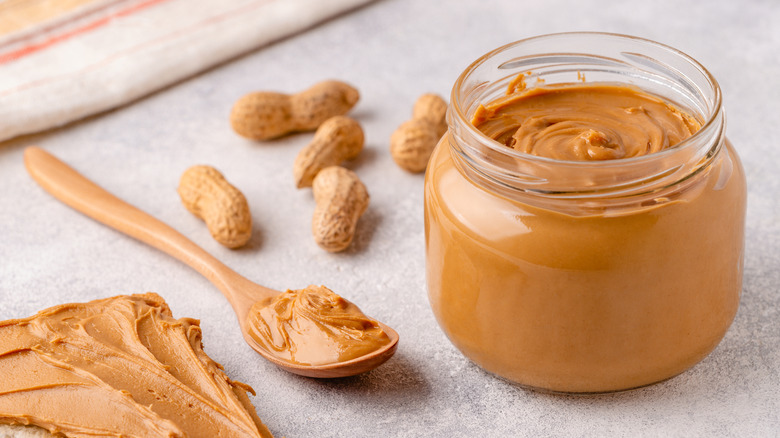
Nut-based milk is a popular substitute for dairy milk, so why not go the extra step and add nut butter as well? One tablespoon of peanut butter without added sugar or oil contains about 4 grams of protein, which is four times more than a whole cup of almond milk. Since nut butter is much thicker than coffee and milk, you may want to use a blender to mix all the ingredients and get a uniform consistency. Otherwise, you may end up with floating clumps of nut butter. For this reason, you should also stick with smooth nut butter rather than chunky, unless you like chewing your coffee.
You can use any type of nut butter in your coffee. Peanut butter is especially high in protein, but it also has a strong flavor. For a more subtle option, you can opt for almond or cashew butter, which contains about 3 grams of protein per tablespoon. Seed butters are also a good choice, and can even outdo peanut butter when it comes to protein content. Pumpkin seed butter trounces the competition, containing around 4 grams per tablespoon.
Make Vietnamese egg coffee

Like Scandinavian coffee, Vietnamese egg coffee uses raw eggs. Unlike Scandinavian coffee, though, Vietnamese coffee uses this protein-rich ingredient to create a silky, decadent texture. Think of it as a way to level up an already fancy cup of coffee rather than a way to mask low-quality coffee. Perhaps you've heard of this phenomenon on social media or seen cups of frothy, creamy coffee and wondered how on earth eggs and hot liquid could have produced it. The origins of Vietnamese egg coffee are a lot more distant than you might assume. Rather than springing up on TikTok, it took hold in Hanoi in the 1940s when an enterprising barista found himself without milk and decided to use eggs instead.
The process is a little more involved than simply whisking eggs into coffee. It requires separating the egg and whipping the yolk with condensed milk until it forms a rich, foamy custard. There is less than 3 grams of protein in one large egg yolk, but it's more than what you'd get from most nut milks. More importantly, it's a lot more decadent, too.
Include a little collagen powder
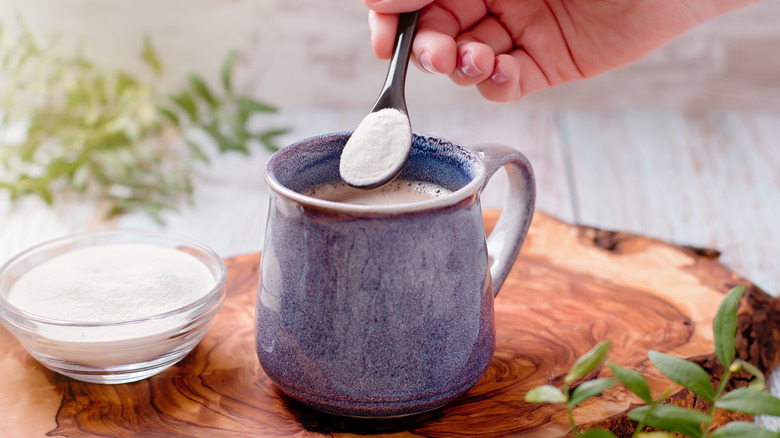
Like protein powder, collagen powder is at the center of a social media frenzy these days, with health claims flying all over the place. Many of the claims have centered on aesthetic benefits, such as skin and nail health. Brands tout collagen's ability to improve skin hydration and firmness while also minimizing the appearance of fine lines and wrinkles. The jury is still out on whether any of these claims are actually backed up by science, but what is crystal clear is that these collagen supplements contain a lot of protein. The reason for this is that collagen is, in fact, a type of protein. You might be purchasing it for its purported aesthetic benefits, but a happy byproduct of that decision is a boost to your overall protein intake.
If you already have collagen powder in your pantry, chances are, it won't tout its protein content. Instead, it may say something like it has 10 grams of bovine collagen peptides in each serving. If you look at the nutrition facts, though, you'll find that translates to roughly 9 grams of protein. Adding it to coffee is as simple as adding protein powder — just stir it in. You'll be in good company, too. Jennifer Aniston has been doing it for years.
Buy a protein creamer

If you want to make things easy, you don't have to parse nutrition facts on the back of milk cartons or get your blender out to ensure the protein powder mixes seamlessly with your coffee. You can simply buy a high-protein coffee creamer. The fact that these products exist might come as a surprise to people who associate coffee creamer with those little white plastic packets at diners and hotel restaurants. However, the industry has risen to meet the protein craze, and you can now purchase a wide range of macronutrient-enriched options.
You can find dairy-based protein creamers, vegan ones, sweetened, and unsweetened. When shopping for the best option, keep an eye on the actual protein content. Some products offer as much as 10 grams of protein per serving, which trumps most other options, including dairy milk. Others offer so little that it's questionable whether the brand should be allowed to call the product a protein creamer at all. Two measly grams are hardly worth writing home about. You'd be better off sticking to the much cheaper option of oat or nut milk.
Opt for ultra-filtered milk
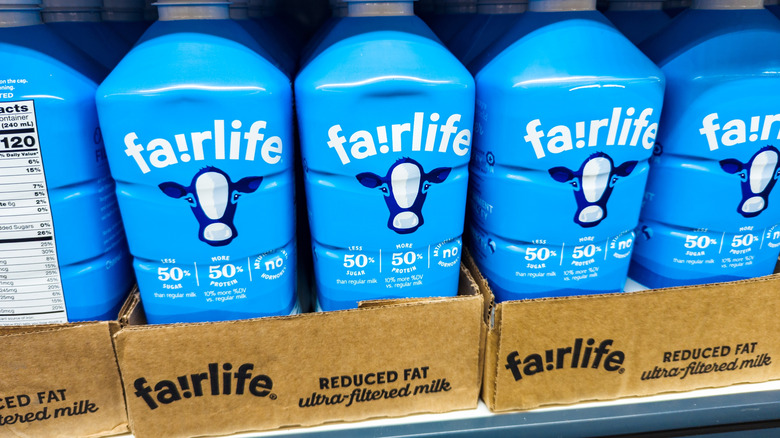
There are a lot of marketing terms out there that are just that: marketing. But every so often, a product comes along that sounds like advertising spin but turns out to be the real deal. Ultra-filtered milk is one of them. As its name suggests, ultra-filtered milk undergoes an extra filtration process that removes some of the lactose while retaining the protein. The results are creamier than regular milk, lower in lactose, and higher in protein. What's not to love?
So, just how much protein is there in ultra-filtered milk? A cup of regular dairy milk contains about 8 grams of protein and 13 grams of carbohydrates. A cup of ultra-filtered milk contains a whopping 13 grams of protein and only 6 grams of carbohydrates. Not only is it a great option for people who are sensitive to lactose, but it's a great option for anyone who wants more protein in their coffee. If you already drink coffee with dairy milk, the only difference you're likely to notice is that your cup of joe is a little creamier. It's a win-win.
Swap whole milk for skim milk
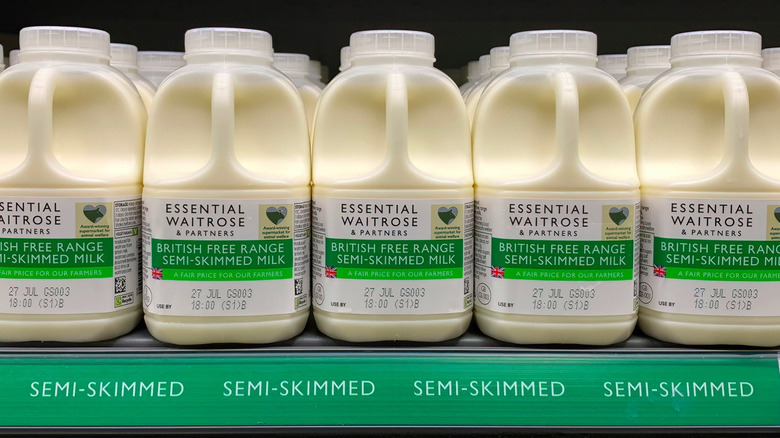
Another simple way to level up your protein without radically altering your coffee is to swap whole milk for skim milk. This might come as a surprise, given that skim milk seems like a watered-down version of whole milk. However, skim milk actually contains slightly more protein than whole milk – about 8.5 grams per cup compared to 8 grams in whole milk. It's a very slight difference when comparing them ounce for ounce, but in practice, you're likely to add more skim milk than whole milk to smooth out the bitterness of the coffee.
The problem that most coffee drinkers would point to when it comes to skim milk is the fat content. In order to get a velvety texture for your latte or cappuccino, you need a little fat. Without it, your coffee will end up tasting thin and a little watery. That said, if you're trying to eke out as much protein as possible and your only options are whole milk and skim, the latter has a slight edge over the competition.