

Is It Okay To Eat Shrimp Every Day? Here's What You Should Know Before Doing So
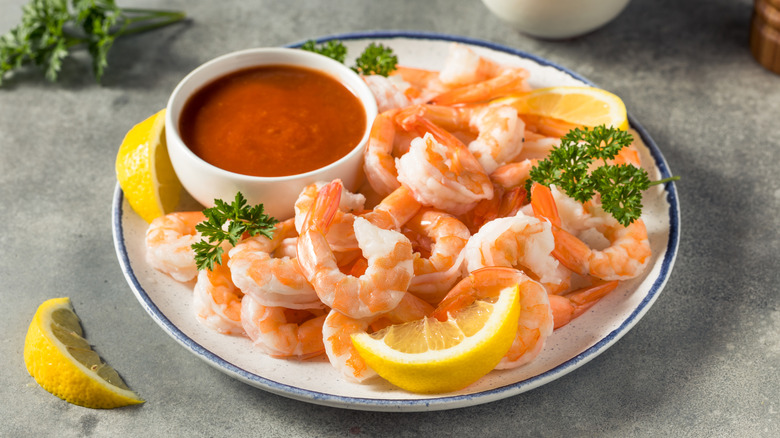
Shrimp are somehow simultaneously the bacon and the chicken of the sea. They're mild enough to take on whatever flavor you throw at them, but rich enough to feel indulgent, so it makes sense to ask if there is such a thing as too much of a good thing. They sear in two minutes, poach in three, and somehow sing across nearly every savory profile. Close your eyes and picture them raw and tangy, marinated in aguachile, or tossed with gochujang and honey, simmered in a Thai curry, cold with horseradish-y cocktail sauce, nestled in a scampi or fra diavolo, or wrapped in a warm corn tortilla with cilantro and lime. It's hard to think of a cuisine or pantry where shrimp wouldn't be wonderful. So if they're that good, can you eat shrimp every day?
From a mercury standpoint, yes. Because shrimp sit low on the marine food chain and don't accumulate as much mercury like bigger, long-living fish do. For most healthy adults, daily shrimp doesn't run the same risks that a daily tuna habit might. The bigger question is what else comes with that routine: Saturated monotony, missing micronutrients, cholesterol nuance, additives in cheaper frozen bags, and the ethical quandary of how shrimp are raised and harvested.
Drifting into a shrimp-every-night routine is understandable, but it's borderline the same energy as gym bros eating chicken breast and rice every day because it "gets in the macros," even though it slowly drains the joy and diversity out of the diet. Hitting protein goals is good, but hitting the wide spread of micronutrients human bodies need to stay balanced is better. Shrimp can absolutely be in regular rotation, but if they're your sole protein source, there's a good chance something essential is falling out of the picture.
The fine print of the nutrition panel
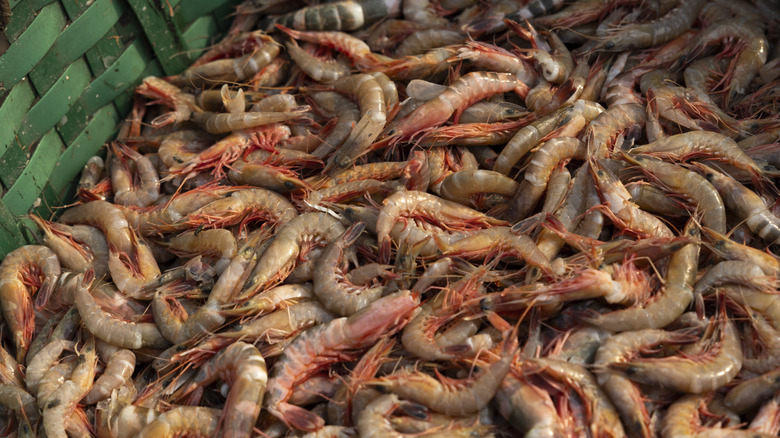
To figure out whether "daily" is smart, you have to zoom in on what shrimp give you, what they don't, and why variety is important. Shrimp are packed with high-quality protein, low in saturated fat, and naturally rich in micronutrients like iodine, selenium, B12, and astaxanthin, the antioxidant pigment that gives them their color (which, fun fact, comes from the algae they eat). Those are real assets, and they make shrimp a nutrient-dense choice.
Then there's the high cholesterol content, which is somewhat infamous, but there's context and nuance. They are indeed fairly high in dietary cholesterol, with a standard serving accounting for a large chunk of the old 300 milligram per day guideline. But the assumption that dietary cholesterol correlates to blood cholesterol has been largely dismantled in recent years, because for most people, saturated or trans fat and genetics have a much bigger effect on LDL levels. That said, if someone starts eating shrimp daily and their LDL creeps upward, that's feedback worth listening to. It doesn't mean shrimp are "bad," but that the body is saying you should probably mix it up.
Shrimp also contain iodine in meaningful amounts, which is helpful for many, but potentially too much for people with hyperthyroidism or specific autoimmune thyroid conditions if they overdo it. Frozen shrimp often come treated with preservatives like STPP and sodium bisulfite, and eating copious amounts of those, every single day, isn't healthy. Also, shellfish allergies often intensify with repeated exposure, so if your body is reacting, don't try to push through mild symptoms. Ultimately, no single food can do everything for a human body, because we're omnivores who need diversity in our diets. A varied protein roster is nutritional insurance, and makes something compulsory (eating), interesting and joyful.
Is there ethical consumption?

Another important consideration is that cheap shrimp are almost never ethical. The bargain bags often come from massive overseas aquaculture systems where environmental and labor oversight is thin. Mangrove forests get bulldozed to make room for ponds, and those poorly-filtered ponds are crowded and therefore prone to disease and parasite outbreaks, which leads to heavy antibiotic use including drugs banned in the U.S. because of their medical importance. That effluent wastewater flows into, and harms, local ecosystems.
The labor issues are similarly troubling. India and Thailand's shrimp industries have been repeatedly implicated in forced labor and trafficking, with workers trapped on boats or in peeling sheds under brutal conditions. Investigations of other countries in the region have revealed similar abuses of workers and environments. When shrimp is something you eat once in a while, your share of that impact is smaller. If it's every day, the supply chain you choose matters enormously. There are better options. Some shrimp farms now use recirculating water systems with strong environmental controls; certifications like ASC or BAP aren't perfect, but they cut through a lot of opacity. Wild Gulf shrimp are sweet and snappy, one of the best mouthfuls in American seafood. If you can get your hands on those regularly, yum. Coastal food cultures, like in parts of Mexico, the U.S. Gulf, and Southeast Asia, have long eaten shrimp, but those traditions grew around local waters, not mysterious international commodity bags.
So can you eat shrimp every day? Nutritionally, sure. Ecologically and ethically, it depends. Try to buy them from waters you'd actually want to swim in, and incorporate other proteins. Joy, balance, and a better seafood system can be caught in the same net. Don't forget the garlic butter.