

10 Tips And Tricks To Make Chicken Taste Restaurant-Quality
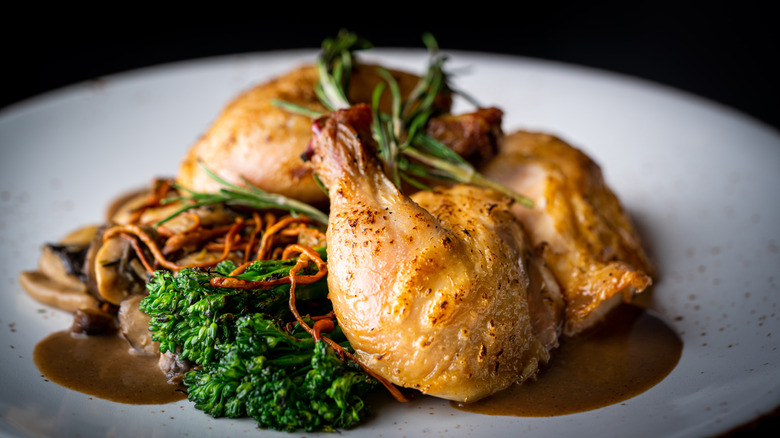
If the idea of chicken for dinner makes you roll your eyes, you're not alone. Maybe you find it bland, fairly boring, or just not worth your time and would rather reach for a thick, juicy steak instead. That's certainly understandable, but don't dismiss chicken just yet. When prepared and cooked properly, chicken can be a succulent, crispy-skinned delight that makes you wonder why you ever overlooked it. Plus, there are many delicious ways to use up leftover chicken.
To help you make chicken that tastes like it came straight from a high-end restaurant, we reached out to a few professional chefs who have built their entire careers around creating stellar food. We spoke with executive chef Aaron Cuschieri of The Dearborn, an urban American tavern in Chicago, and New York City-based private chef Lana Lagomarsini. We also spoke with Tristen Epps-Long, chef, restaurateur, and visionary founder of Houston-based hospitality consultancy, Epps & Flows Culinary. Together, these three experts offered invaluable insights on how to make show-stopping, award-worthy chicken, even if it's just for your weeknight dinner.
Source a fresh chicken in vacuum-sealed packaging

While you might be tempted to buy your chicken from the grocery store, Aaron Cuschieri says your best bet is to visit your local poultry farm or farmers market. If that's not an option, he suggests finding a butcher who knows where their chicken is sourced from. Whatever you do, make sure the chicken is fresh, and never frozen. "The difference is so noticeable, it's not even up for conversation," adds Cuschieri.
Regardless of the source, all chicken is chilled using water or air before it's packaged. Air-chilling results in less water weight, which leads to drier skin. According to Tristen Epps-Long, this is ideal because it keeps the meat firm and the skin browns perfectly. Lana Lagomarsini agrees that drier skin is favorable and advises buying vacuum-sealed chicken. "I personally don't like when the chicken looks overly wet," she explains. "I look for skin that's well attached to the bird, a nice pink color, and a bouncy texture." The skin may also have a nice yellow tone, indicating the bird was raised on a corn- and grass-based diet — a good sign, according to Lagomarsini.
Vacuum-sealed chicken is often labeled by producers to indicate the weight, grade, processing method, farm name, and nutritional information. Epps-Long advises staying away from poultry with added solution or brine. "That usually means the bird has been pumped with extra water for weight," he explains.
Buy a whole pasture-raised chicken
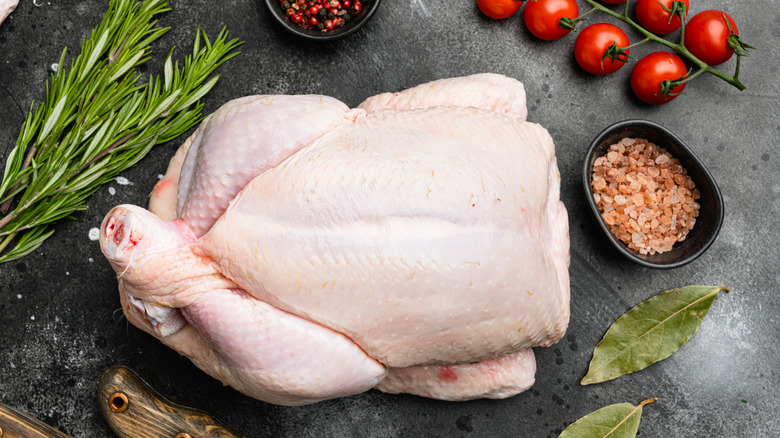
For delicious chicken that doesn't hurt your wallet, it's best to buy a whole bird rather than individual cuts. Not only does this give you more flexibility, explains Tristen Epps-Long, but it's also better value overall. "I always buy two chickens," he says, "one you can cook whole, and one you can break down for parts and future meal prep, or making broth." Aaron Cuschieri agrees, adding that he doesn't purchase separate breasts, tenders, or wings, and avoids skinless and boneless cuts. Buying a whole chicken lets him prepare it exactly how he wants for his dishes. He also notes that a whole chicken is usually cheaper than an assortment of pieces.
Epps-Long points out that the best-tasting chicken typically comes from farms that raise their birds in fields where they can freely roam in search of grass and insects. "Start with pasture-raised because that's always the best indicator of quality," he says. "It means the birds truly roam and forage outdoors, which translates into richer flavor and better texture." Lana Lagomarsini believes free-range chicken is a good middle ground because it's often juicier with a superior texture. She adds that buying organic isn't always worth it, and while heritage-breed chickens are her favorite, she acknowledges that the birds are smaller and tend to be fairly pricey.
Brining is simple but extremely effective
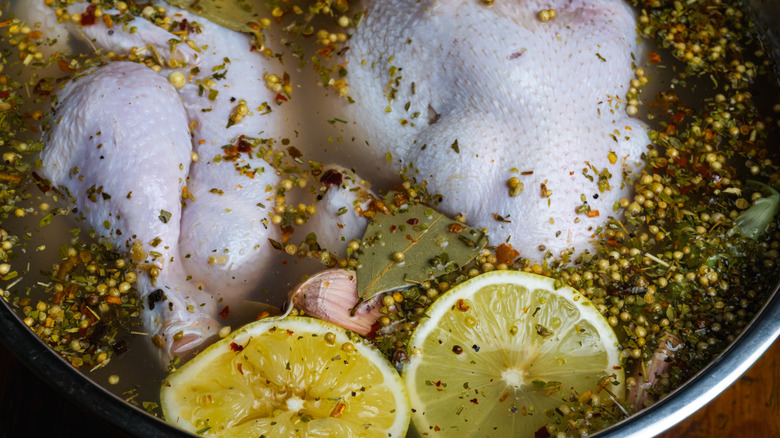
The easiest way to create restaurant-quality chicken at home is to brine it, says Tristen Epps-Long. "It's the secret to juicy, well-seasoned chicken every single time. A quick brine works wonders," he notes. Brining chicken requires submerging the bird in a saline solution with a water, broth, or even buttermilk base. You can also add herbs and spices for extra flavoring. This process helps lock in moisture, so the bird is less likely to dry out when you cook it.
Dry brining works just as well but doesn't require a large pot of water. Rub salt and spices directly onto the skin and leave the chicken to sit at room temperature for about an hour before putting it in the fridge for up to 24 hours. And though it's all about the brining, Epps-Long also recommends air-drying the chicken after. "Let the chicken air-dry in the fridge — uncovered — for a few hours, so the skin is dry to the touch," he says. "That's how you get that professional, crackly finish." (Brining and air-drying are the perfect preparation techniques for trying our maple butter roast chicken recipe.)
Lightly dust baking soda on the skin before seasoning
Cooking restaurant-quality chicken requires more than just ensuring the meat doesn't dry out. It's also contingent upon keeping the skin and fat intact. "At the very least, try to buy and cook chicken with the skin on," advises Aaron Cuschieri. "The skin adds so much flavor and depth." Tristen Epps-Long adds that the fat is where flavor lives, so you shouldn't be afraid of it.
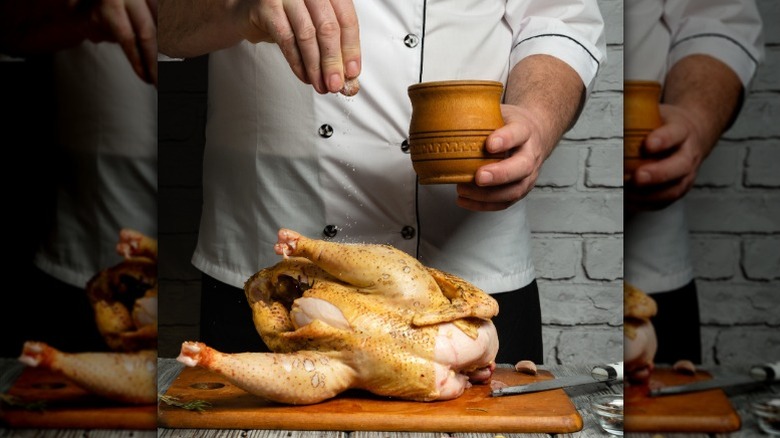
The skin is a crucial aspect of crafting amazing-tasting chicken, and an appealing exterior lets your eyes and stomach know a delicious meal is coming. Epps-Long suggests a simple baking soda hack for chicken skin that will take it to a new level: Lightly dust the skin with baking soda before you season it with herbs and spices. "It draws out moisture and helps achieve crisp, golden-brown skin," explains Epps-Long, "especially when roasting or air-frying."
In terms of seasoning, once you've dusted the skin with baking soda, there's really no spice or herb you can't use. "The great thing about chicken is that it's so versatile," notes Lana Lagomarsini. "I love using za'atar on chicken breasts, adobo seasoning for fried chicken, and cumin in spice blends." Likewise, Epps-Long believes bold seasonings can be impactful and make chicken shine bright, particularly Middle Eastern and North African spices. "I use blends like berbere or Persian-inspired spice mixes," he says, "as they bring depth, brightness, and warmth."
Use soft herbs for extra flavor
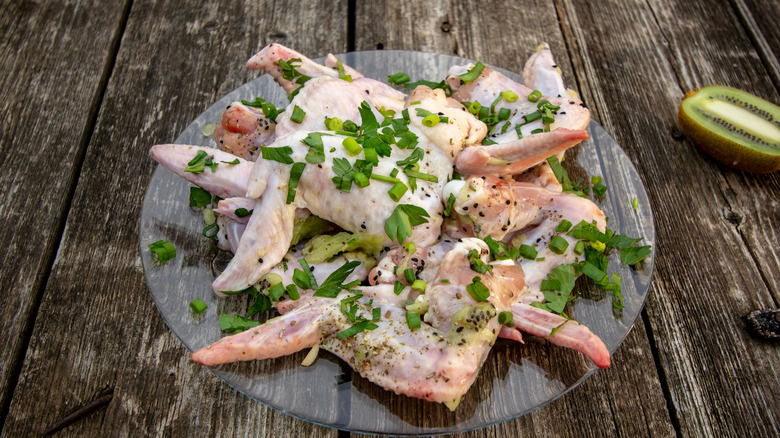
In addition to dry seasonings, Aaron Cuschieri recommends utilizing soft herbs, like parsley, dill, or chives. If you're not into bold, heavy-hitting spices, you can still achieve great-tasting chicken with milder seasonings. "Tarragon is a very amazing and special (and underrated) herb for chicken," says Cuschieri. While he does note that most fresh herbs work well, he warns that some can overpower a recipe. "I generally stay away from strong herbs, like basil, rosemary, and oregano," he explains. "They take over the entire dish, and then everything tastes like that."
Though dried herbs have their place, fresh ones bring a punchier flavor, as long as they're used correctly. Unlike spices and dried herbs, delicate, leafy herbs like parsley and cilantro, can lose their essence if exposed to too much heat, so they should be added during the last few minutes of cooking or used as a garnish where the residual heat can lightly steam them. Woodier herbs, such as rosemary and thyme, are more robust, and can be added a little earlier in the cooking process. To prevent strong-tasting herbs from overpowering your dish, try adding them to your brine instead.
Focus on getting the skin crispy
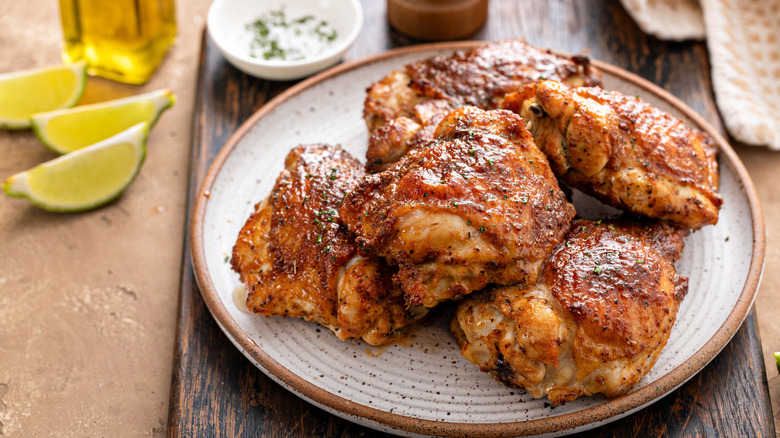
According to Lana Lagomarsini, focusing on getting the skin crispy is crucial when you're chasing the tastiest chicken. Nearly every step of preparation and cooking is aimed at achieving this ideal exterior. The result is two-fold: It creates a wonderful textural contrast of crispy skin and tender meat for a perfect bite, and when the fat from the skin melts, it naturally bastes the chicken as it cooks.
"I'm a big believer that simple is best," Lagomarsini says. "I like to brine chicken in buttermilk for about an hour as it tenderizes the meat." After brining, dry the chicken in the refrigerator or somewhere with neutral air-flow, but avoid extreme temperatures. "That helps keep the skin crispy because if it's wet, it won't sear properly; it'll steam instead," she explains. Once the chicken is dry, Lagomarsini recommends slathering butter under the skin before cooking to add flavor, moisture, and extra fat, which help the skin crisp up. Plus, this technique means you won't need to baste as regularly.
Truss the bird
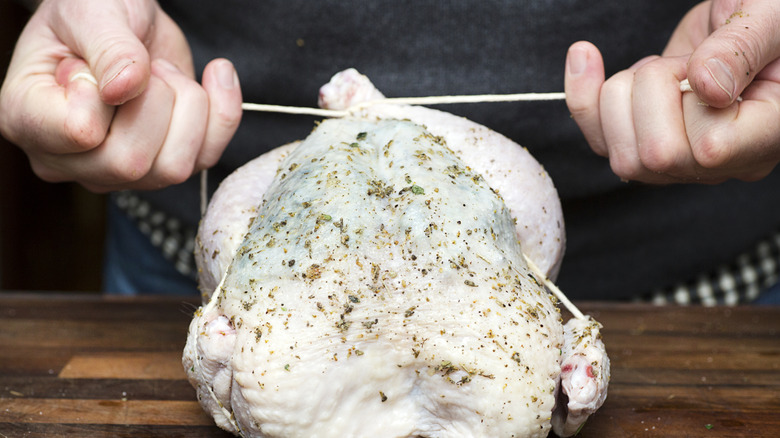
Trussing is an underrated and often overlooked step when preparing chicken, but it helps the meat cook evenly. Tristen Epps-Long believes it's a technique that elevates chicken from good to restaurant-quality. "When roasting, remember different parts cook at different speeds," he says. "Trussing the bird — tying it so it cooks evenly — helps everything finish at the same time."
There are numerous ways to truss a chicken, even if you don't have any kitchen string, and you shouldn't let a lack of familiarity discourage you from trying. Even if you don't tie the chicken, or you're working with individual cuts, Aaron Cuschieri recommends cooking your meat on the bone, as it helps the flavors develop. The bone also helps hold the meat in place, preventing shrinkage, and helps prevent leaner cuts from drying out for juicier, richer results.
Sear in the pan, finish in the oven
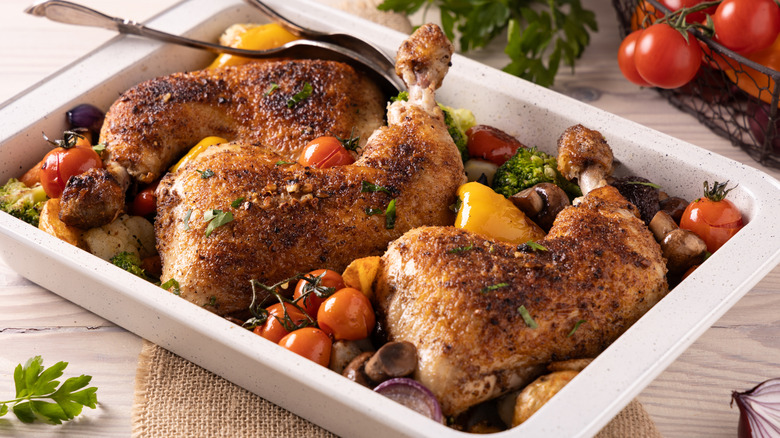
Aaron Cuschieri and Lana Lagomarsini agree that whether you're roasting an entire chicken or using individual cuts, it's important to cook the chicken with the skin-side down. "This is the most important tip I can teach anyone," says Cuschieri. For professional results, he recommends pan-searing the chicken first, then transferring it skin-side-up onto your roasting pan (be sure to use a wire rack to prevent the flesh from burning). Finish cooking the whole thing in the oven at 500 degrees Fahrenheit.
One of the biggest mistakes people make with chicken is not cooking it to the right internal temperature. Both Cuschieri and Tristen Epps-Long advise using a meat thermometer to determine when your chicken is done cooking. "I think we are so scared of getting food poisoning," says Cuschieri, "that, in general, we cook our chicken beyond the point of return." He recommends letting the internal temperature of the bird reach 150 degrees Fahrenheit before taking it out to rest for 5 to 10 minutes. Lagomarsini adds, "Remember, it takes about 13 minutes per pound, so size your pan and timing accordingly. You can feel when it's fully cooked — it should still have a bit of give, not be rock hard."
Try cooking a whole chicken in an Instant Pot
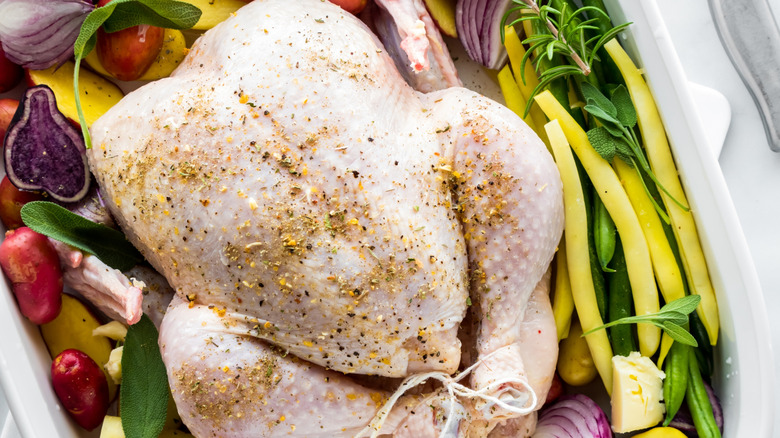
Multi-cookers and pressure cookers are a game changer for busy home chefs. They're a great way to enjoy many of your favorite dishes without the lengthy wait times, and Aaron Cuschieri recommends you try cooking a whole chicken in an Instant Pot, if you have one. "You can put some wine, herbs, stock, salt, and pepper in the bottom," he says, before emphasizing the importance of those last two ingredients. "The biggest thing that separates professional cooks and chefs from amateur and home cooks is the proper use of salt and pepper."
Once your ingredients are in the bottom of the pot, place your whole chicken inside. Simply close the lid, press the button that says chicken or poultry, and in just 30 minutes, you'll have a fully cooked, juicy, tender chicken that's bursting with flavor. To crisp up the skin, brush the cooked bird with butter, and briefly pop it under the broiler to finish. If you're interested in trying this method, take a look at our Instant Pot classic whole-roasted chicken recipe.
A great sauce can fix anything
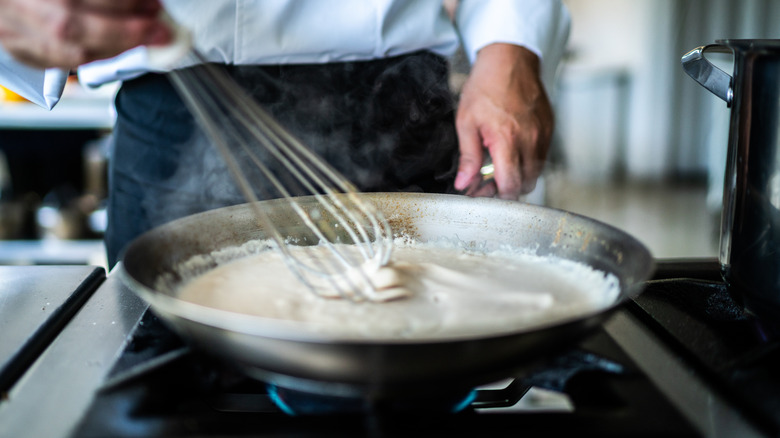
Whether your chicken is overcooked, under-seasoned, or you're simply looking to jazz it up, Aaron Cuschieri believes that sauce fixes everything. "Professionals know this," he says. "Home cooks don't usually focus on sauce." A good sauce will only enhance your dish, even when your chicken is cooked to perfection. "Try messing around with different pan sauces," suggests Cuschieri. He recommends experimenting with cream- and stock-based recipes, as well as herb- and mayo-based sauces, like ají verde — a creamy Peruvian green sauce that's sure to brighten any roast chicken.
Cuschieri explains that the best sauces start with a great stock, which is why getting a whole chicken is ideal. Use the chicken bones to create a hearty stock base for a creamy sauce that complements your meal. "Stock can be frozen and used whenever you need," Cuschieri adds. "Do not underestimate the power of homemade chicken stock."