

You Can Bring Live Lobster Through Airport Security, But There's A Catch
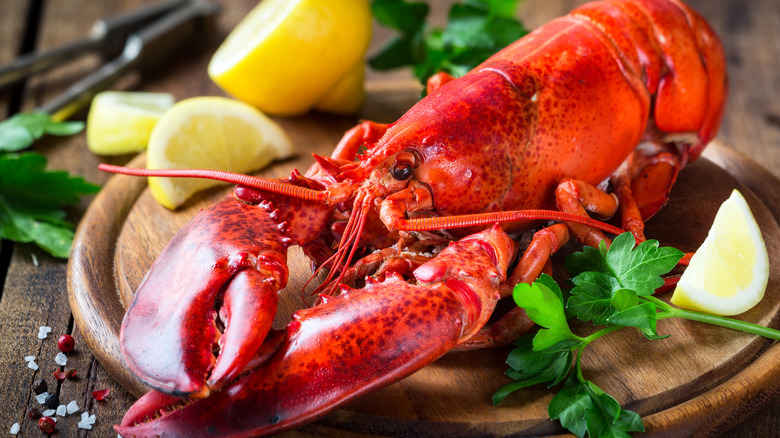
If you've ever visited the Northeast during prime lobster season and enjoyed the plump, succulent meat, you may have pondered how you could bring home a taste of that fresh-caught magic. While you can purchase live lobster online to ship to you directly, this service comes at a high cost — so if you're in a lobster-abundant state, it may be easier to transport your own lobster home with you. Just be aware of common mistakes to avoid when buying fresh lobster, so you select the best ones.
Despite all of the confusing rules and regulations, there are a number of unexpected foods you can bring through airport security, like tamales and pizza. According to the Transportation Security Administration, you are allowed to bring a live lobster through airport security a long as it is transported in a clear, plastic, spill-proof container. A TSA agent will also need to visually inspect the lobster.
The TSA also recommends that you check with your specific airline prior to traveling with a live lobster in case the airline has a different policy regarding live lobsters, especially if you plan on carrying on the lobster instead of checking it. If you happen to be flying through Portland's International Jetport in Maine, there is a restaurant after security that actually sells and properly packages fresh lobster for you to bring with you on the plane.
Lobsters are living creatures that need to be transported with care
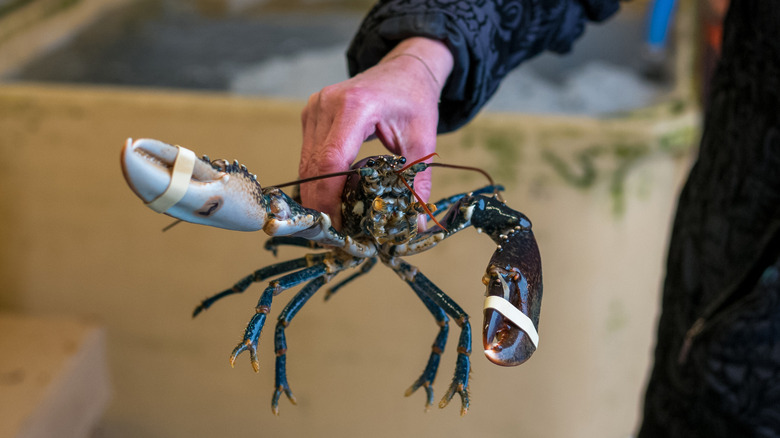
Although lobsters live in the ocean and need to be submerged in salt water to live, live lobsters can actually survive out of the water for up to 48 hours. But it's safe to err on the side of 24 hours as long as they are kept cold and refrigerated. Whatever you do, do not put a live lobster in fresh, unsalted water, as the lobster will not survive without ocean-level salinity. If there are gel or ice packs in the container, they must be completely solid before passing through the TSA screening area. Make sure you don't use regular ice that can melt, as it can submerge the lobsters.
Once your flight lands safely and you've gotten your lobster home, store it in an uncovered vessel in your refrigerator, but you should wrap the lobster in a damp towel or damp newspaper to keep its environment moist. Keep the lobster in cold temperatures between 32 to 40 degrees Fahrenheit, and be sure to cook your lobster within 24 hours of returning home with it. When you're ready to cook, steaming or boiling are simple, tried-and-true cooking methods. But for a more luxurious experience, butter poaching is a superior way to cook lobsters.