

The Rule Of Thumb That Will Save You From Overcooking Prime Rib
We may receive a commission on purchases made from links.
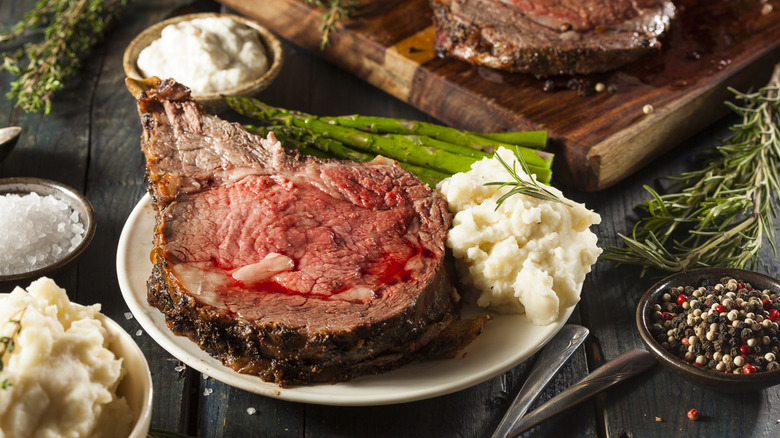
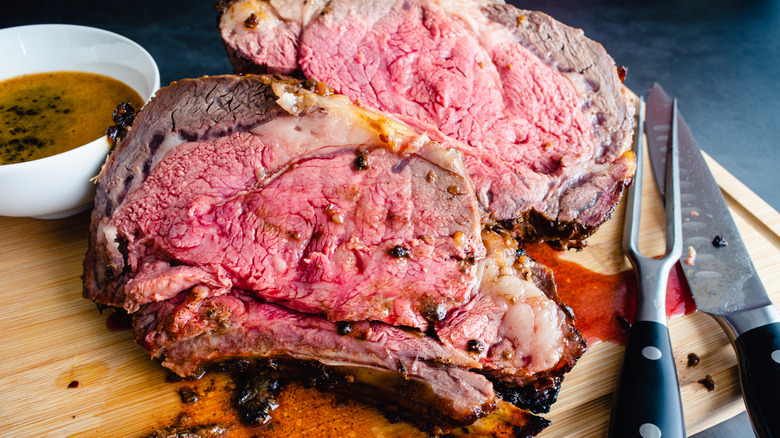
Prime rib is the king of all beef roasts, and not overcooking it is the one rule you simply don't break. Coming from one of the most tender and juicy cuts of beef, the ideal prime rib is pink throughout and almost buttery and soft. And for such a large roast, the time it would take to cook to medium-well or beyond would deprive it of all its amazing fat marbling, robbing it of everything that makes it special. But managing the temperature of a roast this size can be tricky, so when we talked to chef K.C. Gulbro about the biggest mistakes people make with prime rib, he actually recommended undercooking your meat.
The logic is simple. The temperature you are aiming for with prime rib is quite low, around 115 to 120 degrees Fahrenheit for medium-rare. That's really easy to overshoot in the oven, if you aren't paying close enough attention — but nobody wants to spend time babysitting a roast, either. Most importantly, the benefit of an undercooked prime rib is that the issue can easily solved by just putting it back in the oven for a few minutes, whereas an overcooked roast is basically unsalvageable. It's also key to note that larger roasts will continue to cook outside of the oven as they rest, increasing up to 10 degrees in temperature. So bypassing your target temperature in the oven will mean the meat will become even more overcooked after you take it out. With such a pricey cut, you can never be too careful.
Aim to undercook prime rib so it doesn't dry out
When you are shelling out for a fancy roast like prime rib and temperature is a concern, you really want to have a good digital meat thermometer to help you be as precise as possible. With such big cuts the time it takes to reach your desired temperature can vary, so it's going to be almost impossible to estimate doneness based on how long it's been in the oven. Thankfully, there are some solid thermometers like the ThermoWorks ThermoPop 2 that are pretty affordable, and you'll get plenty of use out of them for cuts beyond prime rib.
Along with using a thermometer, the easiest way to make sure you don't overcook your meat is by taking a low and slow approach, and using the reverse sear method for a tender and flavorful prime rib. While some recipes recommend you start your beef at temperatures over 400 degrees Fahrenheit to brown the exterior of your roast, this risks raising the interior temperature too fast. Instead you should start it in the oven and heat it slowly at temperatures in the 200 to 250 Fahrenheit degree range. Then when it's almost done, sear it in a pan on high heat to get that browning. This is a much more precise cooking method that gives you more temperature control, although you'll still need a digital thermometer. But achieving the perfect prime rib is worth the extra time and effort.