

Mistakes Everyone Makes With Parchment Paper In The Kitchen
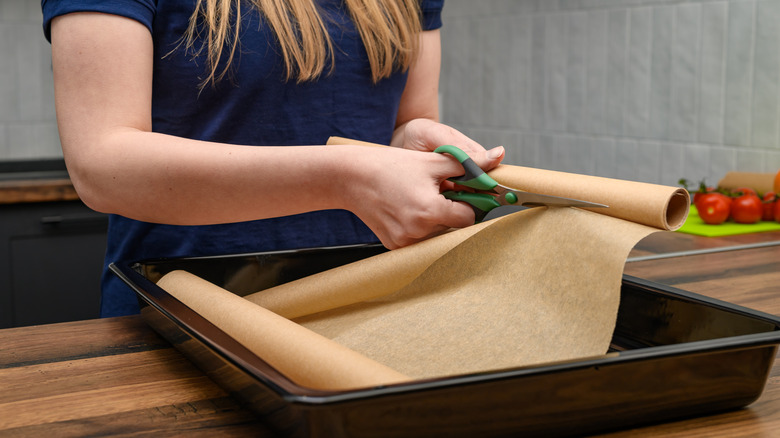
If you're someone who cooks regularly, there are a few disposable cooking staples that you probably have in your kitchen. Perhaps you always have plastic wrap on hand, or maybe you keep your drawer stocked with aluminum foil. Both certainly have their uses, but if you ask us, one of the most convenient products to have ready to go is parchment paper. There are plenty of cooking and baking situations where parchment paper can make cleaning up easier, saving valuable time that you would've otherwise spent scraping crusted food off of your pans. And that's just scratching the surface, as there are lots of clever parchment paper hacks that make the stuff even more versatile.
Although parchment paper seems relatively straightforward to use for various cooking tasks, in reality, there are plenty of mistakes you can make with it. Some of these could affect the quality of your food, while others can could be downright dangerous. We spoke to Rena Awada, culinary content creator, food blogger, and founder of Healthy Fitness Meals, and Keiry Palma, a chef-instructor of Pastry & Baking Arts at the Institute of Culinary Education to learn more about the common mistakes home cooks make with parchment paper — and how to avoid them.
Using parchment paper for broiling or grilling
Parchment paper can be useful in a lot of contexts, but it's not suitable for every occasion. For example, the situations in which you might use aluminum foil are generally not the same as those where you're going to need parchment paper. "A lot of people think parchment and foil are interchangeable...but they're not," says Rena Awada.
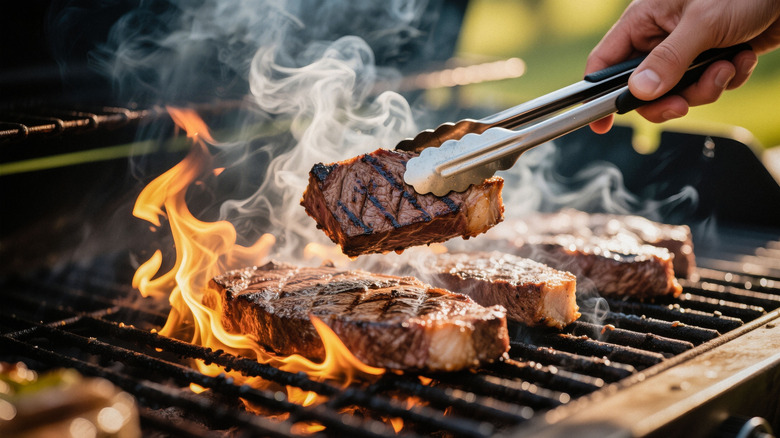
According to Awada, parchment paper is best for situations where you're cooking with moderate heat and want to prevent food from sticking, like when using the oven. She says it's great for roasting vegetables, baking fish, and making cookies. However, when working with high heat — broiling, grilling, or cooking anything with an open flame — parchment paper won't be able to withstand the increased temperature. "I've seen people line their broiler pans with parchment only to have it turn into a small campfire in their oven," recalls Awada. To avoid a kitchen hazard, she recommends using parchment paper only in settings where you're going to be cooking at 450 degrees Fahrenheit or below, and not putting it in your broiler or on the grill.
Assuming wax paper and parchment paper can be used interchangeably
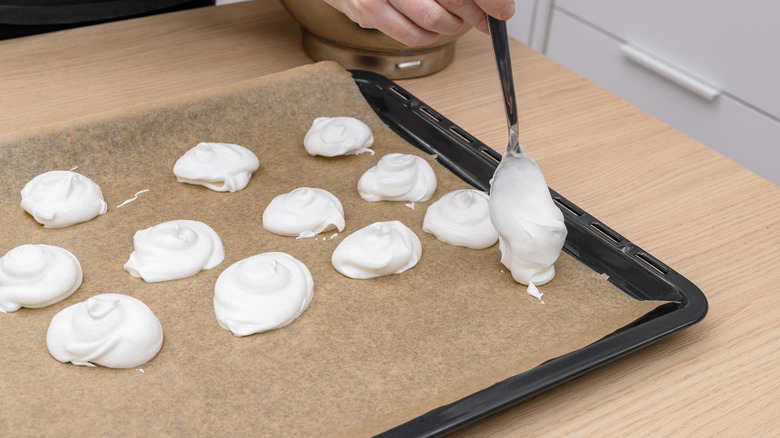
Now we know that foil and parchment paper can't be used in the same way in the kitchen, but what about wax paper? Since it looks nearly identical to parchment paper, many home cooks assume that they are interchangeable. However, while wax paper has many creative uses, it's a distinct product with a different purpose.
"Although parchment and wax paper are both commonly used for baking, it is important to remember that they are not the same," explains Keiry Palma of the Institute of Culinary Education. "Wax paper, in the simplest terms, is paper that is coated with wax. It is not oven safe and should only be used for separation and holding cold or room-temperature items." Wax starts to melt when it's exposed to heat, so wax paper is better suited to cold applications, like storing food in the freezer. On the other hand, you absolutely can use parchment paper in the oven, as long as you're cooking below 450 degrees Fahrenheit.
Storing food in the refrigerator with parchment paper
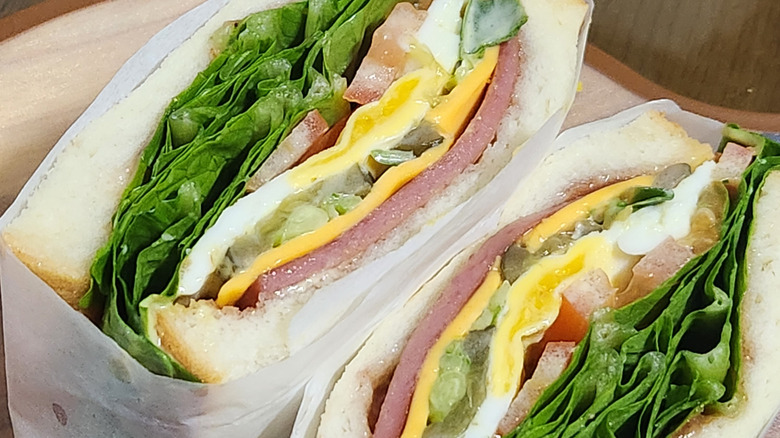
While parchment paper can be used for a wide variety of applications, that doesn't mean you should use it for everything that doesn't involve high heat. According to Rena Awada, when it comes to food storage — especially in cold environments — parchment paper likely isn't going to be your best bet. She also notes that using it in moist conditions is a major mistake.
"Some people wrap food in parchment and stick it in the fridge," she says. "They'll call it a day, thinking that it'll breathe better. The problem is that parchment absorbs moisture. In the fridge, it softens and can even glue itself to your food." The last thing you want is a stuck-together mess when you're trying to enjoy that sandwich you packed for lunch. If you're putting anything in the fridge over the short term, opt for wax paper or aluminum foil instead. Alternatively, use plastic wrap for items you plan on storing for a longer period of time.
Not securing the parchment paper on baking sheets
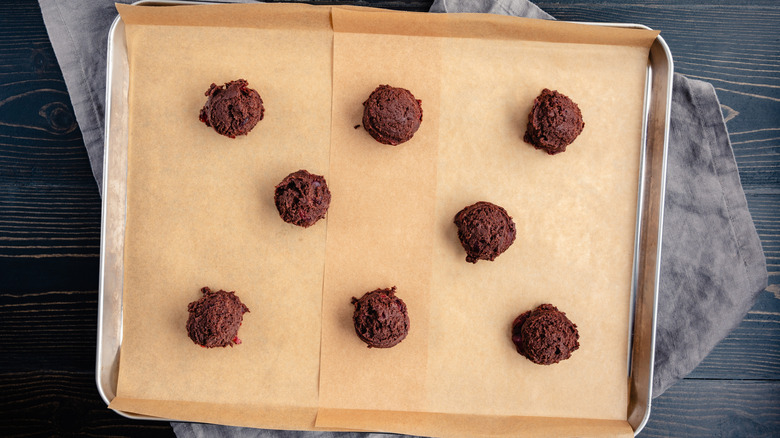
Most of the time, when you buy parchment paper, it'll come in rolls. This makes it easy to unfurl a piece and rip it off whenever you need it, but that also makes it curl up at the edges. This can be an issue if you're working with a flat pan and you need the parchment paper to stay in place. In fact, Keiry Palma says that not securing the parchment paper at the corners is one of the main mistakes home cooks make with this kitchen product.
"The easiest way to combat this is by lightly spraying the pan with cooking or baking spray, or using little dabs of dough on each corner of the pan to 'glue' down the parchment," she suggests. (Can't decide which brand of baking spray to try? Check out our baking spray ranking.) But what about when you're using a pan that's not a perfect rectangle? In this case, you can simply cut the parchment paper to fit the area you're working with. If this proves too fiddly, Palma notes that you can always crumple the parchment paper and flatten it out again before lining your pan, as this will make the paper less rigid and easier to shape.
Using the wrong side of the parchment paper
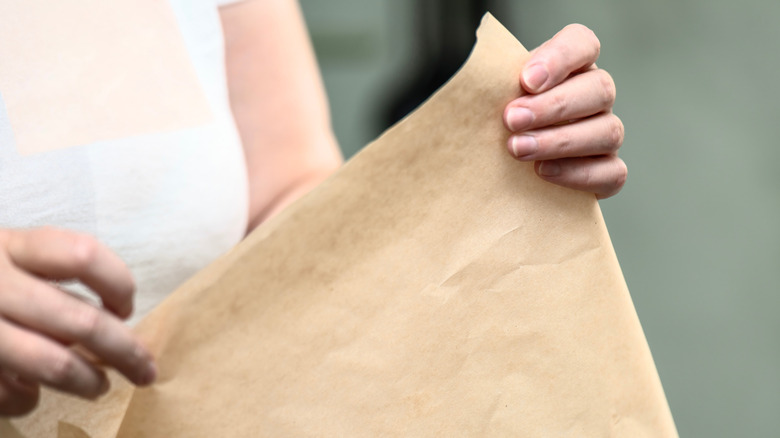
When you look at a sheet of parchment paper, you might not realize that each side is different. According to Rena Awada, a common mistake that home cooks make is not knowing which side is which and using the wrong one. "Unlike regular foil, parchment has a 'right' side," she explains. Most parchment paper has a shiny side which is coated with silicone that makes it nonstick. The other side has a duller appearance, which is just plain paper.
If you place your cookie dough on the dull side of the parchment paper, when you try to pull the baked cookies off, you might find they're stuck and that removing them makes a bit of a mess. Therefore, you'll want to pay close attention when you unroll the paper. But what if you're struggling to identify the correct orientation? "The easy way to tell is to drop a tiny bit of water on each side," explains Awada. "The coated side will bead up. The uncoated side absorbs it. Always bake on the beading side."
That being said, some parchment paper actually is double-sided, which means that neither side will stick to whatever it is you're cooking. Always check the product box to determine whether you've purchased double-sided or single-sided paper.
Using parchment paper when you don't really need it
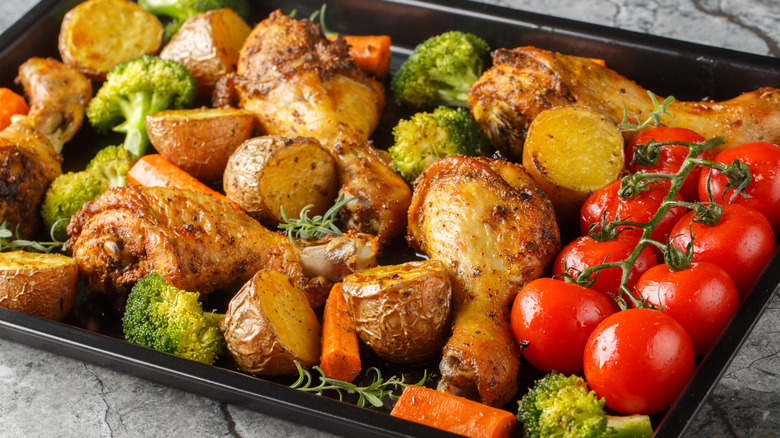
As helpful as parchment paper can be when baking, it's not always necessary, especially if you're not particularly worried about things sticking. According to Keiry Palma, it can sometimes yield a less-desirable texture. "In applications where you need a crispy or flaky crust, baking directly on the sheet tray is usually the way to go," she explains.
Palma says this is because parchment paper doesn't get as hot as a metal baking pan, so it may prevent the Maillard reaction from taking place. This is the chemical reaction that occurs when sugar and amino acids come into contact with heat, creating the rich flavor and golden-brown hue we're looking for when baking. "Bread, pizza, pie dough, and other yeasted doughs that bake at high temperatures are better baked without parchment because it can prevent the desired browning," warns Palma.
Continually reusing the same piece of parchment paper
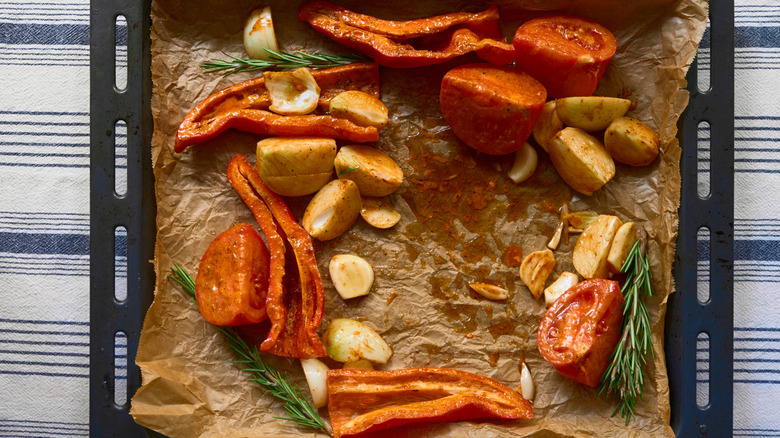
We're all for cutting down on waste in the kitchen. Not only is it better for the environment but it can also help you cut your grocery costs. This is especially important when it comes to non-food kitchen items, which aren't always biodegradable or recyclable. However, that doesn't mean you should start continually reuse parchment paper. "Professional kitchens sometimes reuse parchment once," says Rena Awada, "but ONLY if it's clean and dry." Otherwise, trash it.
If the parchment paper you used to bake chocolate chip cookies on last week still has some residual oil on it, it's probably not a good idea to use it again. Even though parchment paper is often handy for preventing a mess, overusing it could actually create a bigger problem, which defeats its purpose. "After one or two uses, the silicone coating starts to break down," explains Awada. "It becomes this sticky, brittle mess that smokes at lower temps." And of course, you want to avoid cross-contamination, so you should never reuse parchment paper that's been used for the prep or storage of raw dough or meat.
Trying to use parchment paper in a microwave or air fryer
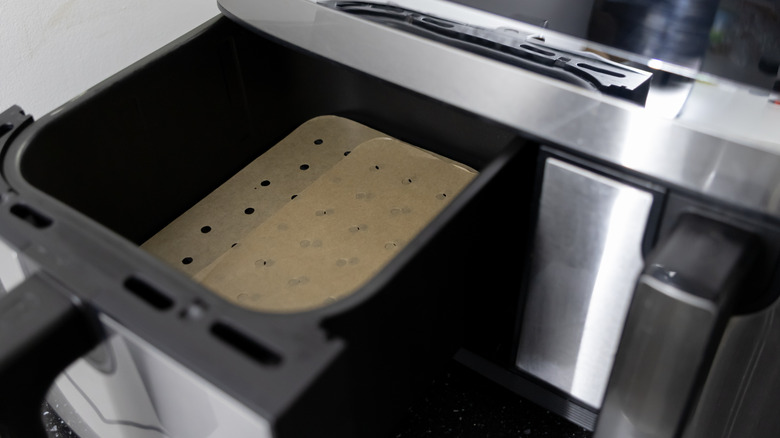
Parchment paper isn't suited to every cooking appliance, so you'll want to be careful about where you use it. Two places it definitely doesn't belong are the microwave and air fryer. Rena Awada explains that parchment paper can't breathe in these appliances, which makes it unnecessary and possibly problematic. "Microwaving parchment isn't dangerous," she elaborates, "but it's pointless. It doesn't crisp anything up. And in air fryers, it can block airflow and cause uneven cooking." There's even a risk of the paper getting caught in the air fryer's fan, which can damage the appliance or create a fire hazard.
Ultimately, you should save conventional parchment paper for the oven. If you need to cover food in the microwave, use paper towels instead. For air fryers, Awada says that you can find perforated parchment paper that allows for more air circulation and prevents uneven cooking. That said, if you have a non-stick air fryer, perforated parchment paper probably isn't even necessary — save your money and only use parchment paper when you really need it.