

How Whipped Honey Is Made (And How To Replicate The Texture At Home)
You've probably had jarred honey before, and more than one iconic bear-shaped squeeze bottle may have passed through your kitchen over the years. You might also be acquainted with honeycomb, manuka honey, and bee pollen. But there's one type of honey you might be missing out on: whipped honey.
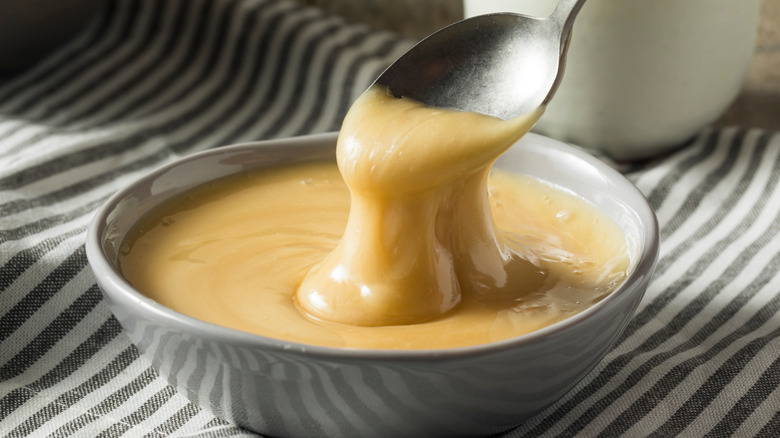
Whipped honey is a creamy, slightly thickened form of honey that's more akin to a spread than something you drizzle. Contrary to what you might think, it's not made with a beater. Instead, whipped honey is created through a careful process that involves injecting regular honey with ground honey crystals. It sounds complicated, so we asked Eloy De La O, Director of Quality at Sioux Honey, to break it down.
He says, "Whipped honey is honey that has been allowed to crystallize naturally under controlled conditions, creating a smooth, spreadable texture. While the process doesn't add any health or dietary benefits, it's often preferred when honey is used as a spread rather than in liquid form."
Making your own whipped honey
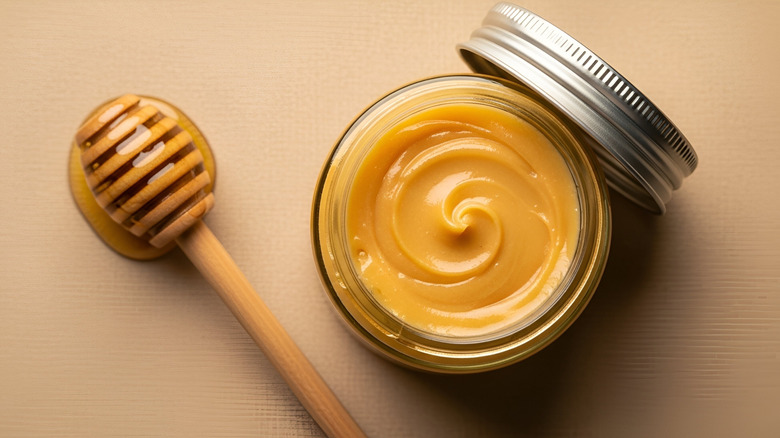
What makes it even more interesting is that whipped honey can be restored to its natural state. De La O says, "Since it is already 'granulated,' whipped honey can either return to its liquid form or solidify further depending how it's stored." The best place to keep whipped honey is in a cool, dry place like the pantry. It will be fine in the refrigerator, but it might harden.
You can find whipped honey in a lot of large grocery stores or specialty markets, and you can make it at home. De La O says, "Homemade whipped honey can be made by combining liquid and granulated honey into a bowl and slowly mixing until the desired consistency is achieved." Some crystallized honey also works if you can't find granulated — just whip it with liquid honey until it's smooth and leave it set. If you want, you can also infuse the honey with flavorful ingredients like vanilla, caramel, or cocoa powder.
Once you have your whipped honey, think of it as a sweeter, lighter version of peanut butter. You can lick it right off the spoon, but it's also delicious when it's spread on toast, blended into smoothies, or stirred into a good oatmeal recipe. You can top cakes with it too, or use it to add more flavor to roasted vegetables. It might just become your new favorite type of honey (we won't tell the bear).