

The '90s Kitchen Cabinet Trend You Never Thought Would Return (But Here It Is)
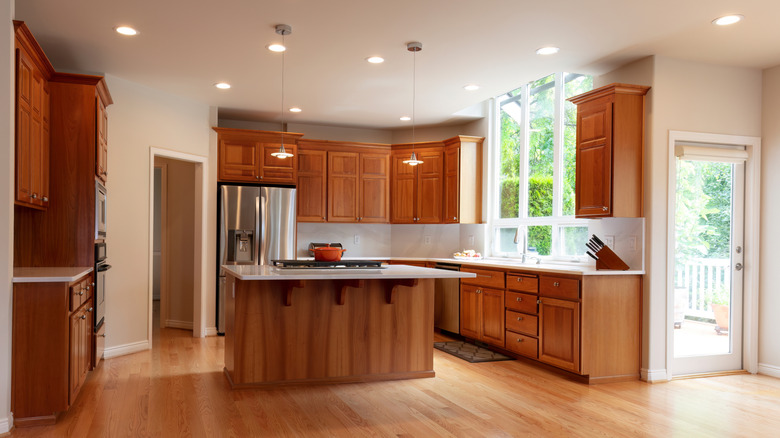
Oak cabinets defined the kitchens of the 1990s, immortalized in the on-screen kitchens of the era's most beloved sitcoms, from "Home Improvement" to "Full House." For many foodies at home, maybe that '90s design trend has also been immortalized in your own kitchen. Rest assured, classic, charming 1990s honey oak cabinets and their warm-toned colorways are making a comeback – as are other hallmarks of '90s kitchens like George Foreman grills and kitchen televisions. If you've got 'em, embrace 'em.
Aesthetics aside, foodies of the '90s might have chosen oak cabinets for their functional durability. Oak wood isn't as susceptible to scratches and dings as many materials. Plus, the absence of exterior paint means there's even less opportunity to stain or mar over time. Oak is also temperature-resistant (no warping or peeling) and easy to clean, with a timeless finish built to last. For modern, aesthetically-minded home cooks, there is also much to love. Oak cabinets are versatile enough to star in rustic kitchens and cool, minimal spaces alike. The wood tonally works with white walls or any variety of paint colors; whether your kitchen features cool blues and greens or earth tones like terracotta, oak cabinets won't clash with the space's existing design.
Arguably, the key distinction between modern oak cabinets and fixtures of the '90s is color temperature. Opt for "true honey oak" tones, leaving any ultra-yellow or orangish wood tones in the past. These can weigh a space down and make it appear visually heavy or overpowering.
Oak cabinets are back and just as warm as ever, with a modern facelift
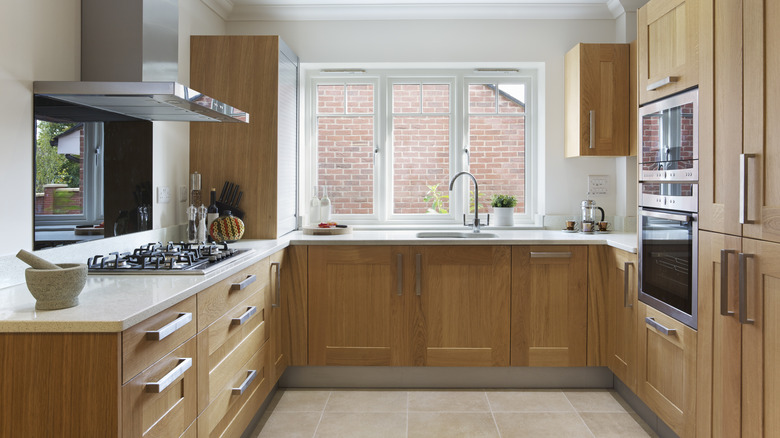
More Everyman than cherry or walnut, oak cabinets nonetheless contribute a warm, familiar, instantly comforting atmosphere to a kitchen. This can be used to a designer's advantage, warming up other modern design features for a balanced space that's tranquil without feeling sterile. To do it, incorporate modern elements alongside honey oak cabinets, such as brushed nickel pendant lighting, marble countertops, or matte black industrial drawer pulls.
For subtler, contemporary implementations, some designers are opting for oak upper cabinets and cream-painted lower cabinets, applying that warm-toned wood with a lighter hand. The overall effect is cozy without feeling heavy, keeping it airy. Other designers are choosing waxed white oak, a coating that contributes a cooler, muted temperature with almost Scandinavian-style sleekness. For more openness, it can also be helpful to replace one upper cabinet with open shelving or add a glass windowpane cabinet door.
Oak cabinets famously pair well with brown tones and warm-painted walls (more charming '90s kitchen color schemes that deserve a comeback). But, for an update, oak also complements warm yet breezy neutrals like linen and putty gray. For example, a kitchen with honey oak cabinets, cream-painted walls, marble or concrete countertops, and a few strategically-placed leafy green plants would artfully toe the line between cozy and contemporary. As for the furniture, we recommend committing to the oak look with a honey oak dining set (or else a totally non-wood material like metal, glass, or Formica).