

Don't Throw Out Leftover Lemon Peels, Use Them In Your Garden Instead
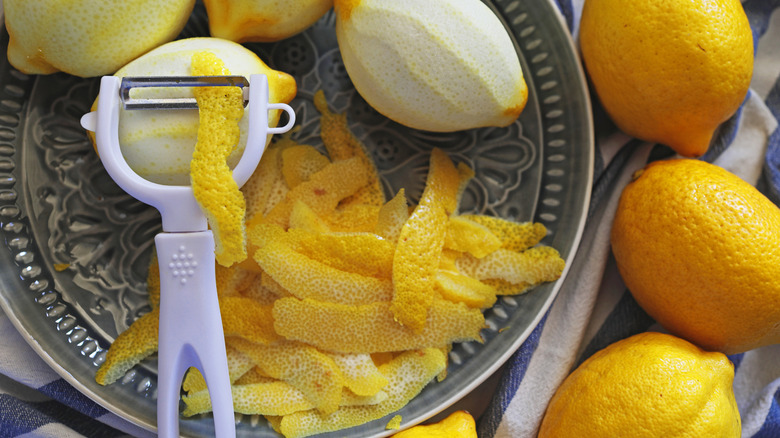
There's a helpful symbiosis between your kitchen and your garden, as a whole range of food scraps can be turned into fertilizer, which in turn can give you more food. Egg shells and coffee grounds are well known for their horticultural benefits, but using leftover lemon peels can also boost the growth of some of your plants.
Lemon peels contain phosphorus, which is essential for healthy roots, potassium, for better fruiting and flowering, and nitrogen, which ensures your plants have plenty of lush green leaves. As an added benefit, the essential oils from the lemon peels can act as a deterrent to certain pests, including aphids and mosquitoes.
Lemons are acidic, which means plants that need acidic soil to thrive (such as potatoes, peppers, and azaleas) will benefit from tipping the pH level in the right direction. The flipside to this is that you should avoid using lemon peels around plants that prefer alkaline soils. This includes cabbages, asparagus, and lavender. This is the same reason you can't apply coffee grounds to all plants.
While you can simply add lemon peels to the compost heap, or bury them directly into the soil, making a fertilizer allows you to get a more even distribution and avoid creating any overly acidic patches of soil.
How to make fertilizer from lemon peels
There are two main methods for preparing lemon peels as fertilizer, both of which can help you garden on a budget. The first is a powder made from dehydrated lemon peels. This involves drying out the peels completely — which can be done in the oven, in the sun, or in a dehydrator — before blitzing them in a food processor. To make the drying process easier, try to remove as much of the flesh and pith as possible.
The lemon peel powder can be sprinkled on top of the soil around your plants and reapplied once per month. For indoor plants, it's recommended you limit the amount to 1 teaspoon of dry fertilizer per gallon of soil.
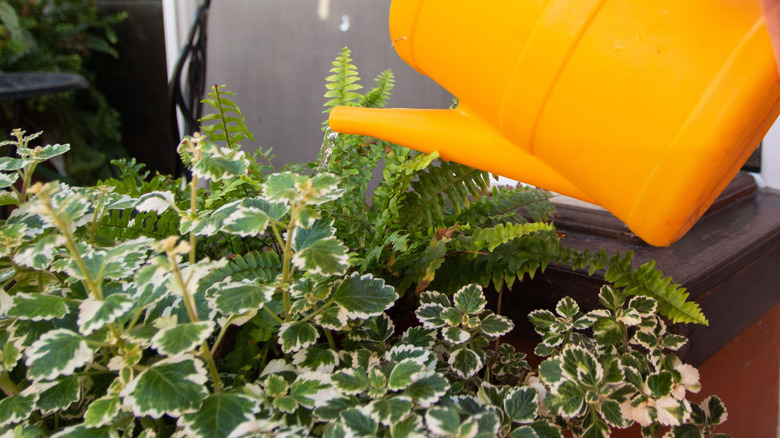
The second method is to create a liquid fertilizer. Chop the leftover peels and cover with water, leaving to soak for a day or two. Strain after soaking, particularly if you don't plan to use the whole lot at once, as the leftover fruit can turn moldy. Dilute before use, then pour directly onto the soil. Even if you're using this solution on acid-loving plants, it's a good idea to test the soil regularly, as overly acidic soil can prevent nutrient uptake.