

The Retro Wood That Can Bring Natural Texture And Personality To Your Kitchen
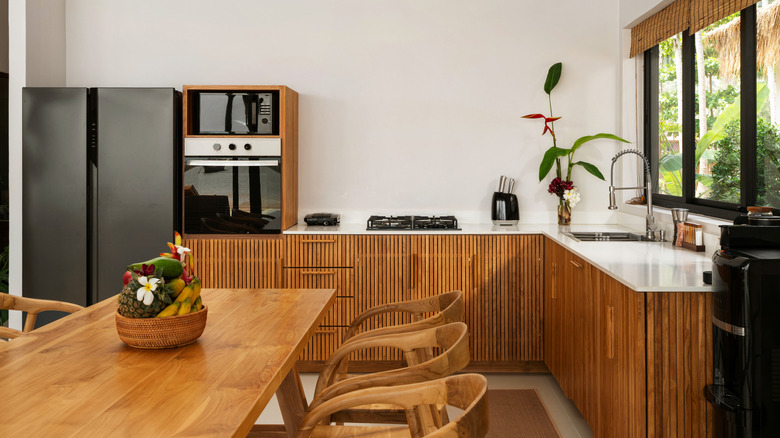
Incorporating wood elements in your kitchen design and decor can add warmth and color. One retro kitchen design trend that is having a resurgence in popularity right now is the use of burl wood. Burl wood is a unique, rare wood grain that forms as a result of growths on trees. These growths develop as the tree's response to stress, infection, or other trauma. When removed, the wood can be used to make table or countertops, veneer for furniture, wood paneling, and more. Burl wood is gorgeous because of its distinct pattern, texture, and coloring.
No two pieces of burl wood are alike, and its grain has beautiful, swirling patterns that can become the focal point of your kitchen. The use of this type of wood first became popular in the 1900s and was a highlight of the Art Deco era of the 1920s and 30s. It then experienced a resurgence in mid-century modern design, which began in the 1930s and '40s and remained through the '60s and '70s, embracing the use of natural materials and colors to create simple, functional elements. Burl wood fell out of style in the '80s, and didn't return to design projects until recent years.
Designers loved burl wood not only because of its novelty and rarity, but because it added texture, personality, and warmth to home interiors. Now, designers and homeowners are drawn to it because it brings the beauty of the outdoors right into the home while also highlighting the wild rarities of nature. Whether you're designing a rustic-style kitchen or a mid-century inspired kitchen, adding a statement burl wood piece allows you to showcase the stunning beauty of nature and bring personality to your space.
Incorporating burl wood into your kitchen design
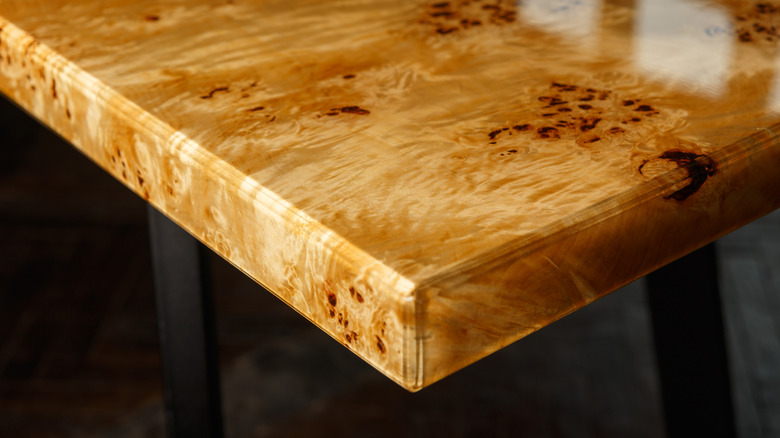
Because not all trees develop growths or burls, burl wood can be expensive and hard to find. Before starting your hunt for a burl wood piece for your kitchen, take some time to research the different types and price points so that you can figure out what will work for your kitchen's overall design and your budget. Burls can form on all tree species, and you'll note differences in color, texture, and overall appearance depending upon whether it originates from elm, oak, walnut, cherry, or any other type of tree.
When modernizing and elevating this retro design trend, think less is more. Incorporating too many pieces in a small space could make it look dated and claustrophobic. Instead, use one statement piece to create a focal point in your kitchen design. Smaller pieces of burl wood can be used for banquette kitchen seating, shelves, cutting boards, or cabinet faces. Larger burl wood slabs can be shaped, polished, and refined into a kitchen table or island. This unique wood can also be manufactured into wood veneer that can be used for cabinets or even an elevated version of '80s inspired wall paneling.
You can combine burl wood with other natural building materials such as stone and marble, or offset its natural look with sleeker materials like stainless steel. Whatever you do, take inspiration from the pattern, colors, and grain of the wood to create your color palette and choose other kitchen design elements.