

The Most Questionable Food Trends Of The 1970s And '80s
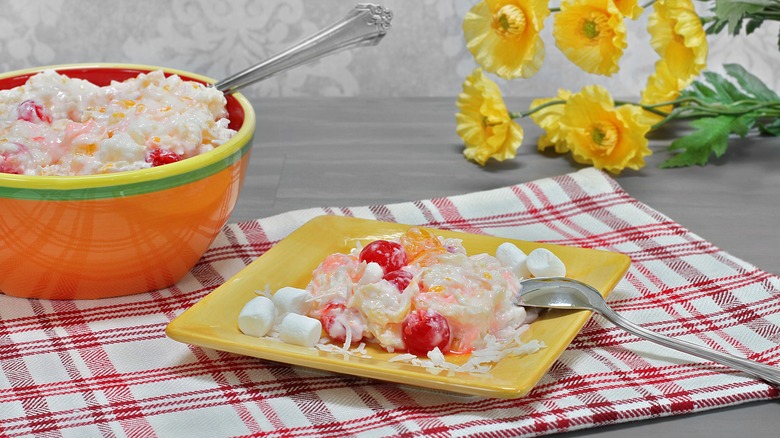
The 1970s and 1980s were defined by many things. This was the era that gave us iconic movies like "The Godfather" and "E.T." It also gave us Bob Marley's music for the first time, Prince Charles and Princess Diana's wedding, and the dawn of the internet. But on top of all of this, it also gave us some pretty questionable trends. No, we're not talking about the interesting fashion that was around at the time (especially in the 1970s), but the food.
The 1970s and 1980s were two decades that were full to the brim with questionable food trends. It gave rise to convenience foods like Beefaroni and Manwich, for example, and it was also a popular time for unique party foods like fish-shaped mousse and aspic with cherries and chicken. Some have even described the cookbooks of the 1970s as lawless, full of weird and wonderful dishes that were big at the time, but seen as a little questionable now.
Want to take a trip down memory lane? Check out some of the most unique food trends of the 1970s and 1980s below.
Libbyland Dinners
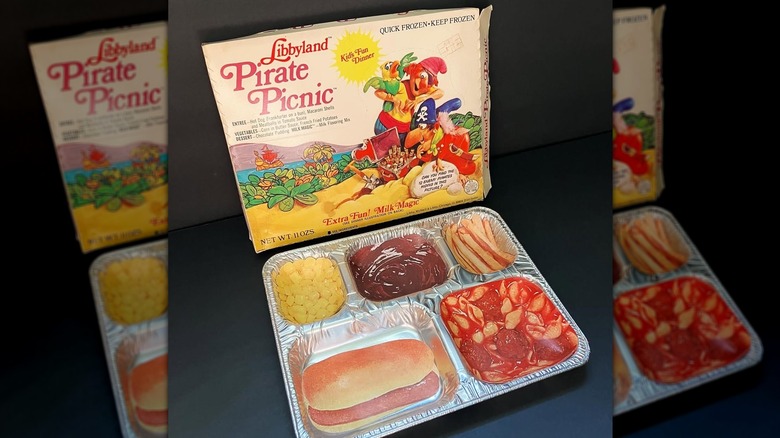
In the 1970s, Libbyland Dinners were all the rage. Marketed specifically at children, these T.V. dinners came in several different varieties, like Safari Supper, for example, which featured safari animal-themed packaging and contained foods like fried chicken, alphabet spaghetti, meatballs, corn, potatoes, and chocolate pudding, all portioned out on an inner foil tray. Other options included Pirate Picnic (which featured hot dogs and sloppy joes) and Sundown Supper (with hamburger and beans).
Today, Libbyland Dinners probably wouldn't hold up in the same way — especially given growing awareness around the negative health impact of ultra-processed foods. But back in the 1970s, they were pretty exciting. Many people remember getting the Libbyland Dinners as a special treat every now and again. Most were won over by the fun packaging (and getting the choice to eat dessert first).
Libbyland Dinners were just one example of 1970s T.V. dinners. Swanson also offered a range of heat-and-eat options, including Turkey Dinner and Fried Chicken. Most who remember them admit that the quality wasn't the best, but they loved the experience of eating them all the same. "I just remember the extremely hot temperatures and how much I loved the saltiness of everything, including the tinfoil tray," said one Reddit user.
Beefaroni
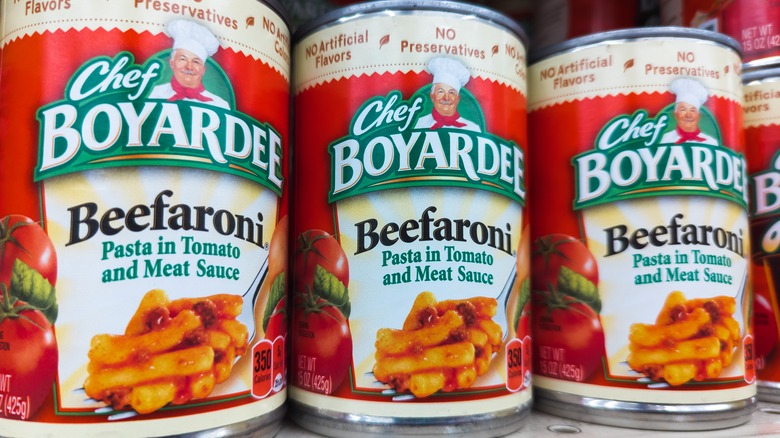
Beefaroni hasn't actually gone anywhere. You can still buy it from the store in a can, if you really have a craving for Chef Boyardee's signature tomato pasta with meat sauce. But in the 1970s, canned pastas like Beefaroni were a classic childhood meal.
Beefaroni's popularity was helped along by its memorable commercials. Some featured hand drawn characters and catchy jingles, while others focused on the value for money and meat content in each can. The 1970s was a major period of stagflation, so it makes sense that easy, cheap canned food options like Beefaroni were appealing for many people.
Today's Beefaroni isn't quite the same as the kind that was around in the 1970s, and Chef Boyardee has acknowledged that fact. In 2019, it even launched a new Throwback range, offering Beefaroni made with more beef and cheese than the modern versions. While it has its fans, many people admit that the taste of Beefaroni leaves a lot to be desired, and if they buy it today, it's mainly for nostalgic reasons.
Canned ham
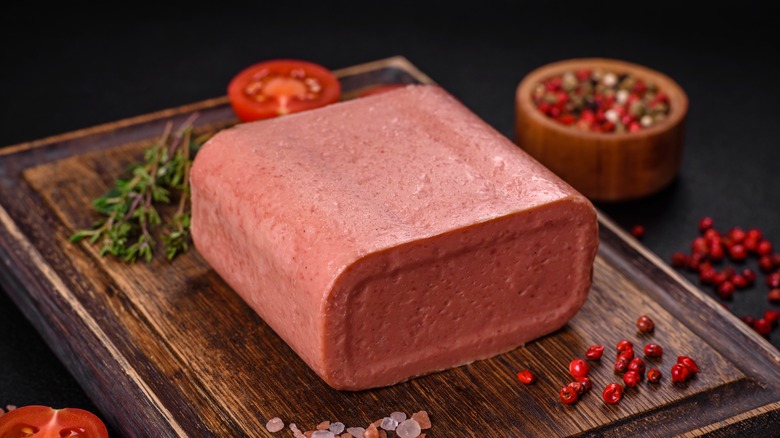
In 1926, Hormel Foods invented ham in a can, and shortly after that, SPAM hit the market. The latter, a type of canned lunch meat made with a mix of pork and ham, hit peak popularity with Americans during World War II, but after that, some people started to avoid it due to its association with the tough war years. But its simpler predecessor, canned ham, stuck around.
Many people remember eating a lot of canned ham in the 1970s, specifically. The cans were tough to get into (you actually had to use a type of key to open them), but once you were in, you could plop them out of the tin, remove the jelly coating, and then pop them in the oven to bake. People would often serve them with cloves and pineapples, and sometimes, they would even be offered up for Christmas or Easter dinner.
People still buy canned ham today, but it's not as popular as it once was (and you could argue SPAM is actually more popular now in many communities), given the range of other fresher ham products sold in grocery stores now. There's also the health impact to consider — canned and processed meats tend to be high in sodium, saturated fat, and nitrates or nitrites.
Bananas with meat or fish
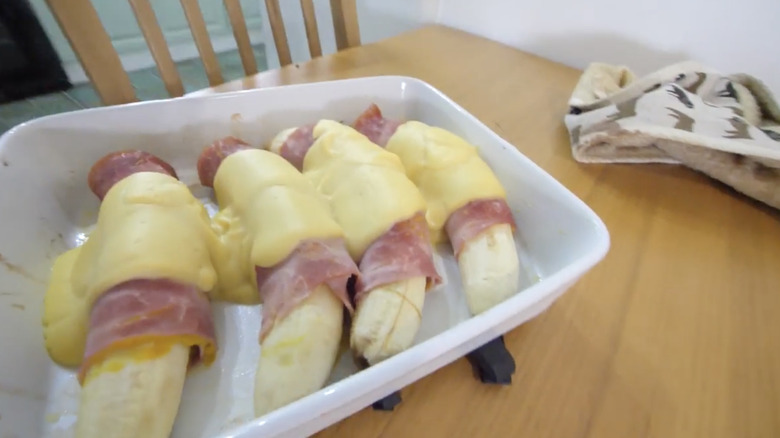
Nowadays, we see bananas as a convenient, sweet, nutritious food to eat as a snack, add to smoothies or desserts, or bake into bread. Who could forget the banana bread boom of 2020? Five years ago (at the time of writing), it seemed like every single person we knew was spending lockdown perfecting their own recipe. But if it had been the 1970s, there's a chance people might have been making very, very different foods with their bananas.
It seems that, back then, people were pairing bananas with many different, questionable foods. And when we say questionable, we mean ingredients like pickled herring, mayonnaise, and ham. No, that's not a joke. People really did that.
In fact, one 1972 Australian cookbook, called "Be Bold With Bananas," featured recipes like pork cutlets with bananas, bananas and ham, and even banana sausages. To make that last one, you'd have to peel the bananas, dip them in lemon juice, and then slice them lengthwise, before wrapping them in bacon. We reckon we'll stick with the bread.
Sizzlean bacon
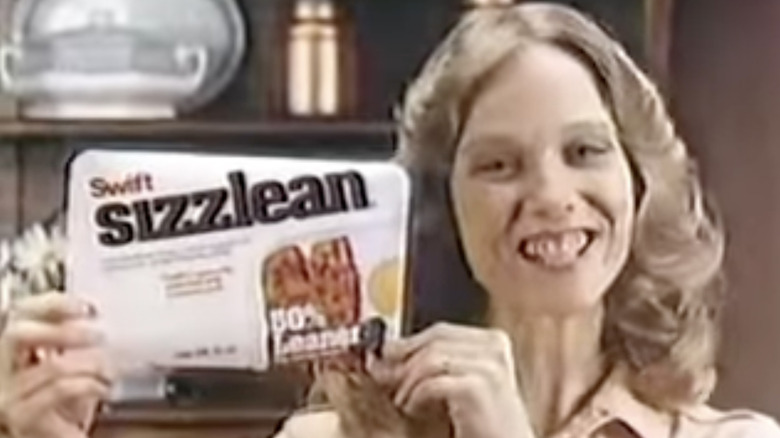
There have been many, many diet trends over the decades. In the early 2000s, liquid-only diets were popular, and in the 1990s, it was all about Atkins. In the 1970s and 1980s, everything had to be low-fat. This gave rise to many new, low-fat products, including Swift's Sizzlean bacon, which was made with a combination of bacon and lean meats.
At the time, many commercials for the product would demonize bacon for its fat content, and position Sizzlean as the more wholesome, considerably leaner alternative. Many remember the commercials for their catchy jingles and catchphrases like, "Move over, bacon."
But how did Sizzlean actually taste? Well, some didn't mind it, but plenty of people were not fans of Swift's attempt at a bacon alternative. Some have referred to the product as SPAM-like, but with a much limper texture. Another Reddit user called Sizzlean "pure disappointment," adding that it was one the "most cynical things" they had ever encountered.
Spray can cheese
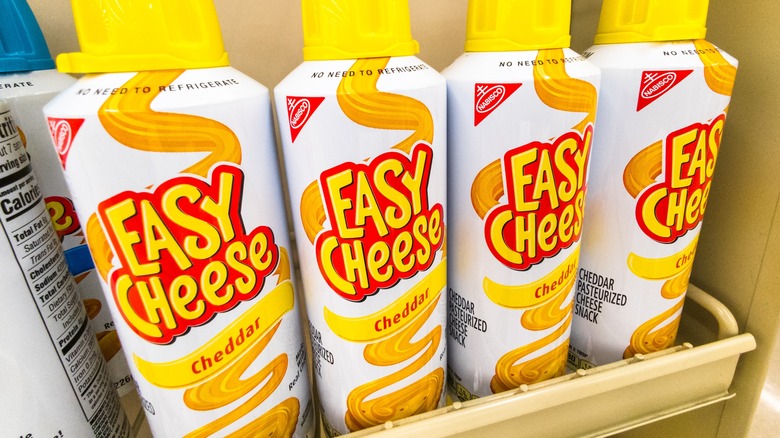
Back in 1965, Nabisco gave the world spray can cheese for the first time. Called Snack Mate, it was billed as an easy alternative to refrigerated cheese, and print ads showed the many different foods you could spray it on (everything from asparagus to melon to hot dogs, apparently). Snack Mate stuck around through the 1970s, and then in the 1980s, it was adopted by Kraft and renamed Easy Cheese.
After that, the vibe changed significantly. Gone were the asparagus and melon suggestions, and in their place was fun new kid-friendly packaging and molds of beloved T.V. characters like Ninja Turtles that you could spray the cheese into.
Canned cheese is still on the shelves, but to many now, the whole concept of shelf stable sprayable cheese seems quite questionable. But many kids of the 1980s were huge fans. Some remember sitting down with a can of cheese, pizza, and an episode of "Teenage Mutant Ninja Turtles." Bliss.
Jell-O salads
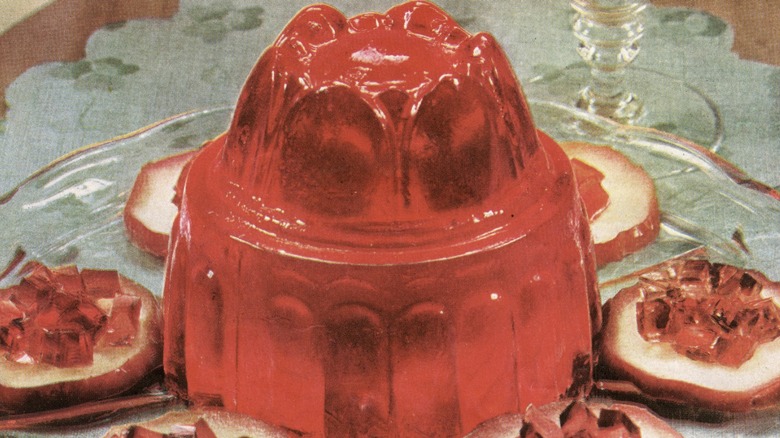
Jell-O salads were not a 1970s invention. In fact, they were already featuring pride of place on dinner tables in the 1930s. Back then, people would combine gelatin with almost anything and call it a salad. One dish that was popular in the 1950s and 1960s, for example, was cream cheese Jell-O salad, and another recipe from this era combined lemon Jell-o with ingredients like canned beets, vinegar, minced onions, and horseradish. No, we're not making this up.
Jell-O salads may sound like a seriously questionable meal choice, but they had staying power. They were still being served up in the 1970s and 1980s, usually by grandmothers who had grown up being fed them by their own mothers. In fact, in the 1970s, Jell-O cookbooks were still being published. This means that many people who were kids in these decades have vivid memories of having to eat Jell-O salad for dinner, at church picnics, and holiday gatherings, for example.
Tuna mousse
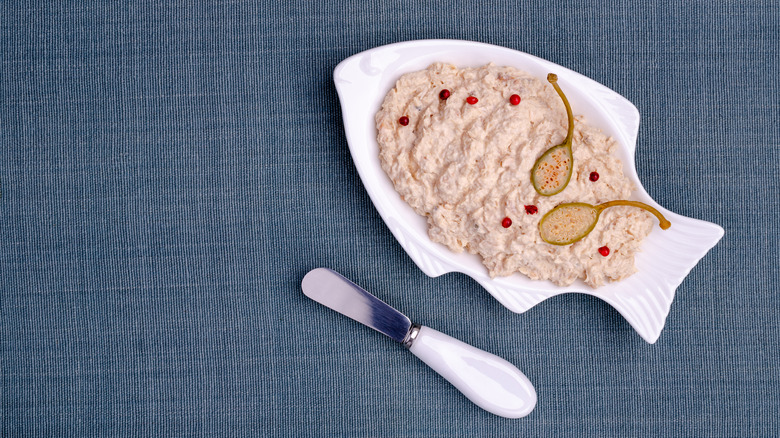
When we think of mousse, we think of flavors like indulgent chocolate or maybe refreshing strawberry. One thing that usually doesn't come to mind? Fish. But in the 1970s, tuna mousse, often served in a fish-shaped mold, was an actual trend.
The concept of tuna mousse might sound, quite frankly, questionable, but it has actually been around for quite a long time. In France, it's known as mousse di tonno, and it's made with simple ingredients like tunafish (of course), as well as butter, anchovies, capers, and lemon juice. In the 1970s, people would often serve up tuna mousse at parties in fancy moulds, with toppings like hot sauce and onions.
In general, 1970s party food was a little, well, strange-looking. The elaborate mousse, which was sometimes made with other seafoods, like lobster or shrimp, was sometimes served alongside other extravagant and odd dishes. Think: frankfurter crowns, carrot rings with a pool of peas in the center, and sandwich loaves (filled with things like egg salad and frosted with cream cheese, of course).
Liver and onions
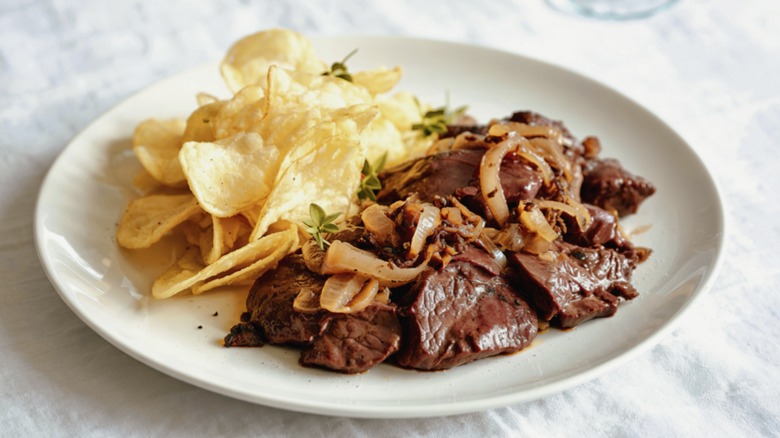
You know those days when you would get home from school to find your parents cooking something you just really didn't want? The disappointment was overwhelming. In the 1970s, for some, that dish would be liver and onions. It was definitely more of a hit with the adults than the kids. In fact, some remember that their parents would serve it with extra bacon grease or prune juice, while others recall their parents trying to disguise it as a different food, like steak. Some would happily go to bed without any dinner, if it meant not having to eat liver and onions.
Of course, liver and onions had its fans (and it still does), but many kids were not that impressed by the sight of the dish — especially when it was served at school. Today, even more people would find the whole idea of eating liver and onions pretty questionable. The dish fell out of favor in the late 20th century, and it hasn't really had much of a resurgence since.
Aspic
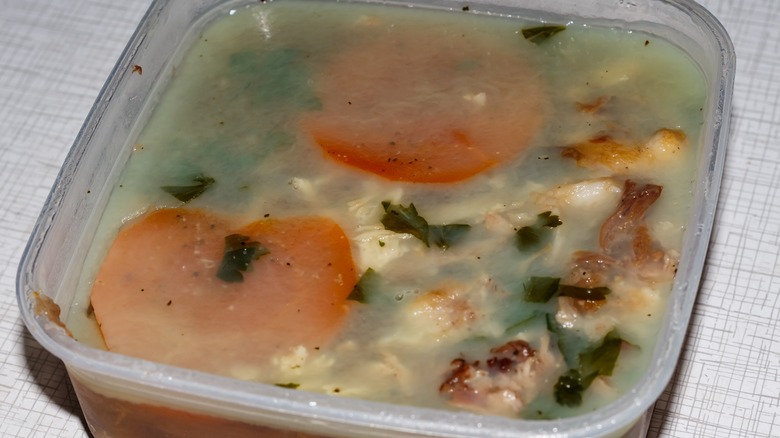
We've covered Jell-O salads, and now it's time to talk about the dish's equally wobbly sibling: aspic. The texture might be similar, but these dishes had some key differences. While Jell-O salads were made with, well, Jell-O, aspic was a type of clear jelly made with animal bones. The bones would be simmered to make a stock, and then the remaining liquid would be placed in the fridge until it congealed. Sounds appetizing, right? It sounds seriously questionable, we have to admit, but many people in the 1970s ate a lot of aspic.
One recipe from 1972, for example, instructs the reader how to make aspic out of ingredients like chicken breast, unflavored gelatin, mayonnaise, celery, and carrots. Everything would be placed in a mold and then presented on the table like a towering jelly, but with vegetables and meat inside.
Instant pudding
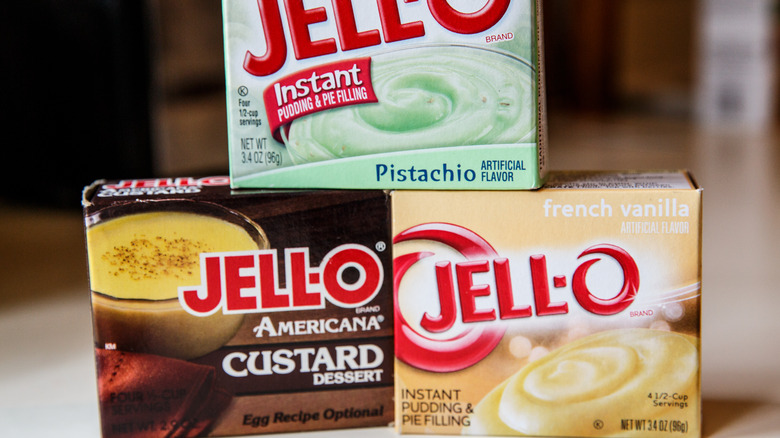
Jell-O wasn't just in the salad game, it was also the force behind instant pudding. Way back in 1936, it offered its first chocolate instant pudding, which was made with milk. It was a big hit at the time, so the brand introduced a range of new flavors, like vanilla and butterscotch.
In the 1970s and 1980s, Jell-O was still feeding kids instant pudding. Many people remember its Soft Swirl dessert, for example, which was a new twist on instant pudding. It was supposed to be more sophisticated than other products on the market, with a softer and creamier texture than its predecessors. It also came in a range of flavors like chocolate, peach, and strawberry crème.
Some people were fans of Soft Swirl, while others thought the taste and texture was seriously questionable. Either way, it didn't stick around very long, and disappeared from the market after the 1980s.
Cheese balls
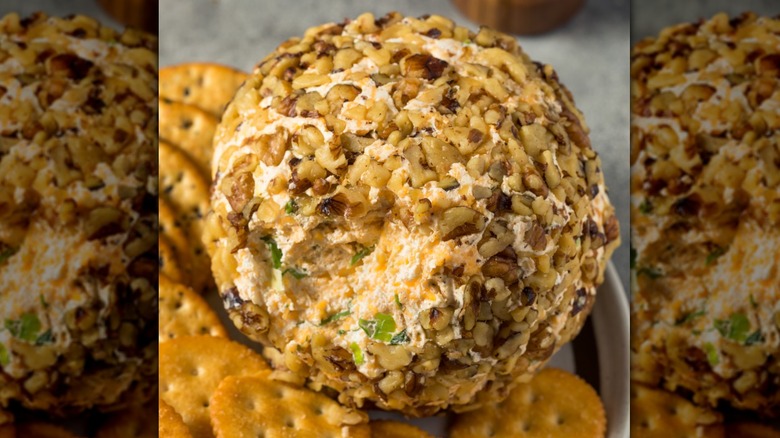
If you were at a party in the 1970s, there's a good chance that, sitting alongside the fish mousse, Jell-O salads, and aspic we spoke of earlier, there'd be cheese balls. No, we're not talking about the puffed snack (although those would become a popular party staple in the 1990s), but actual balls made of cheese.
Usually, cheese balls would comprise cream cheese, mixed with cheddar, mixed with other ingredients like garlic and Worcestershire sauce. Everything would all be pressed together by hand until it formed a ball and then the whole thing would be covered in nuts. Many households had their own spin on the recipe, and would add ingredients like bacon and jalapeños into the mix, too.
Some cheese ball recipes sounded pretty good, we won't lie. But some were made with some pretty divisive ingredients, like deviled ham, pineapple, deviled eggs, and thousand island dressing.
Hot dog everything
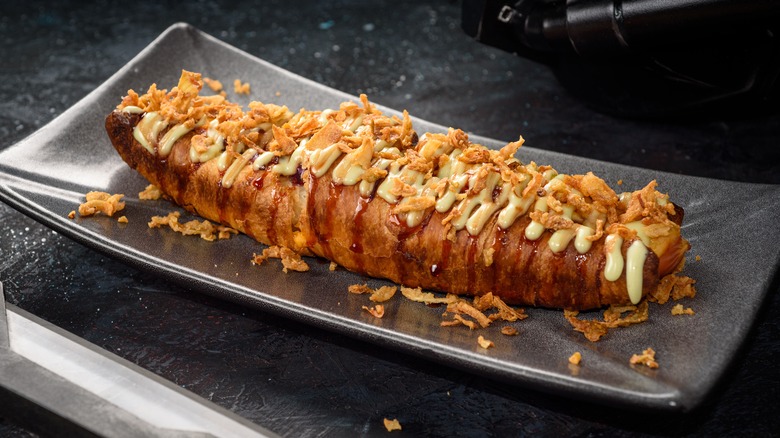
Hot dogs weren't new in the 1970s. In fact, they weren't even new in the 20th century. They've actually likely been around since the 1600s, when they were first invented in Germany. Hot dogs made their way to the U.S. in the late 1800s, and they became an instant hit. Over the course of the 20th century, the food kept gathering momentum, and by the 1970s, people were really having fun with hot dogs.
In order to impress party guests, people would transform hot dogs into fancy centerpieces, turning them into diamonds, spirals, and palm trees, for example. But for many people in the 1970s and into the 1980s, a hot dog casserole was a popular choice. Some would make it with potatoes and mushroom soup, while others would combine it with nacho cheese or corn, for example. In another unusual recipe, some would turn hot dogs into a pie by combining them with white bread, sauerkraut, pickles, and mustard.
Sloppy joe in a can
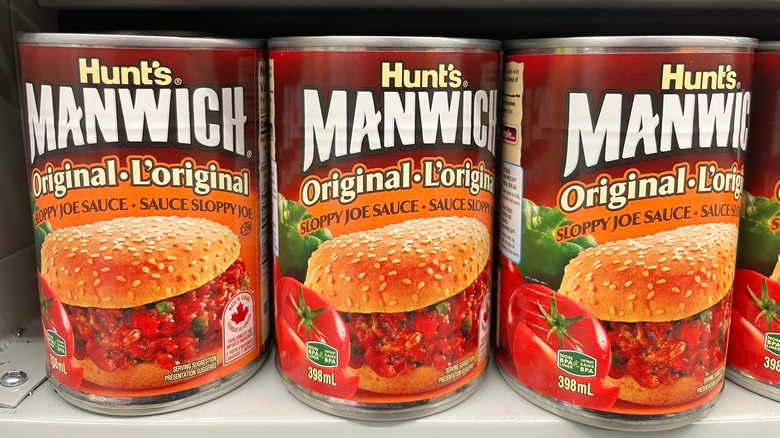
Ham wasn't the only thing that came in a can in the 1970s and 1980s. Manwich, which is basically a sloppy joe in a can, was also pretty popular. It first hit the market in the late 1960s, and it was a big hit in the decades that followed — especially for kids.
Many people remember opening a can of Manwich, produced by Hunt's, in the 1980s and throwing it on whatever bread was leftover with some sliced cheese, for example. Others remember going to friends' houses and being treated to Manwich, while some recall their parents using a can of the processed meat to cook up a casserole.
Sloppy joe's and Manwich are still around today, of course. But for many people, the 1970s and 1980s was when they first fell in love with the food, which, let's be honest, is basically just soggy canned meat.
Ambrosia salad
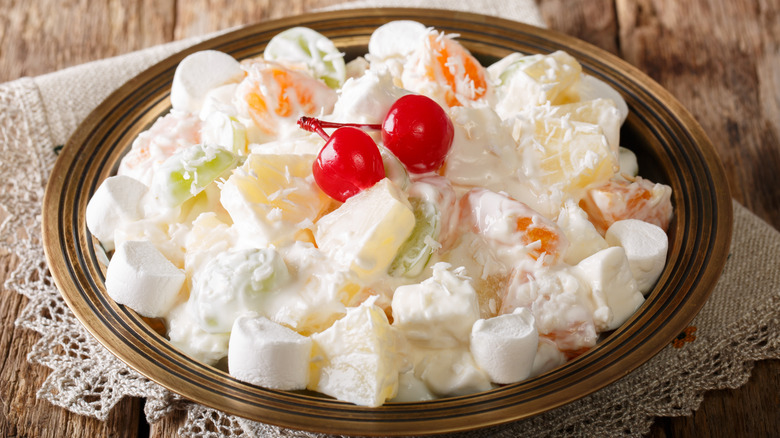
Ambrosia salad hails from the Southern U.S., and it is, well, unique. The dish is made with whipped cream and marshmallow fluff, which so far, sounds pretty normal, if a little sweet. But this is where things seem to go a little off-piste. The other ingredients in ambrosia salad are mayonnaise and sour cream. Yes, with the whipped cream and the marshmallow fluff, and often decorative fruits like pineapple and cherries, too.
The salad might sound odd to some, but plenty love the unusual combination of ingredients. In the 1970s and 1980s, it was a particularly popular party piece, and many have fond memories of being served the dish at holiday dinners and gatherings.
Not everyone made ambrosia salad the same way. Some chose to forfeit the mayonnaise and sour cream, for example, and just make it with sweet ingredients like canned fruits, whipped cream, and mini marshmallows. Others would mix in cottage cheese and lime Jell-O. To each their own.