

6 Simple Ways To Elevate Your BBQ, According To Michael Symon
We may receive a commission on purchases made from links.
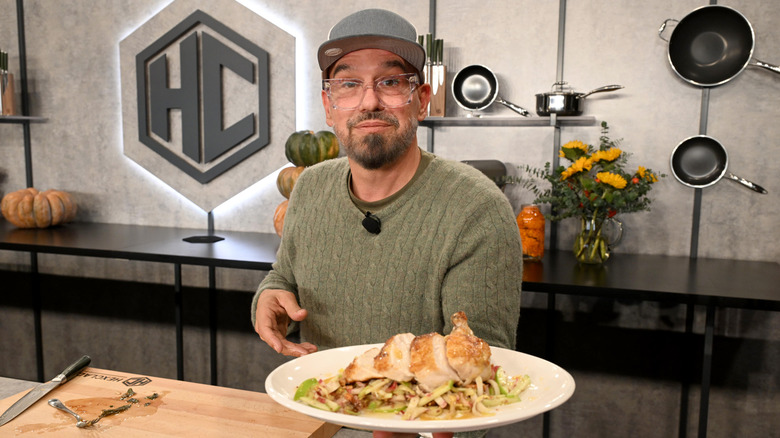
If you are hunting for an expert to talk to about all things relating to BBQ, you won't do much better than restaurateur and award-winning chef Michael Symon. The Food Network and ABC alum is perhaps best known for his appearances on hit shows like "Burgers, Brew & 'Que," "Iron Chef," and "The Chew." He has also authored many cookbooks, several of which have been included on the New York Times Best Seller list.
Chef Symon is a veritable font of knowledge on all things cooking, regularly providing tips and tricks that home chefs can incorporate into their daily routine to level up their culinary game. While these are fantastic, we were curious to pick his brain on some of the simplest ways you can elevate your BBQ that are both cost-effective and accessible to the average home cook wanting to wow their friends and family with pitmaster-level results.
To this end, we caught up with the legend ahead of his upcoming appearance at the Los Angeles Wine & Food Festival, which will be held from November 7-9. The chef offered us some fantastic recommendations that are not only effective, but may just blow your mind in terms of their ingenuity. Read on for the full scoop.
Stick with charcoal
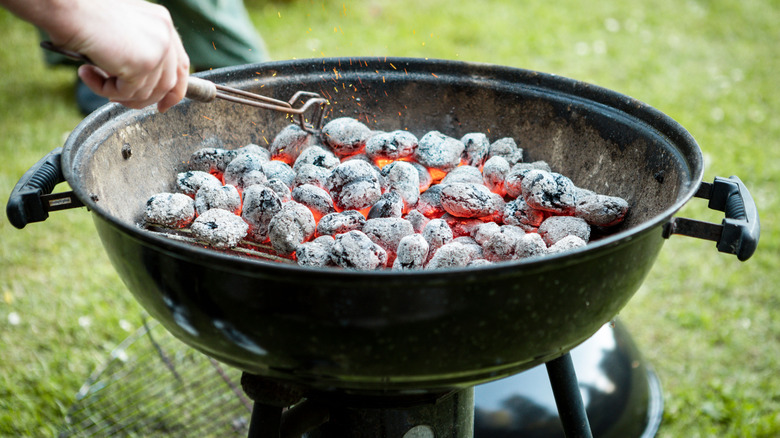
In the world of BBQ grilling, pitmasters will often argue about the utility of gas versus charcoal for the best results. There are proponents for each, but when it comes to the home cook, chef Michael Symon quickly settles this debate once and for all by suggesting you "grab a Weber potbelly grill and use the damage method with charcoal instead. It's cheaper and delivers better results."
Beyond cost, the primary reasons to cook with charcoal are flavor and texture. Because you can cook at a higher heat, the meat will achieve that quintessential seared crust and will be infused with that smoky flavor that makes quality BBQ so mouthwatering. That said, it does require a little skill and patience to use. Among the most common mistakes made with charcoal are not using the right kind, failing to implement a chimney starter, and putting too much inside the grill.
While you can use a charcoal grill to smoke meat, Symon says "if you're looking to buy, the small Gateway smoker is a great option for quality at a reasonable price." Gateway drum smokers are versatile and extremely easy-to-use for novice and expert cooks alike. They are especially effective because of their consistent heat control, which ensures that the meat cooks evenly and quickly every time.
The best cuts don't have to be expensive
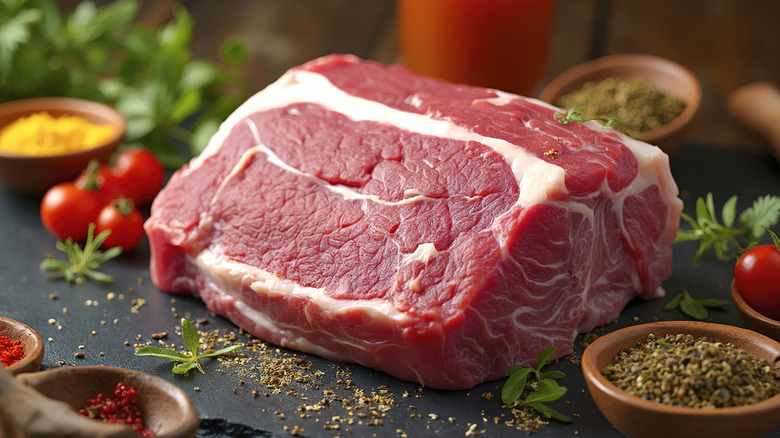
Brisket and ribs may be a staple for BBQ lovers, but Michael Symon suggests that you don't need to spend a lot of money on expensive cuts — or have a lot of experience to get professional level results on the grill. "You can't beat a pork butt — affordable, flavorful, and forgiving. And don't sleep on beef cheeks ... they're seriously underrated."
Pork butt is often a go-to for barbecue beginners because it is so cost-effective and easy to prepare, but sometimes more experienced cooks will forgo it thinking it isn't as exciting as more bougie cuts. This couldn't be farther from the truth. When cooked at the proper temperature using the right seasonings, pork butt can be incredibly flavorful and tender. Try elevating a simple pork butt using flavor injections, like apple juice or apple cider vinegar, which will not only infuse the meat with moisture, keeping it tender and juicy, but will enhance the taste.
When it comes to beef cheeks, smoking is the name of the game. Beef cheeks are a relatively tough cut of meat, making them an ideal candidate for low-and-slow cooking methods. As they smoke, dense protein fibers, sinew, and cartilage will slowly break down, infusing the meat with intense, savory flavor and essentially basting it from the inside out, keeping it tender and juicy.
Pickle brine is the secret to barbecuing like a pitmaster

Among the more unusual, yet intriguing, suggestions made by chef Michael Symon for elevating your BBQ game is repurposing that leftover pickle brine you've been saving up in the refrigerator. Not only is pickle brine purportedly good for your health, it can transform BBQ meat. "Add a little pickle brine to your spray bottle for misting while cooking — it adds brightness and keeps things juicy."
If this sounds somewhat unorthodox, it isn't without precedent. Pickle brine is frequently added to meat brines and marinades owing to its acidity and salinity, both of which can help tenderize meat and infuse it with an intense, briny flavor. Though you can theoretically use any type of pickle brine for this purpose, you may want to consider the flavor you are going for before you decide. For example, dill pickle brine is tangier and has a distinctive herbaceous taste profile, while sweet pickle brine has the addition of sugar that can not only help the meat brown, but give it a less notably sharp flavor.
Keep the seasonings simple
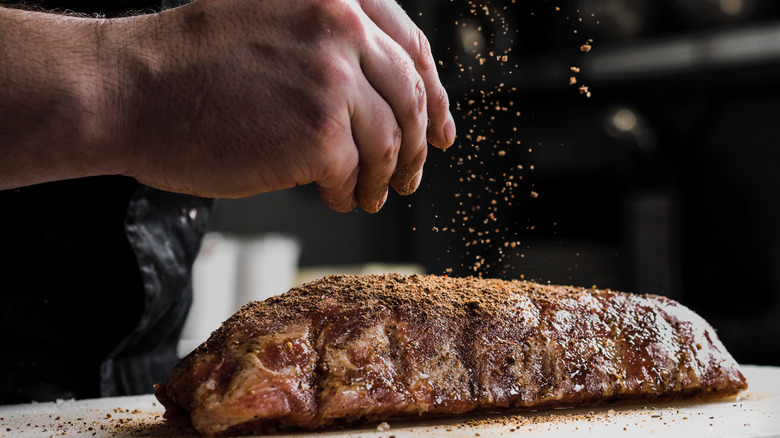
While it may seem tempting to go bold or go home when it comes to seasoning meat for BBQ, sometimes it pays to keep things more straightforward. Chef Michael Symon notes "I keep it simple — salt, black pepper, Aleppo pepper, and ground celery seed. Clean, balanced, and always delivers."
When it comes to salt, the best variety to use for BBQ is kosher salt. Not only does its coarse texture make it easier to distribute evenly across a cut of meat, its clean flavor enhances the natural taste of beef, pork, or chicken. Salt can either be liberally added to the meat before it hits the grill or be applied ahead of time as a dry brine, which will help tenderize it and encourage the formation of a crisp crust as it cooks.
If you are looking to infuse the meat with additional flavor, try glazing the meat with a mop like a true pitmaster. This process essentially encases the meat with a protective layer of sauce, thereby preserving moisture and enhancing its taste. While you can use a store-bought sauce, making one from-scratch is not only easy, it may produce the best flavor. If you do opt for a store-bought variety, you'll want to add some sugar to it and reduce it to help thicken it before using it as a glaze.
Don't forget to rest the meat
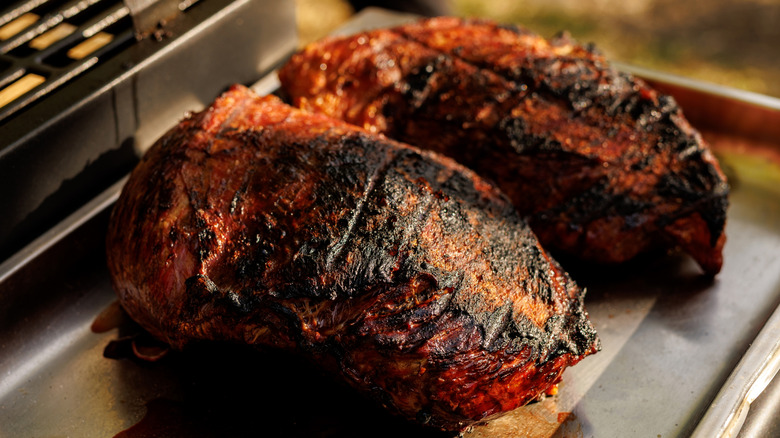
When it comes to BBQ, it is crucial to allow the meat to rest after pulling it off the grill. While you may already be familiar with this tip, chef Michael Symon felt that it was worth reiterating. "Let your meat rest for at least 2 hours after smoking, wrapped in peach paper and tucked into an insulated cooler. It makes a huge difference ... and remember: the internal temperature will rise about 10°F after it comes off the smoker. Don't overcook — pull it early and let the rest do the work."
The primary reason for resting meat after cooking it is to allow for the juices within it to redistribute before you cut into it or shred it. As it cooks on the grill, protein fibers within the meat contract, forcing the moisture within them to pool in the center of the cut. As the meat begins to cool, these muscle fibers will begin to relax, allowing the moisture to penetrate back into the edges of the meat.
Cook to temperature, not time
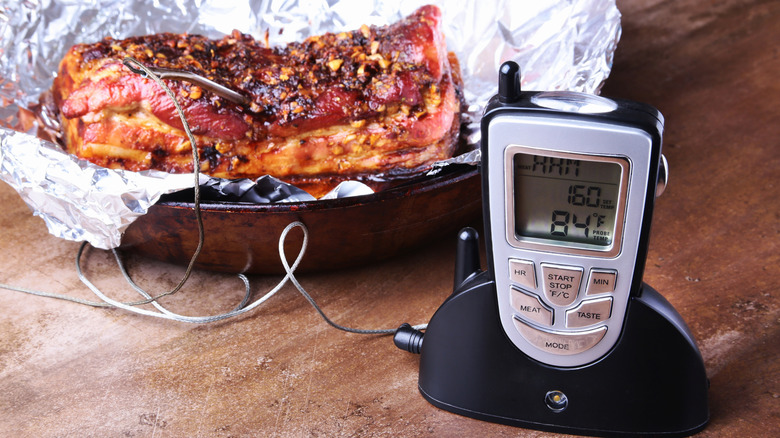
Though BBQ recipes often include recommendations for how long a piece of meat should take to cook properly based on weight, Michael Symon warns that you should never rely solely on time to determine doneness. "Cook to temperature, not time, and most importantly: have fun and be patient. Great BBQ doesn't happen overnight — it's all about practice."
No two grills or grillers are alike, and every cut of meat will require more or less time to achieve the desired doneness depending on its precise morphology and how it is prepared before it has been added to the grill. To ensure the meat is done to the ideal temperature it is necessary to invest in a quality meat thermometer.
A wireless meat thermometer is ideal for use with BBQ because it eliminates the need for babysitting the grill overnight and it can more accurately determine doneness. While some of these can cost a pretty penny, there are a couple brands that are more affordable, yet equally reliable, including the MeatStick V Wireless Meat Thermometer and the Ninja ProChef Wireless Meat Thermometer. Both of these allow you to monitor the temperature of your BBQ meat from your phone, giving you the confidence that you won't over or undercook it.
Michael Symon and others can be found at the Los Angeles Wine & Food Festival from November 7-9, 2025. For more information, click here.