

In The Mid-'80s, Burger King's Worst-Ever Ad Campaign Sent Customers Looking For Herb
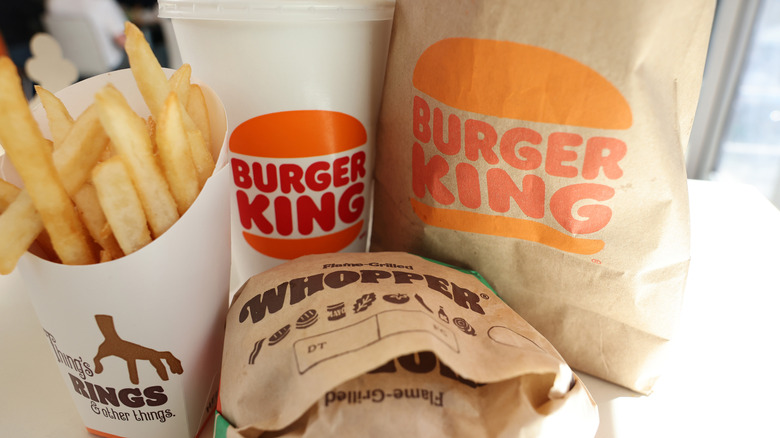
Would you go to Burger King for a chance to win a million dollars? In the 1980s, Burger King was banking on the idea that you would, and so would a lot of other people. The chain decided it needed a new gimmick to compete with both McDonald's and Wendy's, which were riding high on their own popular ad campaigns at the time. Burger King came up with the idea of Herb. If you found him, you had a chance to win big bucks. At the very least, you could get a $0.99 Whopper if you told employees you weren't Herb — that's probably one fact you didn't know about the Whopper.
If you're already a bit confused, well, that makes sense. The ad campaign was ill-conceived from the start. Burger King started running print ads before airing commercials. These ads were ominous and just said things like "What are you waiting for, Herb?" Devoid of context, these ads made no sense and did very little to drum up business (and actual guys named Herb probably didn't love it). But Burger King was trying to build a narrative here, and, in some ways, this was an early attempt at viral marketing, something better left to Taco Bell these days.
Eventually, TV spots showed Herb's parents and friends, focused on the idea that Herb had never eaten at Burger King before. The campaign officially kicked off with the notion that Herb would visit various Burger King locations across the country. If you found him at one, you would win $5,000, with everyone in the restaurant getting the chance to win a million dollars if they played into the craze.
Herb's big Burger King blunder
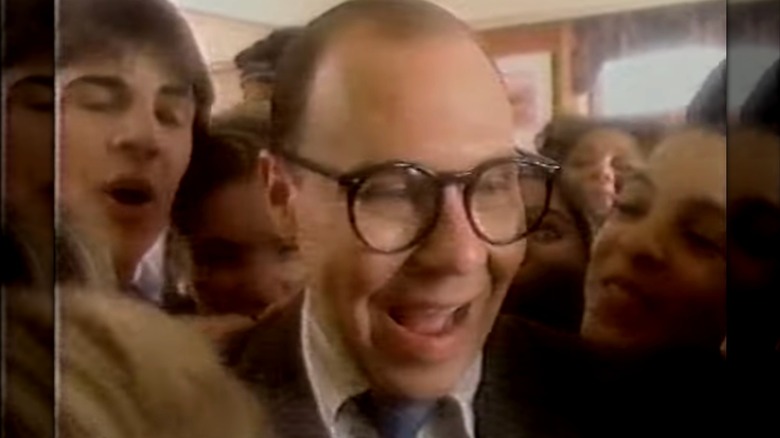
Burger King spent $40 million on this campaign. Adjusted for inflation, that's $118 million today. The fast food chain would have to sell a heck of a lot of Whoppers to make that worthwhile. After six weeks of teasing, Herb's Super Bowl XX reveal fell completely flat. He turned out to be an average-looking guy played by Jon Menick with slicked-back hair and big glasses. BK was leaning into the '80s nerd aesthetic, but it didn't quite land. In the commercial, he said he tried Burger King and liked it, meaning the hype was extremely disproportionate to the payoff.
Folks really did get paid when they found Herb, but it was not without controversy. You had to be 16 to win, and when a 15-year-old spotted Herb, Burger King gave the money to an older person who was with him. The parents of the boy complained, and the Alabama senate declared that Burger King had committed fraud. By May, Burger King had washed its hands of Herb. The chain's then-president Jay Darling, admitted the campaign hadn't worked as well as he'd hoped. The company also dropped the ad firm it had been using, and two months later, Darling resigned.
According to Marketing Dive, Burger King's profits dropped 40% in 1986, proving that Herb, like the story of the ill-fated McWhopper, was not a path to success. Later critiques of the campaign have suggested that the problem was a lack of relevant focus. Herb had nothing to do with Burger King. The campaign didn't relate to the quality of the food or offer any reason to go to Burger King other than an off chance of winning money. No wonder it failed.