

Tea Leaves Are The Aromatic Spice Your Desserts Have Been Missing
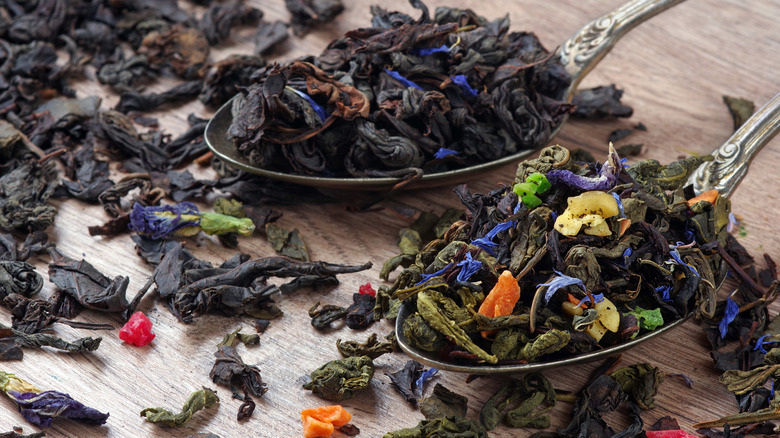
There are six main types of tea with over 3,000 varieties worldwide; some are simple, while others are as full-bodied as fine wines. Tea isn't just for brewing, however, and can be incorporated into desserts, imparting unique flavors that are much more exciting than vanilla extract. Bala Sarda hails from a family of tea retailers and exporters and, in 2015, launched VAHDAM, which soon became globally recognized for its superbly curated and ethically grown Indian teas.
We asked Sarda for his expert advice on how to use tea leaves in baking. "Tea leaves are a unique flavoring agent," he told us, "because they offer complexity and nuance that pure extracts or spices often can't match." Sarda describes tea as a symphony of flavors, citing Earl Grey, matcha, and lapsang souchong as examples of especially aromatic teas. Earl Grey has a hazy origin story, but its bergamot flavor is well-known. Sarda points out that "it also has floral, citrus, and tannic notes" that make it stand out. "Matcha is vegetal, sweet, and slightly bitter," he explains. "Lapsang souchong is smoky, woody, and reminiscent of campfire." Its smoky essence, in fact, works wonders with meat rubs and marinades.
"This complexity," Sarda said, "translates directly into your baked goods, creating a more interesting and depth-filled experience." But not only do tea leaves add tremendous flavor to desserts, their volatile oils also add delightful aromas, with jasmine and masala chai being especially fragrant. "When baked, these aromas permeate the entire item, making the eating experience as much about the smell as the taste."
Some teas are better than others for baked goods
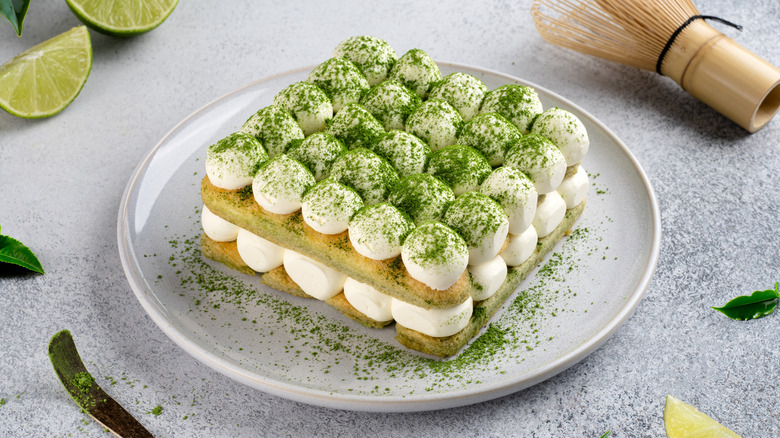
One doesn't usually think of tea as having an umami quality to it, but Sarda reveals that teas like matcha and hojicha (a Japanese roasted green tea) are packed with it. According to Sarda, this adds "a savory, 'moreish' depth that keeps people coming back for another bite." Some desserts will benefit from the natural tannins of certain teas, which "provide a subtle bitterness that, like the bitterness in dark chocolate or coffee, can balance and enhance sweetness, preventing your dessert from being cloying."
Additionally, Sarda recommends particular teas for various dessert recipes. For example, Earl Grey for a perfectly moist chocolate cake, a lemon loaf, or lemon-glazed Earl Grey cookies. Matcha and smoky teas pair beautifully with chocolate cookies, cakes, and chocolate truffles. However, not all teas are suited for baking and other desserts, and Sarda advises avoiding overly delicate or subtle teas, such as white teas, silver needle (a silvery white tea that's produced in China's Fujian province), or very light green teas.
Indeed, you should also refrain from using herbal tisanes with a high moisture content, such as hibiscus, fresh ginger, and fruit teas that contain chunks of fruit. Also stay clear of teas with artificial flavors or oil, as well as extremely bitter and astringent teas. When you're choosing teas for using in desserts, look for higher-quality, loose-leaf varieties, and grinding the loose tea leaves is an important step you shouldn't skip before incorporating them into baked goods. With so many teas to explore, you'll be surprised by the tasty results.