

The Retro Drive-In Chain That Ruled The 1970s Has Just A Few Locations Left Today
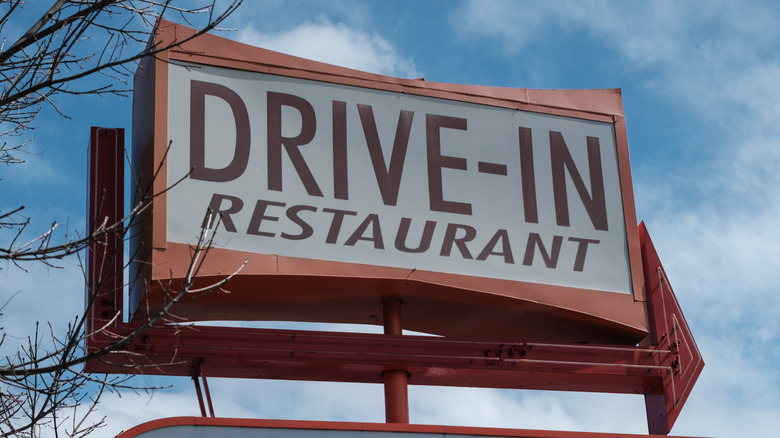
In the 1950s, hitting the drive-thru wasn't something to be done in haste, impatiently waiting for the car ahead of you, then peeling away as fast as possible. Nay, in times of yore, drive-up fast-food joints were as much a place to grab a bite as to show off your car and your company. One epicenter of this era's social scene was Dog N Suds, which remained popular through the '70s but has now declined to just a few remaining locations.
The 1950s-style drive-in restaurant concept was known for its hot dogs, burgers, and frosted mugs of root beer, which were brought out to parked guests by rollerskating carhops. In its heyday, Dog N Suds was a casual social hot spot for teens and young adults to hang out. It was reportedly also a popular place to go after a drive-in movie – further emblematic of 1950s car culture as an emerging symbol of middle-class American life and its near-inextricable overlap with the era's youth culture.
Some locations offered booths where patrons could dine inside, complete with retro yellow checkerboard-tile floors, although the row of covered parking spaces outside was the Dog N Suds hallmark. By 1968, Dog N Suds had a presence of over 650 locations. But, when the business was sold in 1970, like so many golden jewels of the '70s (we miss you, waterbeds), the Dog N Suds dynasty came to its eventual close.
Dog N Suds dominated '70s leisure hours
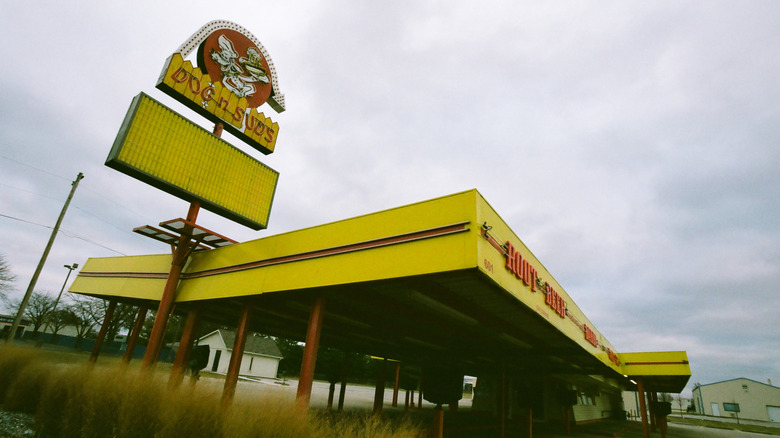
The first Dog N Suds location opened in Champagne, Illinois in 1953 — when Harry S. Truman was President and Patti Page's "How Much is That Doggie in the Window?" topped the Billboard charts. Initially, the Dog N Suds concept was humble side work, the root beer and hot dog stand of two music teachers from the University of Illinois. As Dog N Suds' popularity boomed, Don Hamacher and Jim Griggs left their teaching positions to "walk the dog" full time, backing the chef-hat-clad dog mascot with the slogan "Where Everything's So Dog-Gone Good." By the 1970s, Dog N Suds was one of the biggest fast-food chains in the U.S.
In a Facebook post dedicated to drive-in, reminiscing O.G. fans wax nostalgic: "Dog n suds was our turn around for driving up and down galena avenue in the 70's. Drive to bowling alley down galena to dog n suds, turned around and drive back up galena to bowling alley all night long. Loved it!" Others agree, "Wish I could go back for a day," raving about specific beloved menu items like the Texas Twin Burger and the Coney Dogs, but mostly the root beer ("You can't seem to find root beer like that anymore"). Today, the official Dog N Suds website still calls its hand-crafted root beer the "World's Creamiest." Another post asks, "Does anyone remember eating at 'Dogs N Suds' in the 70's? [...] The hot dogs were good, but the root beer floats were AMAZING!!!"
An old-time legacy kept alive by 11 locations and bottled root beer
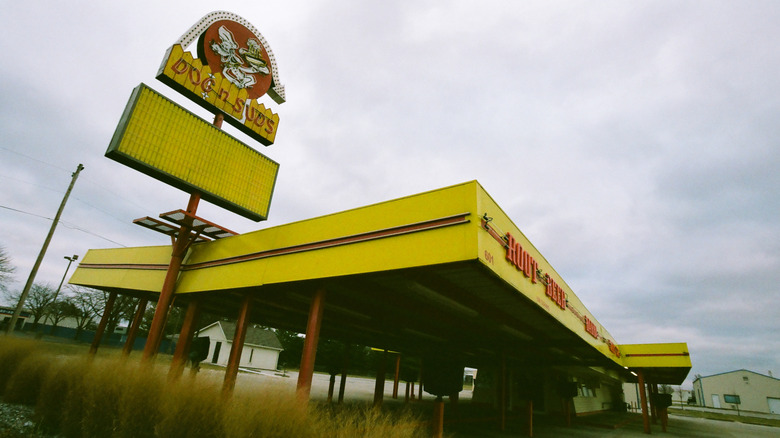
The once-massive chain still holds onto its Midwestern heritage. According to the official Dog N Suds website, 11 operational locations currently remain: four in Indiana, three in Illinois, and one each in Michigan, Ohio, Wisconsin, and Arkansas. Nowadays, Dog N Suds reaches the widest via its bottled root beer brand, which is sold by retailers nationwide. Multiple foodies on Reddit call Dog N Suds their favorite root beer brand; another thread argues that Dog N Suds' root beer tastes even better in the iconic frosted mug, if you happen to live near one of the remaining locations — which have a markedly different flavor from their teen-hangout heyday.
Yelp reviews of a still-operational Dog N Suds in Elyria, Ohio note that the outdoor space is good for kids to run around. Other reviews similarly place the chain's appeal in the past: "This place has been a hometown favorite for 66 years," and "Been going here since I was a little kid [...] that delicious Homemade Root Beer. I always get a gallon of it to go!!! So good!"
In 2008, former Elyria Dog N Suds owner Ilene Hampton told Ohio news outlet The Chronicle-Telegram, "The customers liked it then and they love it now. If it ain't broke, don't fix it." The then-75-year-old, who bought the business in 1961, expounded, "It's like 'Happy Days' [..] They can sit on the picnic table with their car radios playing just like 50 years ago."