

10 Mistakes To Avoid When Making Beef Stew
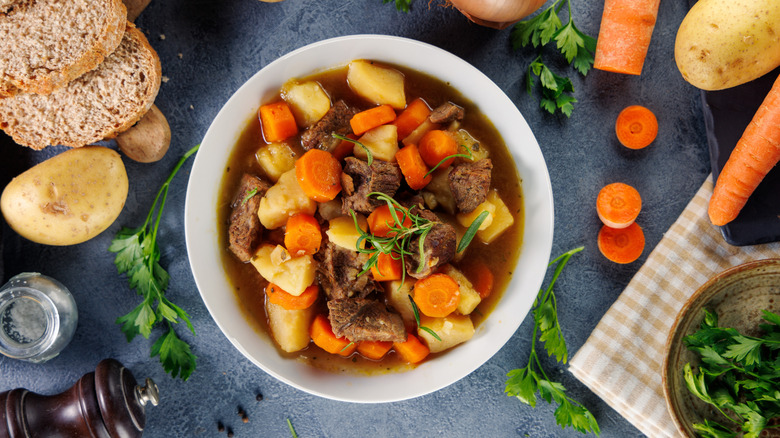
Few dishes are more comforting than a rich and hearty beef stew. When it's cold outside and you need a big bowl of something warming and nourishing, beef stew will get the job done every single time. Although it may seem like a relatively simple dish to make, there's actually a lot that goes into making a good beef stew — and a lot of ways in which you can mess it up if you don't know what you're doing. Luckily, though, most of those mistakes are easily avoided.
We've consulted a couple of beef stew experts, including Chef Robert Smith, owner of Culinary Collective Atl, and Dagan Lynn, executive chef of Beef. It's What's For Dinner, to discuss some of the most common mistakes people make when it comes to whipping up a good beef stew. Avoiding these mistakes is key to ensuring that your next beef stew turns out better than ever before.
Not browning the beef properly
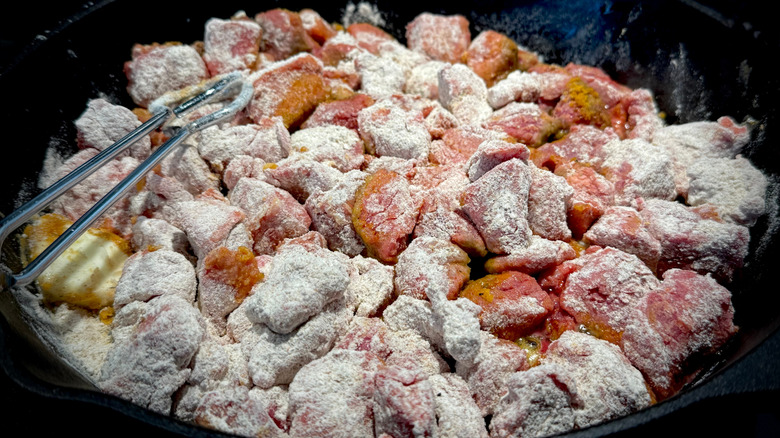
With soups and stews, it may seem like you can just throw all of your ingredients into a pot, cover them with some water, and start simmering away. However, if you do, it's likely to result in a stew that's much less flavorful than it would be if you were to take a few extra steps. One of the most important steps you shouldn't skip when trying to make a deeply delicious beef stew? Browning the beef. "Home cooks often try to rush the browning step, overcrowding the pot, or they just skip it thinking it doesn't matter since the stew will cook for hours anyway," says Chef Robert Smith.
But this can be a big mistake if you're trying to build a flavorful stew base. If you refuse to brown the meat, says Smith, "the beef steams instead of searing, resulting in pale, gray meat that lacks that deep, savory 'beefy' flavor." So, what should you do instead? First, pat the beef dry, then brown it in your pot, working in batches so it can brown properly instead of just steaming. Make sure it develops a nice, browned crust before the next step. In a rush? Check out this tip for quickly browning beef for stew.
Allowing your stew to become too dense
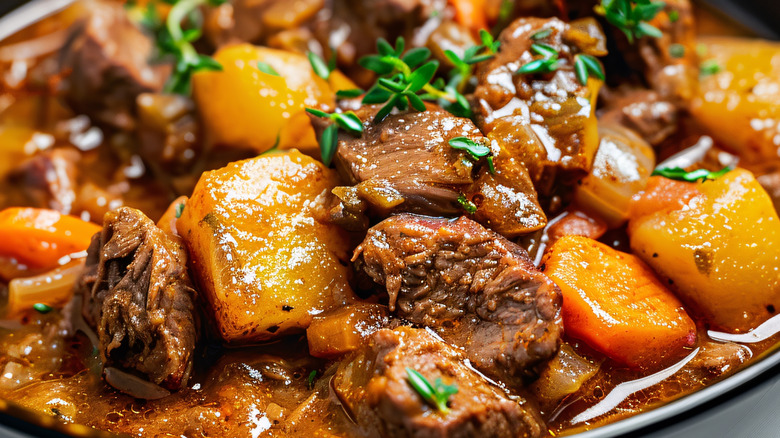
Beef stew is a dish that really depends on a certain texture. You don't want it to be too thin, of course, since that will result in more of a beef soup type of situation, which is not what you're going for. But at the same time, you also want to make sure that the stew isn't too dense. After all, it should still retain some of its brothiness.
Because potatoes, which are often included in beef stew, tend to be so starchy, it's easy for the broth to thicken too much, making the dish too dry. Too much cornstarch, another ingredient that's often called for in beef stew recipes, can do the same thing. Luckily, the solution to an overly thick broth is an easy one: Just add more water or beef stock to thin things out. You can also cover the pot to ensure that the moisture in the recipe stays in the stew instead of turning to steam and escaping.
Using the wrong cut of beef
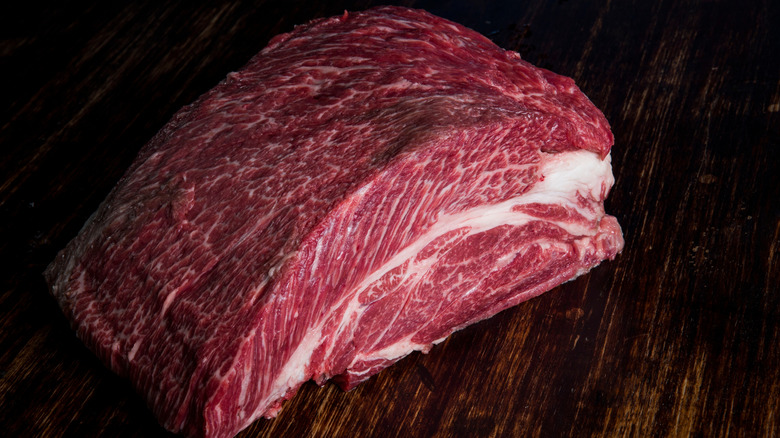
Beef can be pricey at the grocery store these days, which may prompt you to snag the cheapest package of beef you can possibly find. However, depending on what you grab, this might be a mistake, since using the wrong cut of beef can result in a less-than-ideal batch of beef stew. That's why Chef Dagan Lynn suggests a few specific cuts that will result in a better bowl.
Chuck roast, he says, is a solid option — and it's great if you're on a budget. "This cut adds a ton of flavor during the slow cooking process," he explains, "and it is extremely cost-effective when cooking for a larger group, making it the perfect addition to any stew." Looking for something less fatty? "If you're looking for a leaner option that doesn't compromise on taste, bottom round is a great option," says Lynn. "It remains tender while simmering and creates an overall healthier yet satisfying stew." Another option is beef short ribs, which can be perfect if you don't mind including the bone in your recipe. Short ribs, explains Lynn, "will result in a tender fall-off-the-bone meat that is perfect for stews. Plus, this bone-in-cut helps to add extra flavor from the marrow."
Adding too much liquid
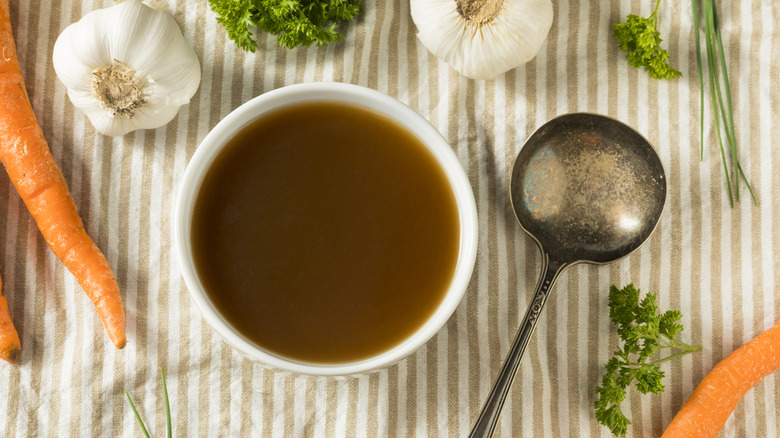
We've already mentioned that making your stew broth too thick can be a problem if you're looking for that perfect, brothy bowl. At the same time, though, you don't want to add too much broth and end up with a stew that's too soupy. That's why adding too much liquid to your pot can be a big beef stew mistake. "A stew should be rich, thick, and cling to the vegetables and meat, not be watery soup," advises Robert Smith. That means that you probably shouldn't throw in a whole carton of beef broth.
Instead, says Smith, "Only add enough liquid (broth, wine, etc.) so that it just barely comes up to the top of the meat and vegetables, not completely covering them." You can also add some thickeners, like all-purpose flour or a gluten-free thickener to the stew to give it more body. Smith suggests adding these before the liquid. "This helps the stew thicken gradually and gives the final sauce a silky texture," he says. "Alternatively, you can mash a few of the cooked carrots and potatoes at the end to naturally thicken the stew."
Not cutting the beef into even pieces
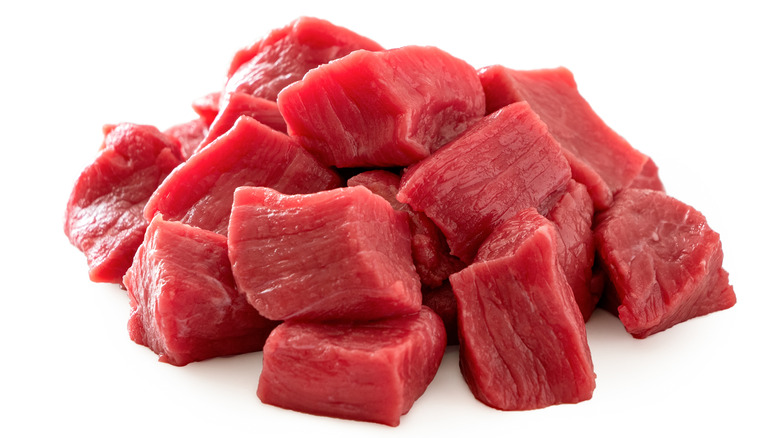
Have you ever whipped up a batch of beef stew only to realize that some pieces of beef were super overcooked, while some were perfect (or even a bit raw in the center)? It's happened to the best of us, and it's likely due to a very common beef stew-making mistake: not cutting the beef into even pieces before throwing them into the pot. If the pieces are different sizes, they will cook at different rates, which won't result in the evenly cooked stew you're probably going for.
That's why Dagan Lynn suggests a uniform chop. "No matter which cut you choose," he says, "you'll want to cut the beef into one-inch cubes." This will help ensure even cooking, but it also gives you a more manageable bowl of stew at the end of the cooking process, with a beef stew that offers "beef in every bite." No more spoonfuls of brothy carrots and nothing else.
Forgetting to deglaze the pot
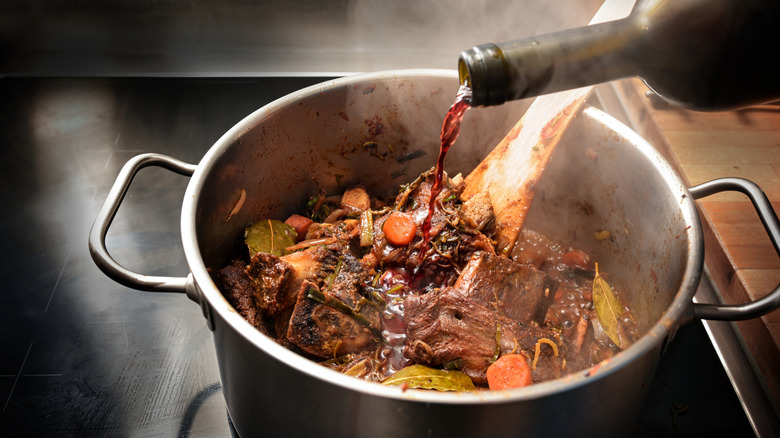
If you want to instantly add more flavor to a pot of beef stew, there's one simple step you don't want to forget: deglazing. It's a mistake you don't want to make, since deglazing can add so much richness and complexity to the finished dish. Deglazing is the process of adding liquid to a pan after sauteing or browning ingredients. In the case of beef stew, you can deglaze after browning your beef. This releases the fond, or all those dried bits of meat and thickener, into the stew, creating a more flavorful base.
Common liquids used for deglazing a pan include beef broth and red wine, the latter of which adds a bold intensity to a beef stew. If you want your stew to feature even more complexity, you can always deglaze the pan with a bit of cognac, if you have some on hand. After deglazing, make sure you take a wooden spoon to the bottom of the pan to release all the fond into the stew.
Adding all the vegetables at the beginning of cook time
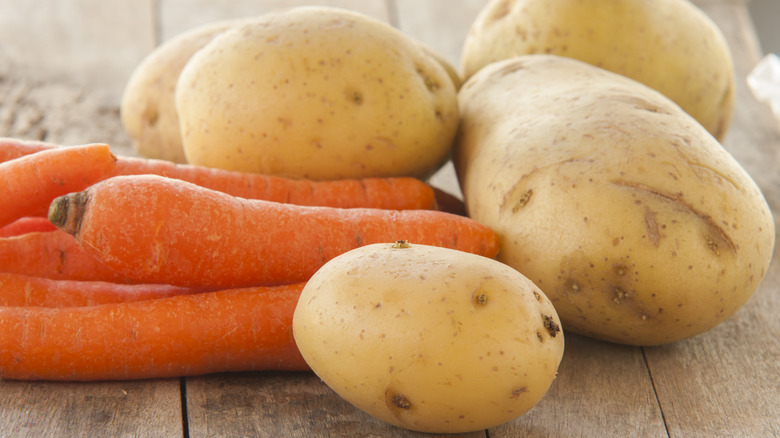
Making a stew would be pretty simple if all you had to do was throw all of the ingredients into the pot at the same time, wait for them to cook, and then dig in. But you shouldn't do this if you want to achieve the ideal beef stew. According to Robert Smith, it's not a good idea to add all the vegetables at the beginning of the stew's cooking time. "This one is purely about texture," he says. "Nobody wants mushy, disintegrating carrots and potatoes."
Therefore, you need to stagger when you add certain veggies to the stew. There are a few that you'll add right away. "Start with aromatics," suggests Smith. "Add your onions and garlic right after browning the beef to build the base flavor." After a while, you can add in your potatoes and carrots. "Wait until the beef is about 30 to 45 minutes from being tender (about [one and a half] to two hours into the cook time) before adding your cubed potatoes and carrots," he says. "They'll finish cooking perfectly just as the beef is reaching peak tenderness, so they'll hold their shape and have a pleasant bite."
Repeatedly checking the stew
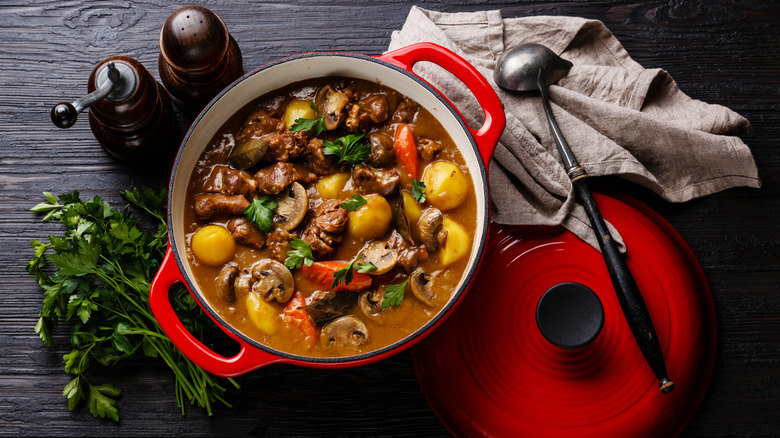
Although you can try to wing it when it comes to making homemade beef stew, it generally makes more sense to follow a beef stew recipe. Not only will a recipe provide you with exact measurements and ratios, which can better ensure a good batch, but it'll also provide you with valuable cook time information. In fact, Dagan Lynn suggests paying close attention to recipe timing, as it'll help you avoid another common beef stew mistake: repeatedly checking the stew and slowing down its cook time.
"Don't lift the lid," he advises. "This will help keep the stew warm and lead to a more flavorful stew." Yes, we understand that you want to keep an eye on your cooking stew, but it's generally best to leave it alone as much as possible. Use your recipe's timing guidelines to get a better sense of when it's time to take the stew off the heat. When you do check it, pay close attention to the beef. "You'll know it's done when the beef is fork-tender," says Lynn.
Not tasting as you go
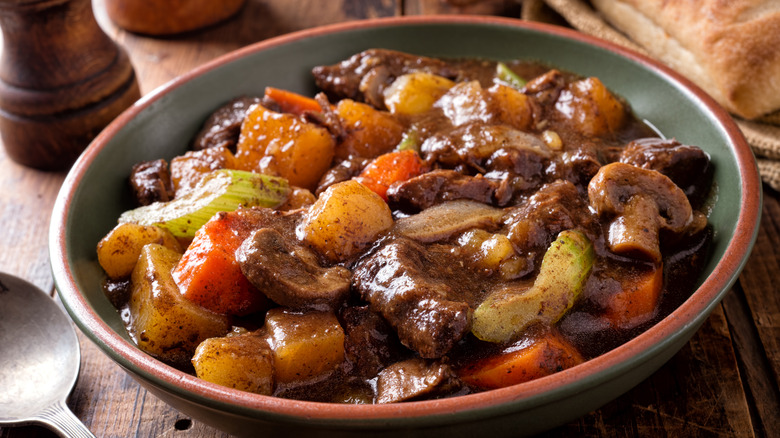
Beef stew is the kind of dish you can have bubbling on the stove for hours before you're finally ready to serve it. During the course of that cook time, the flavor of the dish will change drastically. Taste it right when you put the beef stock in, and it'll probably taste a little bland and flat. But once it's been cooking for a while, those flavors will begin to meld together and concentrate, becoming richer and more complex. That's why it's such a big mistake not to taste your stew as you go.
As the flavor of your stew develops over time, you may notice that it needs more salt, for instance, or that it's becoming too thick and bold and needs some water to make it a bit more approachable. Following a recipe is a great start, of course, but trusting your own palate is important as well. We already mentioned that you shouldn't be lifting the pot lid too often, but every time you do, taste a bit of the stew to get a better sense of how you can balance those complex flavors.
Forgetting to build layers of flavor
It's always a bummer when you spend hours simmering your stew only for it to come out tasting bland and unimpressive. Unfortunately, that's exactly what happens when you forget to build layers of flavor in your beef stew. "A lot of stews taste one-dimensional — just beef and broth," says Robert Smith. "The best stews have complexity and depth." If you're only using the standard beef broth, salt, and pepper, you're probably not creating a lot of complexity in your stew.
Luckily, Smith presents some easy ways to fix this dilemma. First, he says, add a flavor-rich ingredient, like tomato paste, to the pan after you saute your onions. "This step is called 'pincer,' and it caramelizes the sugars, adding crucial savory-sweet depth (umami)," explains Smith. Then, you'll want to add an acidic ingredient to the mix to give your broth a lovely, mouthwatering quality. "A splash of acid brightens the whole stew. Add a good splash of dry red wine right after the tomato paste (and cook it down by half!) or stir in a splash of Worcestershire sauce or a teaspoon of balsamic vinegar right at the very end," Smith suggests.
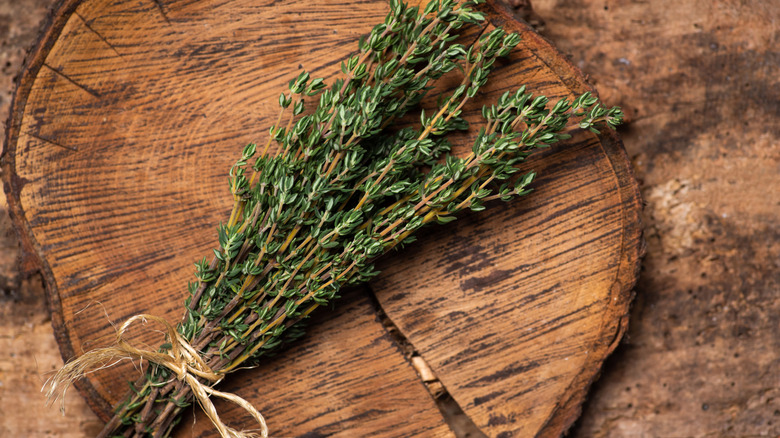
Herbs are also a great way to build flavor in your beef stew. "Tie together a few sprigs of thyme and a bay leaf with butcher's twine, and toss it in the pot for the long simmer." Just be sure to remove the bundle before you serve your stew.