

Solo Dining Etiquette Everyone Should Know
We may receive a commission on purchases made from links.
Going out to eat alone can feel intimidating if you've never done it before. It may make you wonder if people are looking at you and pondering why there's nobody else sitting at your table. While it's normal to feel self-conscious, once you go out to eat by yourself a few times, you'll likely realize that nobody really cares what you're doing — in the best possible way. You may even find that you savor your alone time ordering a delicious meal, reading a book you brought along, or simply people-watching.
But just because you're eating on your own doesn't mean that you can throw all dining etiquette out the window. In fact, there are some solo dining etiquette practices that may not even occur to you if your solo dining experience is limited. That's why we've spoken to etiquette experts, including Kevin Boehm, author of "The Bottomless Cup"; Maryanne Parker, founder and executive director of Manor of Manners; Jodi R.R. Smith, president and owner of Mannersmith Etiquette Consulting; and Rhonda Potts, Certified Etiquette Professional and founder of Pride & Grace Etiquette Consulting, to get a better sense of the landscape of solo dining etiquette. By understanding these etiquette guidelines, you can ensure that your meal will be an even more rewarding experience — all while making sure that the staff and guests around you aren't inconvenienced. These are the solo dining etiquette tips you need for your next night out on the town.
Tip better than you would otherwise
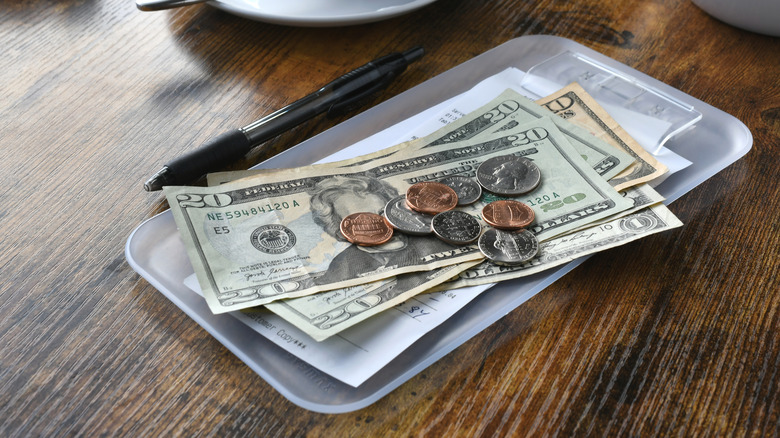
It's incredibly important to tip your server when you go to a sit-down restaurant. After all, most servers are making a majority — if not all — of their money from tips, according to Toast POS. Therefore, refusing to tip is essentially asking them to work for free. Whether you like the culture of tipping or not, it's just the right thing to do when you go out to eat. Generally, tipping 20% is standard. Unless you get incredibly bad service, you don't want to tip less than that.
But if you're dining solo, author Kevin Boehm says that you might even want to consider tipping more than you would if you were with a group. "I usually tip a little higher when I'm [at] a table for one," he says. "I know I'm not maximizing a server's section the way a four-top would, and I like to acknowledge that with a bit of generosity." It's good etiquette to think about the cash your server is taking home at the end of the night because they're working hard to serve you and ensure you have a good time. A few extra percentage points can go a long way in expressing your gratitude.
Don't just stare at your phone
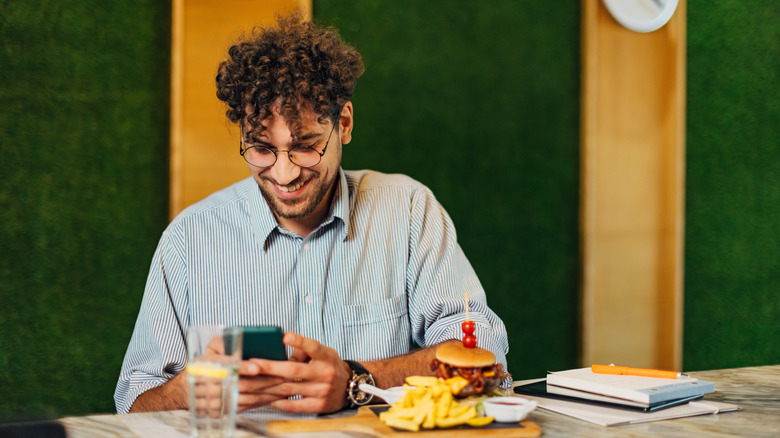
These days, most of us are glued to our phones much of the time. After all, when essentially all of the world's information is at your fingertips, it can feel hard to put down the screen and engage in real life sometimes. That's especially true when you're dining alone, which might make you feel self-conscious. So many of us reach for our phones whenever we feel uncomfortable, but that doesn't necessarily mean that's what you should do when you're dining alone, according to Jodi R.R. Smith of Mannersmith Etiquette Consulting.
"Phone scrolling looks like you are using it as an electronic security blanket," she says. Although not everyone will consider this activity absolutely rude (though some definitely will), it's still arguably not the best way to enjoy an evening eating out at a nice restaurant on your own. Instead, she recommends you "have your props at the ready." She suggests bringing a book along as an alternative. However, people-watching can also be a lovely pastime when you're dining solo. Just make sure you're not outright staring at any of the staff or other guests.
Keep your space clean
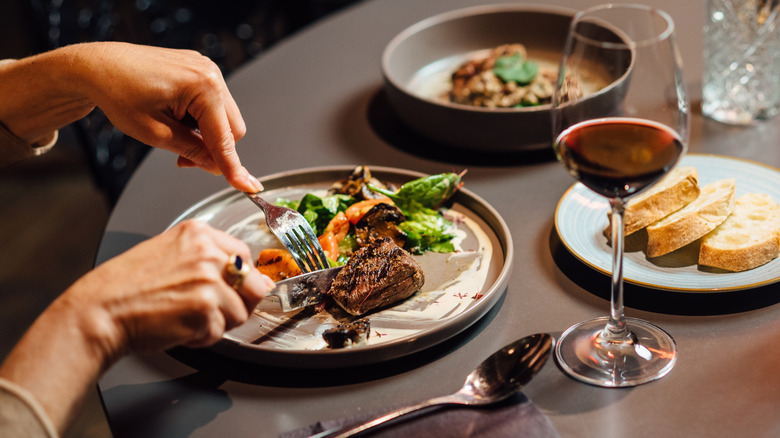
One of the main appeals of eating out instead of cooking at home is the fact that you don't have to clean up after you make a meal. It can be nice to have a break and let someone else do that job for you for an evening while you sit back, relax, and focus on enjoying the food. But just because you're not going to be doing the dishes at your restaurant of choice doesn't mean you should be a slob, either. According to Rhonda Potts of Pride & Grace Etiquette Consulting, keeping your table clean is an essential aspect of solo dining etiquette.
"While dining solo might mean you have extra table space, remember to keep this space tidy," she says. Wipe up any crumbs or liquid you spill with your napkin before you leave, and try to arrange the plates and dishes neatly so that they're easier for staff to come pick up when you're ready to go. It only takes a few extra seconds on your end, but it's a great way to show consideration for your server.
Avoid lengthy conversations with busy staff
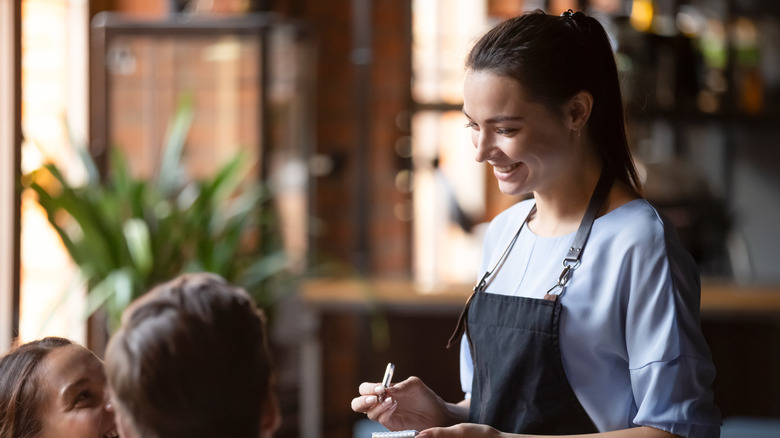
It's normal to feel a bit comfortable and out of place when you're dining alone, especially if it's your first time doing so. You may be used to talking to someone when you sit down to a meal, so eating in silence can feel strange. This may prompt you to try to start a conversation with restaurant staff, whether it's a bartender or server. But while short conversations are okay, you definitely don't want to dominate their time, says Maryanne Parker, founder and executive director of Manor of Manners.
"Be polite but maintain boundaries," she suggests. "A friendly chat with the staff is fine, but remember they're working — so avoid lengthy conversations." Yes, your server is likely going to be nice to you if you try to engage them in conversation, but remember: That's their job. When they have other tables to serve, they might feel stressed or frazzled when you try to engage them in conversation for too long. Don't read their politeness as definitive proof that they actually want to have a long conversation with you.
If you're sitting at the bar and want to chat with the bartender, first try to feel out the vibe. If the bar is super busy, it's probably not the best time to try to start a conversation. On the other hand, if there are only a few people at the bar, they might be more open to chatting. When in doubt, though, err on the side of caution ... and politeness.
If you're not at a café, don't bring your laptop
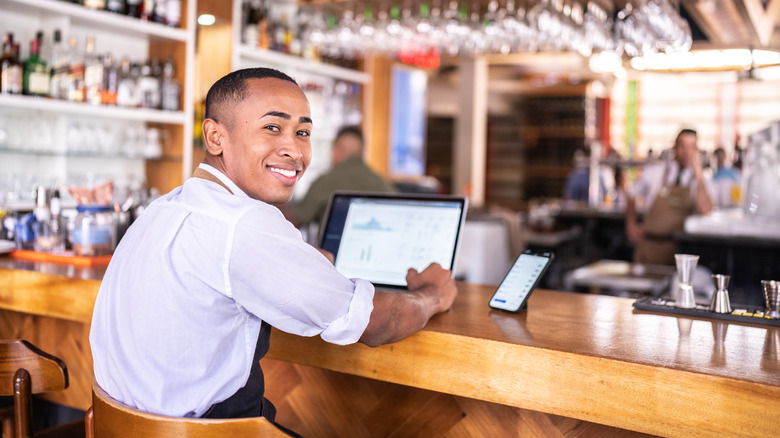
When you're trying to gauge what behaviors are appropriate and which are not when you're at a restaurant, you have to think about what kind of eatery you're visiting. Going to a café in the middle of the day? In that case, it's probably fine to take out your laptop and do some remote work while you dig into your sandwich and sip your latte; you'll probably notice others doing the same. But when you go out for dinner at a spot where people are trying to enjoy their meals in a quiet environment, it can be rude to bring your computer along with you. "Some solo diners turn their tables into offices with laptops open, cords everywhere, no room left for plates," Kevin Boehm says. "It's inconsiderate, and it changes the energy of the dining room."
We get it — you're busy. But take the time you spend at a restaurant to really relax and enjoy your meal without getting distracted by all the work you have piling up. Your emails will still be waiting for you after you pay your bill and leave the restaurant.
Watch your alcohol intake
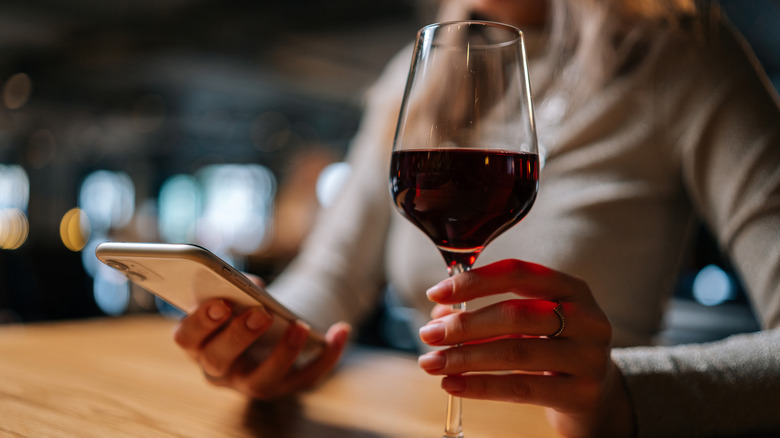
It can feel really nice to go out for a solo dining experience and order yourself a glass of wine, letting the warm glow of a nice pinot noir rush over you while you tuck into your meal. Perhaps you want to try out your bartender's favorite cocktail at the cocktail bar you're visiting or just want to snag a beer to enjoy with your burger and fries at a more casual spot. Whatever the case may be, feel free to indulge in a drink or two when you're dining alone. Just make sure you're not overindulging and leaving the staff to deal with your drunkenness.
"Watch your alcohol intake," suggests Maryanne Parker. "Overindulging can make things uncomfortable for both other guests and the staff." Nobody wants to be seated next to or be forced to serve someone who's clearly tipsy to the point of sloppiness, and without a friend or family member to take care of you, you're putting the staff in a sticky situation. Stick to a reasonable number of drinks and make sure you're clearheaded enough to leave the restaurant with dignity and grace.
Don't ignore basic dining etiquette even though you're alone
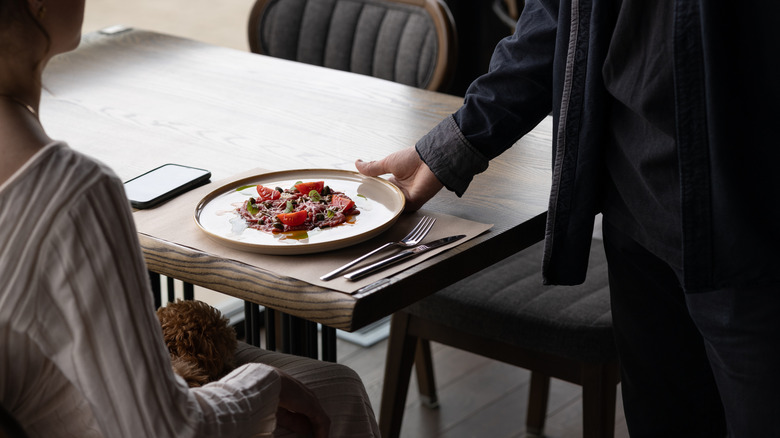
Sure, you might be eating out alone, but that doesn't mean you're actually alone at a restaurant; you're surrounded by staff and other diners who expect a certain kind of atmosphere from the restaurant they're visiting. Therefore, even when you're dining solo, you should still consider the basic restaurant etiquette and table manners you'd normally employ at a dinner you're sharing with others.
"Just because you're dining alone does not mean you negate the proper way to dine," Rhonda Potts explains. This means you should chew with your mouth closed, avoid loudly smacking your lips (if you're in a country where that behavior is inappropriate), and place your napkin in your lap. If you're dining at a higher-end restaurant, you may want to take Potts' advice and brush up on your dining etiquette. "It's always in good taste to dine with style," she says. This last tip applies more to higher-end dining situations than, say, a casual sports bar, but knowing how to handle your fork and knife with grace is a good skill to employ whether you're dining with a group or flying solo.
Make a reservation if you can
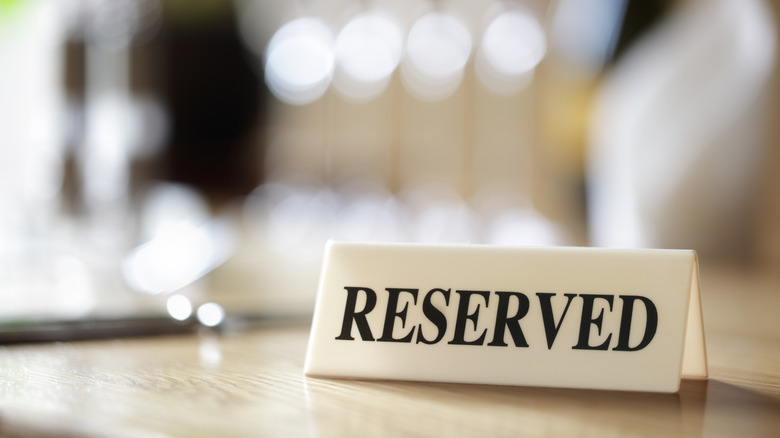
It depends on the kind of restaurant you're choosing to visit for your solo dining experience, but if it's a restaurant that you'd generally think to make a reservation for if you were dining with someone else, it's still a good idea to try to make a reservation even if you're dining alone. "Some restaurants don't take reservations for solo diners, but I still believe it's worth trying," Kevin Boehm says. Go to the restaurant's website ahead of time to try to book a reservation or give them a call to reserve your spot.
Why take this extra step if you're only booking for one seat, you ask? According to Boehm, "Making a reservation helps build a relationship with the restaurant, it signals intention and respect for their time. When you can, do it." Of course, if you're going to a super casual restaurant for a quick burger or slice of pizza, this may not be necessary. But when you're solo dining at a nicer, more upscale place, at least trying to make a reservation is generally a smart and considerate move.
Respect other diners' space and privacy
Sometimes, especially if you're not used to dining alone, solo dining can be, well, a little lonely. You may wish you had someone to chat with while you enjoy your meal. Of course, going out alone makes it more likely that you'll meet other diners, but you shouldn't try to force any social connections. "Respect other diners' space," Maryanne Parker says. "Don't engage people at nearby tables unless they initiate contact. A brief nod or polite smile is enough."
This is another situation in which it's a good idea to read the room. If you're sitting next to another solo diner at the bar, for instance, there's a higher chance that they may be open to chatting with you. On the other hand, if you're seated at a table next to a couple who appear to be on a date, it may be less appropriate to try to start up a conversation. In general, it's best to give people their own space unless they make it clear that they'd like to connect.