

9 Fascinating Facts About Vending Machines
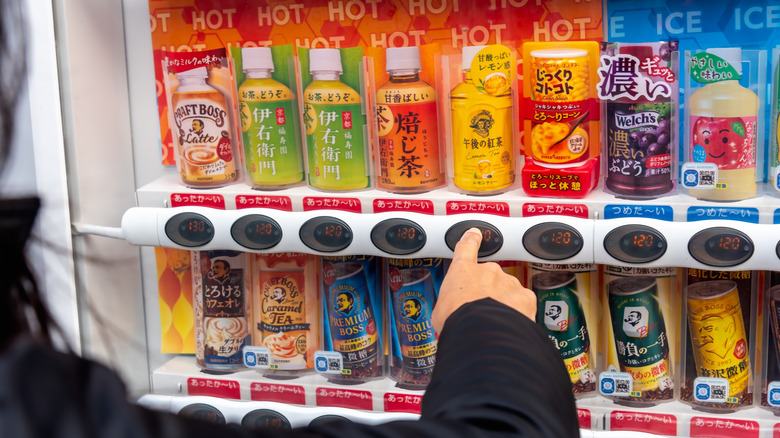
When you're out and about and need a quick and easy snack or a cold, refreshing drink but aren't near a grocery or convenience store, then a vending machine may be your best bet. Encountering one at a busy train station or in a hospital waiting room can feel like a godsend when you get those midday (or middle of the night) cravings. And whether you try to stay healthy and stick to things like water and iced tea or opt for more indulgent treats like potato chips or candy bars, chances are, you've been grateful to encounter a vending machine at least a time or two in your life.
But even if you're an avid vending machine user, there's a good chance that there's a lot you don't know about vending machines. They have a surprisingly long history, and by learning about these fascinating vending machine facts, you may just come to love them even more.
The world's first vending machines originated in Ancient Rome
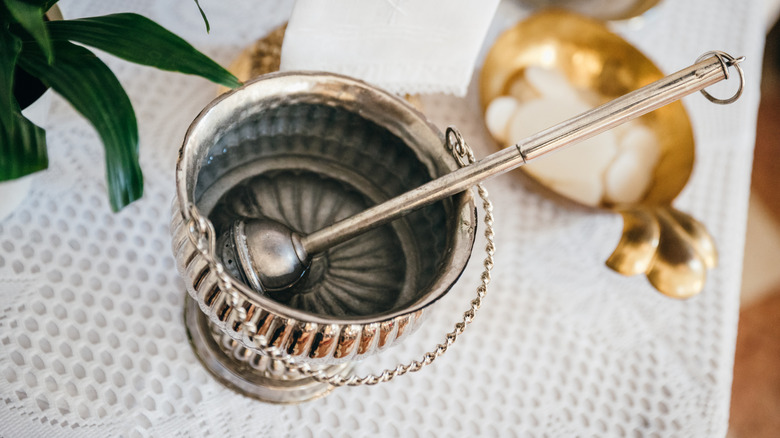
Vending machines may seem like a relatively recent invention, but that couldn't be further from the truth. Vending machines — in some form, at least — have been around for centuries, with the concept dating all the way back to Ancient Rome, or more specifically, the first century C.E. It works in a similar way to how vending machines function now. Users put a coin into a slot in the machine, which would hit a lever. That lever would open a stopper that allowed liquid to flow and be dispensed like a modern soda fountain.
But, as you may have guessed, these types of early vending machines weren't exactly dispensing Diet Coke. Rather, they contained holy water. They were invented because worshippers were taking more holy water than they had paid for, and this system standardized water distribution. You'd probably be hard-pressed to find a vending machine dispensing holy water these days, but the idea is still the same.
Japan's vending machine culture is next-level
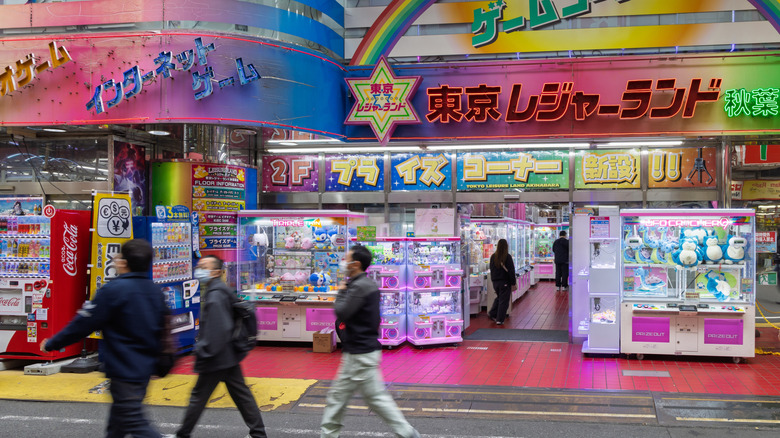
If you're a vending machine fanatic, there's one country you absolutely have to visit: Japan. Japan is famous for its vending machine culture, boasting approximately one vending machine per 23 people. They're widely present in cities, of course, but can also appear on roadsides in relatively rural parts of the country. At night, they're often brightly lit, casting an otherworldly glow on the surrounding landscape.
Of course, you can find all the standard goods you'd find in any vending machine at vending machines in Japan, including drinks and packaged snacks. But there are also vending machines that dispense full, hot meals, including dishes like fried rice and curry, all at the push of a button. Fresh produce is common, as are toys and anime merchandise. Even clothing can be found in some vending machines. Perhaps the best function of some of Japan's many vending machines, though, is the distribution of food and drinks during emergencies and natural disasters, like strong earthquakes. These items are free and are meant to provide essentials for people in life-threatening situations.
Vending machines kill more people than sharks every year
There are some machines that we use on a daily basis that actually do pose a serious threat to our health and safety. Cars, for example, kill over a million people globally per year — that makes them one of the most dangerous machines on the planet. However, you probably don't think of vending machines as very dangerous (although much of the food they dispense is often high in sugar and fat and contributes to poor health).
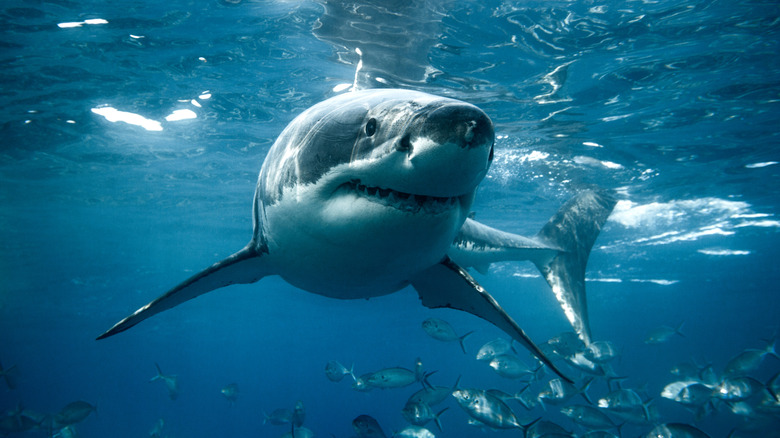
While there are certainly many, many more dangerous machines out there, vending machines have caused injury and death. What may come as a surprise is that, on average, vending machines actually kill more people every year than sharks do. In fact, they're about twice as dangerous as sharks, crushing people at a rate of 1 in 112 million compared to 1 in 250 million people per year. That being said, even if a vending machine doesn't dispense your snack as expected, you probably shouldn't try to start kicking or shaking it to get the food out, as you absolutely do not want a vending machine falling on you.
Coca-Cola once tested surge pricing vending machines
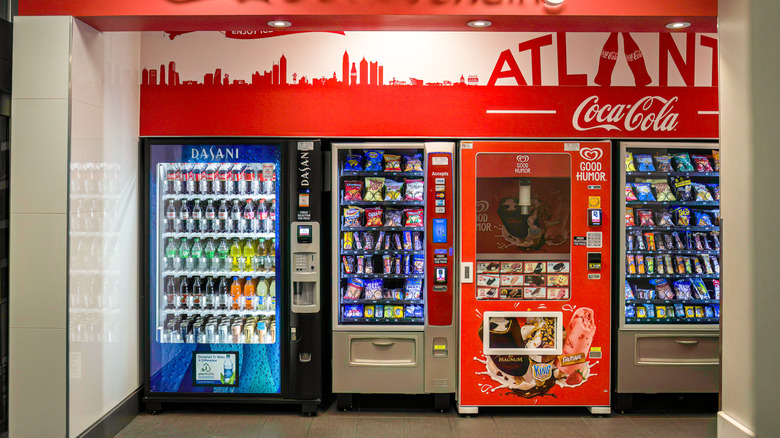
In recent years, we've heard a lot about surge pricing, or the practice of companies charging more or less for goods or services depending on when they're sought out. For example, Uber uses surge pricing, which is why it's so much pricier to order one at 5 p.m. on a weekday with inclement weather than it is to get a ride at 11 a.m. on a sunny weekend. But did you know that at one point, Coca-Cola tested surge pricing vending machines?
The company created a vending machine back in 1999 that adjusted the price of the drinks inside depending on what the temperature was like. For example, if the weather was quite hot out, drinks would cost more. On the other hand, colder days would lead to lower prices for drinks. Although it's a reasonable business idea, it's arguably immoral to charge desperate, thirsty people more for drinks when they might need them most.
Vending machines didn't accept paper bills until 1965
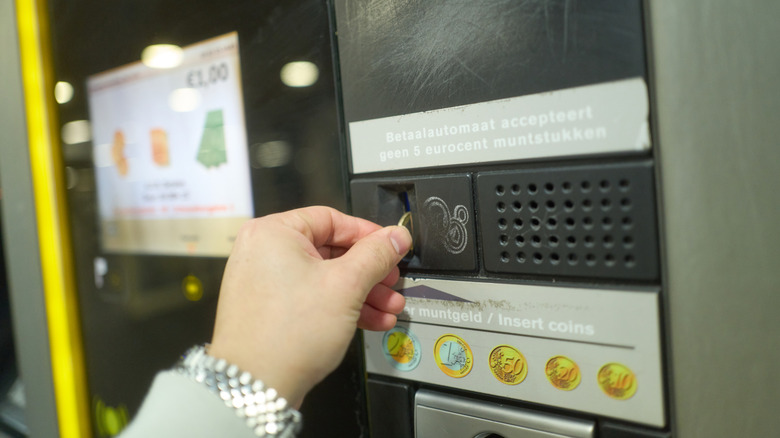
These days, when you're buying something from a vending machine, chances are you're using a credit or debit card. Most vending machines now offer this payment option, which makes sense at a time when people are carrying less cash than they used to. But it wasn't that long ago that vending machines not only didn't accept cards but actually didn't even accept paper bills at all. Until that time, if you wanted to buy something from a vending machine, you had to have coins on you.
In 1965, though, a man named John Greenwick changed the course of vending machine history forever. He invented a vending machine that would accept bills, meaning that people no longer had to carry coins with them to grab a drink or a snack. Just imagine how much change you would have to haul around these days if you still had to pay with coins, now that a simple bottle of Coke can run $3 from a vending machine.
Some are encouraging the inclusion of healthier snacks in vending machines
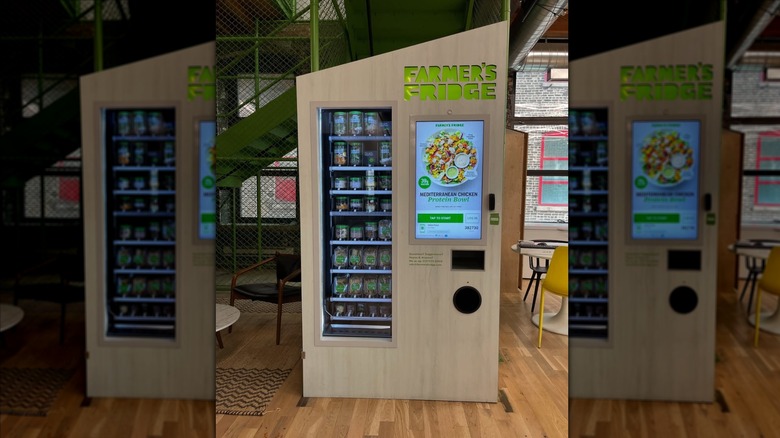
Let's be honest: As much as we love indulging in vending machine food from time to time, they don't often carry a lot of healthy items, especially in the U.S. Sure, you might find a spare not-so-bad-for-you protein bar in the lineup, but most vending machine food products are ultra-processed and full of excess amounts of fat and sugar. While those foods may not be too terrible to eat on a regular basis, they're not necessarily snacks you want to eat all the time.
That's why there are some people advocating for healthier options in vending machines. Some companies, like Farmer's Fridge, are selling healthy, fresh salads and other produce-rich items in vending machines, offering a vision of a healthier vending machine future. Although these vending machines may not be the norm yet, their presence will continue to become more prominent as more people focus on healthier eating.
Many vending machines aren't very energy efficient
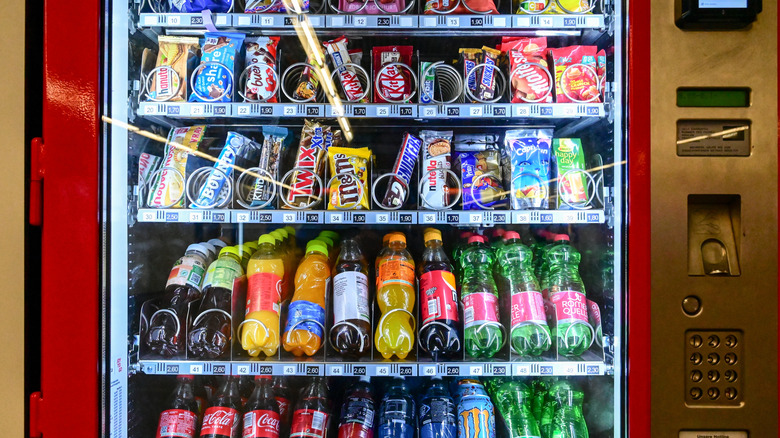
Sustainability has become a huge buzzword across industries, and the vending machine industry is no exception. It's actually important that this industry in particular embraces sustainability, since it turns out that a lot of vending machines aren't very sustainable. First of all, many vending machines run all the time, even at night when few people are using them. They draw a lot of electricity for the lights and the moving parts of the machine, so it's not ideal to have them running 24/7, particularly if they're not energy-efficient models.
However, things are starting to change, with more energy-efficient vending machines making their way to market. These vending machines often use LED lighting and high-efficiency insulation, the latter of which helps keep drinks and other snacks at the appropriate temperature with less power. Some even run on solar power, allowing them to depend less on traditional electricity.
There are actually pizza vending machines
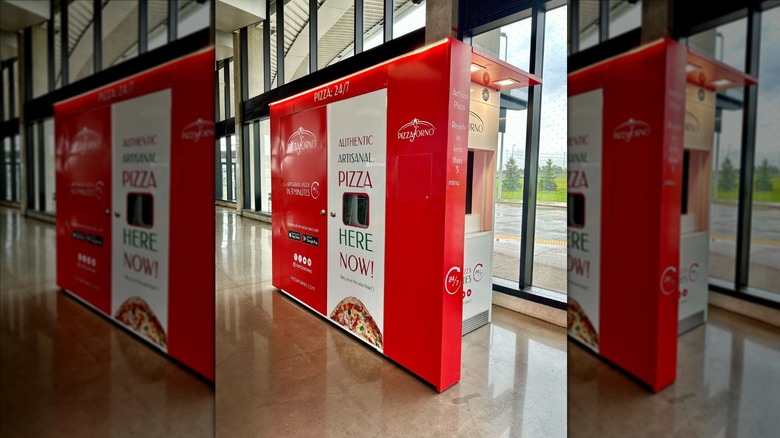
Sure, a bag of chips or pretzels can be a nice snack in a pinch, but if you're seriously hungry, you're probably looking for something more substantial than what you'd find in most vending machines in the U.S. Although you might be able to find full-on meals in some Japanese vending machines, that idea isn't quite as common stateside, at least for now. But there are some companies that are trying to put hot meals, including actual pizzas, in vending machines, so you can grab a pie anytime you might be craving one.
Enter PizzaForno. These vending machines actually dispense hot, fully cooked pizzas in just a few minutes, so you can skip the delivery fees. They literally bake your pizza at the push of a button, arguably making it an easier dinner solution than, say, grabbing a frozen pizza from the grocery store. You won't find them everywhere yet, but PizzaForno boasts that at this point, their vending machines have sold over 500,000 pizzas in North America. We just hope that we'll be getting one of these machines near us soon.
In China, you can buy live crabs from a vending machine
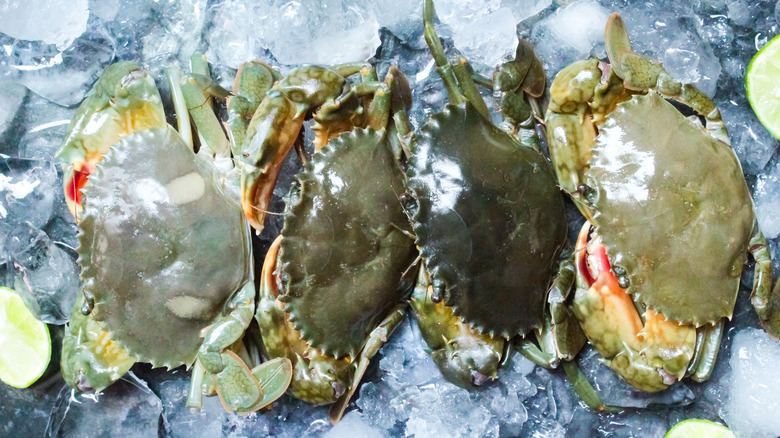
When you're craving some fresh seafood, your first instinct probably isn't to go to a vending machine. Unless, of course, you live in some parts of China, where you can actually find vending machines that dispense live crabs. They're kept in small plastic containers until they're dispensed, and if they aren't alive when they come out of the machine, customers receive a refund. They even come with all the necessary accouterments, including ginger tea and crab vinegar in which to serve the delicacy.
Some argue that keeping live crabs in such tiny spaces in a vending machine is cruel and inhumane, while others claim that it's no worse than the large-scale factory farming that produces a huge percentage of the world's meat. We won't judge how anyone sources their live crab, but we admit that there are probably better ways to satisfy your seafood cravings without visiting a vending machine.