

Why It's Such A Big Mistake To Cover Prime Rib While It Cooks
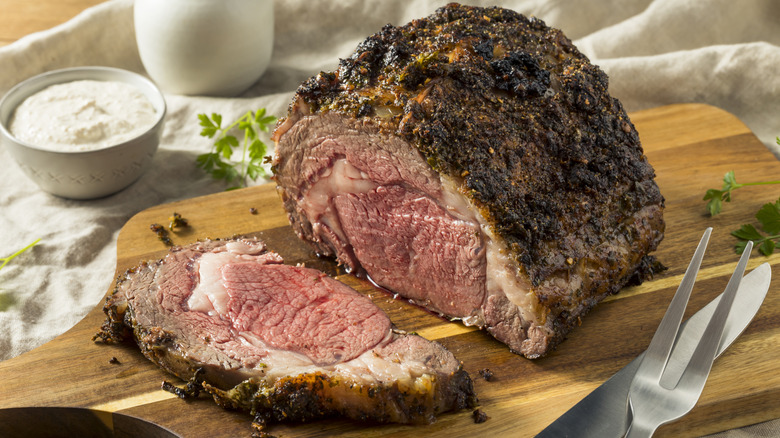
If you were to rate kitchen mistakes on a scale of 1 to 10, where 1 is confusing "tsp" with "Tbsp" and 10 is grabbing powdered sugar instead of flour, then covering prime rib while it cooks would score a solid 9.5. Not only would you have wasted a small fortune spent at the butcher's, but putting a lid on the pan as the meat cooks would've left you with a roast that was "too moist" and missing a crisp crust, according to Chef Jean-Pierre. The French celebrity chef, who (as a 12-year-old) worked at a local butcher's shop, spoke to Tasting Table about avoidable mistakes when cooking prime rib.
The prime rib is a premium cut taken from the most tender part of the cow: the meat attached to the ribs. A four-bone prime rib can cost close to $250 – if you follow the one-pound-per-person rule, this can feed at least eight dinner guests. The best technique to cook the meat is to reverse sear it. Instead of searing the outside on a hot skillet and then basting it to make sure the inside cooks through, when it come to prime rib, you want to first season and cook it low-and-slow in an oven, before moving it to a pan to give it a quick sizzle and a nice crust.
"In this case, you do want the outer surface of your roast to dry out further. That way, when you reverse sear, you get a super crispy, melt-in-your-mouth bite," Jean-Pierre said. "If you choose to cover the roast while it's cooking, it may remain too moist and could miss out on a sizzling, crunchy exterior from the reverse sear."
Searing vs Steaming: The science behind the mistake
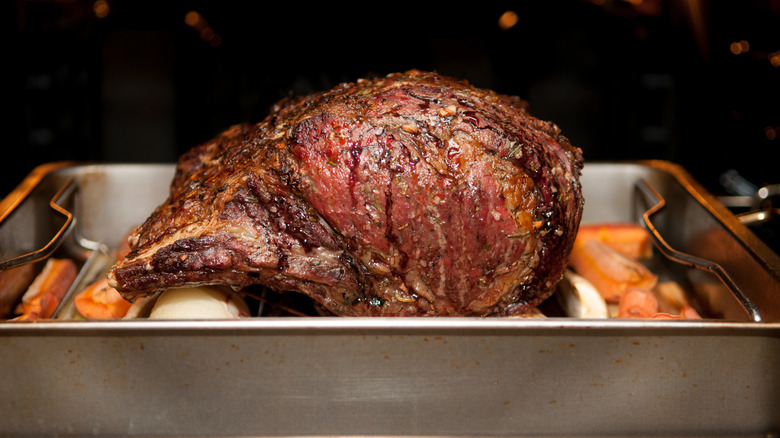
The best way to avoid errors like these is to understand what happens when you cook the steak covered versus uncovered. When you transfer your prime rib from the oven to the pan, the meat is already moist and tender. What you're looking to do is trigger the Maillard reaction, the process through which high temperatures react with proteins and sugars to create a golden, caramelized crust with a rich, complex flavor. When you cover the pan, however, moisture gets trapped and instead of the surface drying out, the steak starts steaming instead of searing, leaving you with a sad, soggy piece of meat.
While how you finish your prime rib is crucial in getting the perfect exterior, the very first prep step goes a long way in ensuring the meat itself remains nice and juicy. Dry brining the prime rib for 24 hours is an absolute game-changer, according to Chef Jean-Pierre. This essentially means covering the prime rib in a generous amount of salt and leaving it in the fridge. As the salt slowly penetrates the meat, it seasons it all the way through and dissolves some of the muscle proteins, ensuring your prime rib stays juicy and tender when cooked.