

This Fruit Tree Loves Tiny Yards And Delivers Huge Rewards
We may receive a commission on purchases made from links.
Passionate gardeners know that even tiny yards can be turned into a hub of plants, but one item that might seem off-limits is a fruit tree. While some trees — like peach, plum, and pear — can grow to be quite large, there are space-efficient choices out there. One of the best buys for a tiny outdoor space is a dwarf apple tree.
A "dwarf apple" isn't some kind of odd fruit you've never had before. Dwarf apple trees produce the same apples you know and love; the trees are simply a much smaller size, even when fully mature. Apples are one of the most beginner-friendly fruit trees, but a standard tree can grow to a whopping 20 to 30 feet. Meanwhile, dwarf versions reach only four to eight feet in height. And while they may be diminutive in size, these trees still produce regular-sized apples. Even gardeners with very limited space can enjoy a beautiful harvest from these little wonders.
Dwarf trees don't lack variety, either, as you can buy popular types of apples from Pink Lady, Honeycrisp, and Granny Smith to more exotic fruits like Pixie Crunch and Harvey Earligold. These special trees also tend to produce fruit much faster than larger ones, and they're easier to maintain and harvest from — no pulling out a ladder every time you need to prune. Still, all fruit trees require careful attention to grow their best, and dwarf trees have a few unique needs.
Where to buy dwarf apple trees and plant them
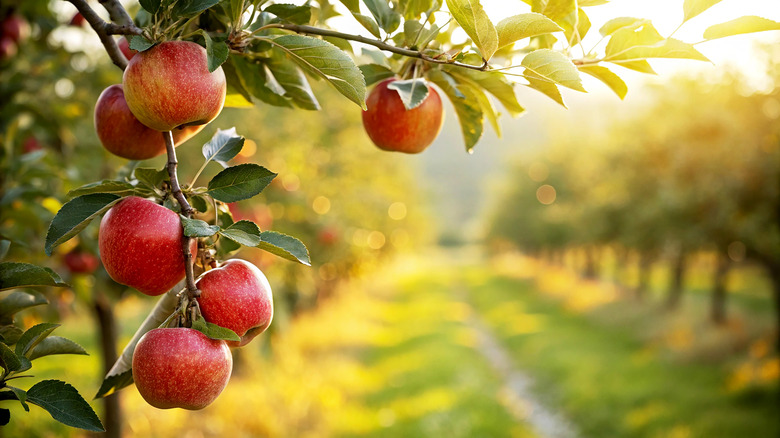
While apple cores are one of the kitchen scraps you can regrow into plants, you can't get a dwarf tree that way. These trees are created by combining a branch of a fruiting tree with a special dwarfing rootstock, or the rooting system that connects with the stem. Therefore, you have to buy dwarf apple trees from a nursery. Online prices for one tree can range from around $30 at big box stores to $60 or more from independent nurseries.
A huge consideration for apple trees is pollination. Most apple breeds do not bear fruit on their own and require cross-pollination, which involves planting at least one tree of a different variety close by. Both trees should bloom around the same time. Gardeners who are really short on space should get a self-pollinating dwarf apple tree such as an Empire, Braeburn, Cortland, or Fuji.
Once you've bought your tree, choose the right location in your yard. All apple trees are full sun plants, meaning they need six to eight hours of direct sunlight per day. Proper air circulation is also crucial to prevent your tree from sitting in too much moisture, which can lead to disease and fungal growth. Avoid planting apple trees close to buildings or other plants, and try not to put them in a place where rainfall accumulates, like the base of a hill. Ideally, you want a sunny, south-facing spot without obstacles that cast shade, especially since dwarf trees are extra short.
Care considerations for dwarf apple trees
Whether you plant dwarf apple trees directly in your yard or in pots, they'll do best in slightly acidic soil with a pH between 6.0 and 6.5. Extra nutrients will make them grow all the better, so use a slow-release commercial fertilizer or read up on the ultimate guide to composting for a cheaper option. Try grabbing a handy gadget like the Suplong 3-in-1 Soil Moisture Meter to measure the acidity, moisture, and sunlight value of your soil each day.
Watering and pruning dwarf apple trees is fairly straightforward. Younger trees need more water than mature ones do, but you can generally water a tree once or twice a week. Just avoid making the dirt soggy, which can cause the roots to rot. It's best to do a majority of your pruning in the cold season before the flowers bloom. In addition to getting rid of dead, damaged, or criss-crossed branches, remove ones that point straight inward, as they'll quickly make the tree too crowded.
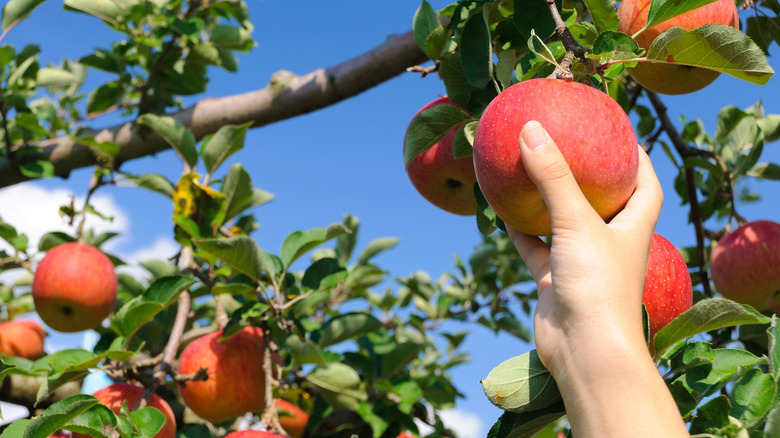
Even though dwarf trees produce apples fairly quickly, you'll have to wait at least two to three years after planting before your first harvest. As the apples grow, you must thin the fruit, or remove small, damaged, or diseased apples so the tree's energy will go towards healthy, large fruits instead. There's a lot to know about raising the most bountiful apple trees, but with a dwarf tree, you'll not only have a more space-efficient plant, but one that's slightly easier to manage.