

The Real Dishes Behind Your Favorite Disney Films

There's a certain magic at play in Disney movie food scenes. As a lifelong Disney fanatic, current D23 member, Disney+ subscriber, Disneyland and Disney World frequenter, and a travel and food writer who's written about all things Disney for a decade, I'm a major Disney movie meal enthusiast — it's impossible to watch these films without craving the gorgeous animated food.
As it turns out, there are plenty of very real dishes from around the world that the animators based these Disney foods on. From porridges served on Chinese breakfast tables to puffy pastries mastered by French chefs, the real foods behind your favorite Disney films offer unique representations of the cultures they're sourced from. These dishes can reveal a lot about the geography, food traditions, values, and history of the people who call the real versions of these animated settings home. So, let's dig into famous Disney movie foods and the inspirations at play.
Ratatouille: Ratatouille
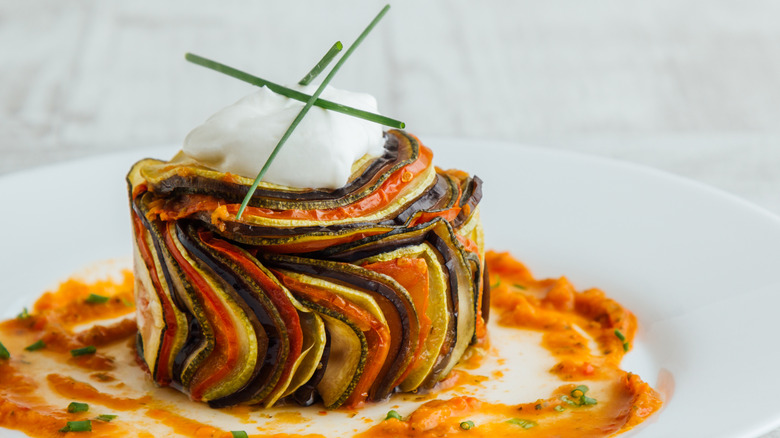
In the 2007 Pixar film, "Ratatouille," the namesake dish dazzles audiences with its gleaming layers of fresh tomatoes, zucchini, eggplant, and peppers. World-renowned Michelin-starred chef Thomas Keller was tapped as an advisor, and Pixar filmed him making what he calls "confit byaldi" as a reference point for the movie. As a result, the onscreen version of the dish is elevated, fanned out, vertical, and distinct to the chef's style rather than casual, more farmhouse-style variations.
Ratatouille sees mentions dating back to the late 1700s, but the first recipes are from the 1800s. However, the Provencal dish was likely beloved well before that. This Nice signature was originally a peasant stew comprised of late summer produce, most of which was not native to Mediterranean France, arriving in the 16th century or later. For example, tomatoes weren't even considered edible on the continent before 1731, and during the same century, eggplants (which were white and egg-like in shape, hence the name) came over from India.
Today, Niçois recipes, including ratatouille, are protected by the French culture ministry — the organization gives a special label to restaurants that make the dish best, without shortcuts. Dressed in olive oil, onion, garlic, and handfuls of herbs like thyme, it's a heartwarming dish that suits the message of the film: The kitchen should be a safe space for everyone.
Mulan: Congee
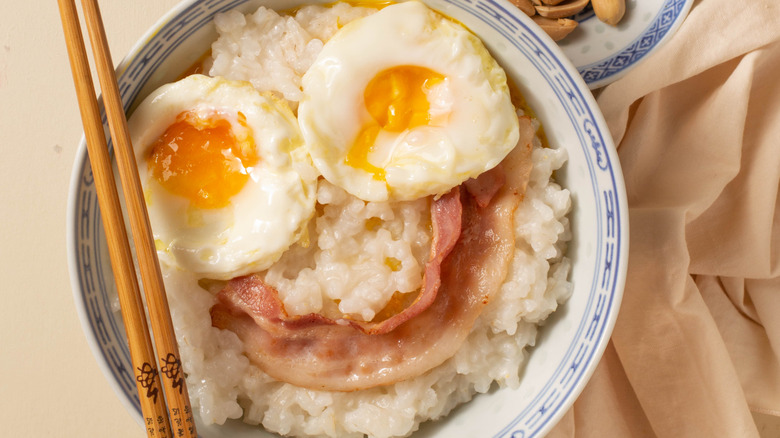
The 1998 movie "Mulan" is one of my favorite movies ever, and the attention to detail is among the many reasons why. The producer, directors, and a team of artists were in China for many weeks in the search for authenticity, taking thousands of photos to be used as reference points. The food is just one aspect of the film that benefited from this deep dive. The tea that Mulan and her family shared on a rainy night, the dumplings she roasted with Mushu after being found out, and other moments around the table or fire showcase Chinese traditions and culinary history. However, Mushu's breakfast porridge gets a special close-up, served to Mulan in her tent on her first day of military training.
Topped with bacon and two sunny-side-up eggs shaped like a smiley face, the porridge itself would be congee, a rice porridge made across Asia. In China, this dish is generally made with medium-grain or non-aromatic long-grain rice. Rice as a crop has a very ancient history in China, but the earliest known reference to congee was made between 206 B.C. and A.D. 220 during the Han dynasty. This is slightly before Mulan's story begins, during the Northern Wei Period between A.D. 386 and A.D. 535, so if Mulan had been a real person, she likely would have enjoyed this popular porridge. Especially as a military member, since rice offers essential carbs for energy, it is easy to make in big batches for troops, and it isn't too complicated to prepare as far as equipment or technique goes. While Mulan may not have topped it with bacon and eggs, modern congee connoisseurs top theirs with all kinds of ingredients, from Italian cheeses to chili crisp to wood ear mushrooms.
The Princess And The Frog: Gumbo
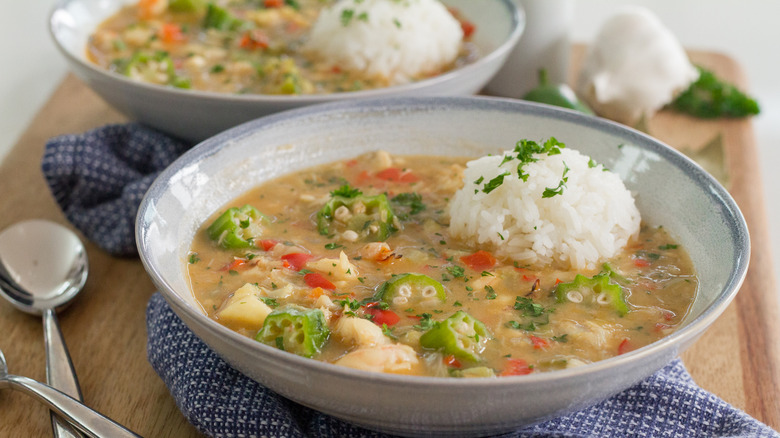
Gumbo might just be the most famous dish to come out of New Orleans, the setting of the 2009 film, "The Princess and the Frog." Dreaming of running her own restaurant, the main character Tiana adventures through what Disney calls the "mystical bayous of Louisiana." Blending the folklore, music traditions, and food culture of the region, the movie brings to life the personality of New Orleans. So, while other foods like beignets are featured throughout, it's perhaps no surprise that gumbo takes a starring role as a special dish that Tiana used to make with her father and share with the community.
Gumbo is a piece of Louisiana's cultural tapestry, which blends African, Caribbean, Native American, and, among other heritages, French influences. The dish seems to touch on every bit of this diverse composition — for example, it begins with a French roux, includes native game and produce, adds Caribbean seafood like shrimp, and is named after the word "okra" in the Bantu language of Africa. First mentioned in the 19th century by Louisiana sources, gumbo used to be served with cornmeal (furthering the Indigenous influence on the dish) before rice was eventually used as a bed instead.
Today, this stew of sorts can be made pescatarian, meat-heavy, or completely vegetarian. In fact, you can get a veggie rendition of gumbo at Tiana's Palace in Disneyland, and it's one of the best meals in the entire park. It's great for sharing, just as the princess would have wanted.
Encanto: Arepas con queso
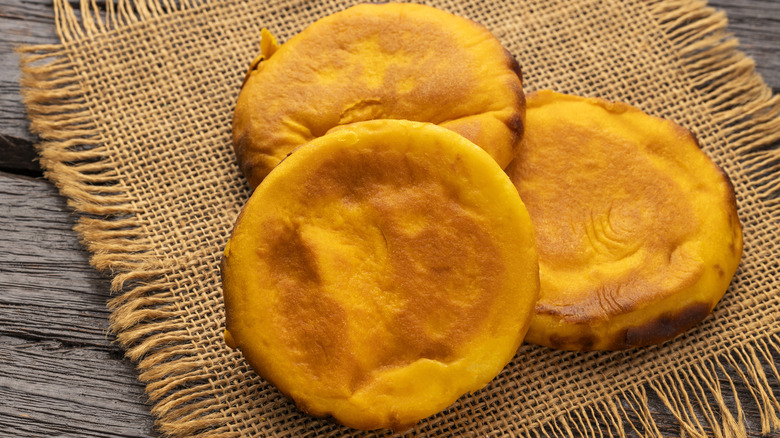
Based on the beautiful Colombian colonial town of Barichara, Disney's 2021 film "Encanto" tells the story of a family that lives in the mountains. Focused around the vibrant (and magical) home, household activities take center stage in many iconic scenes, and it should come as no surprise that delicious arepas appear multiple times throughout the film. The dish is associated with family life, and it's a point of pride for all in the region. Average households in Colombia eat over 900 arepas on an annual basis. This 900-year-old dish originates in the area, but unlike Venezuelan arepas, those from Colombia are distinctly finer and simpler.
While there are about 75 kinds of Colombian arepas, "Encanto" highlights the cheese variety, or "arepas con queso." This sweet and white cheese-topped pick is popular in the Andes and along the Caribbean coast. While Barichara is nowhere near the sea, it is located in the northern Andean foothills, so this would likely be what the Disney characters would have enjoyed in real life. Made with yellow or white corn, a staple across the region, arepas de queso can have cheese mixed into the dough or stuffed in the center before being served warm, often for breakfast with coffee.
Beauty and the Beast: Cheese soufflé
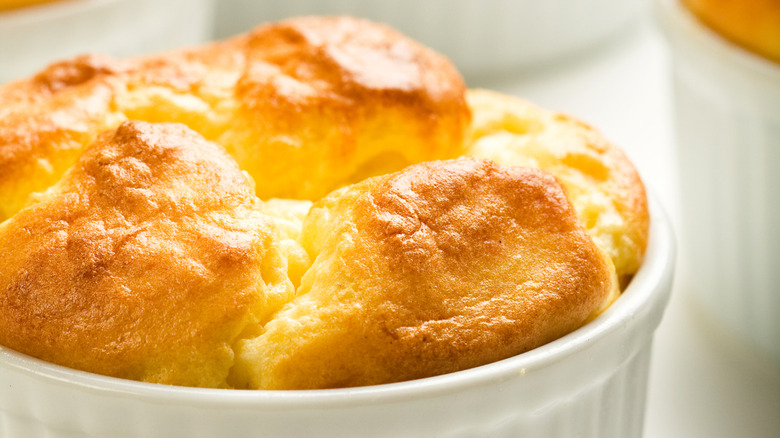
The song "Be Our Guest" from Disney's 1991 "Beauty and the Beast" mentions multiple French foods, including cheese soufflé. This is just one French hospitality reference made within a castle context, and it's appropriate.
The first soufflé recipe is found in "Le Cuisinier Moderne" from 1742. Written by Vincent La Chapelle, the English title was "The Modern Cook: Containing Instructions for Preparing and Ordering Publick Entertainments for the Tables of Princes, Ambassadors, Noblemen, and Magistrates." This collection was fit for aristocracy, with recipes and plating tips specifically for estate and manor head cooks. This might sound familiar to fans of the 1991 film, as those who present the cheese soufflé are estate staff, and they've made it for a woman whom they hope will fall in love with the royal owner ... in other words, she could be the future lady of the estate, and therefore is a potential aristocrat. Paired with the fact that the movie is based on the story, "La Belle et la Bête," written during the 1700s, the reference seems particularly apt.
Soufflé is, in itself, a work of art. When I was studying culinary arts, our final exam involved making a perfect cheese soufflé. It takes years to master, so seeing the puffy, golden dish dance across the table in "Be Our Guest" is impressive. Clearly, the staff has been cooking long enough to make a soufflé that's not only sky-high, but can stay that way even while dancing. Either the prince could afford the best chefs who came with this knowledge, which speaks to his status, or they've just been trapped long enough to master the technique in-house, which speaks to the severity of the curse. Regardless, its inclusion supports the plot and its world-building.
Snow White And The Seven Dwarves: Gooseberry pie
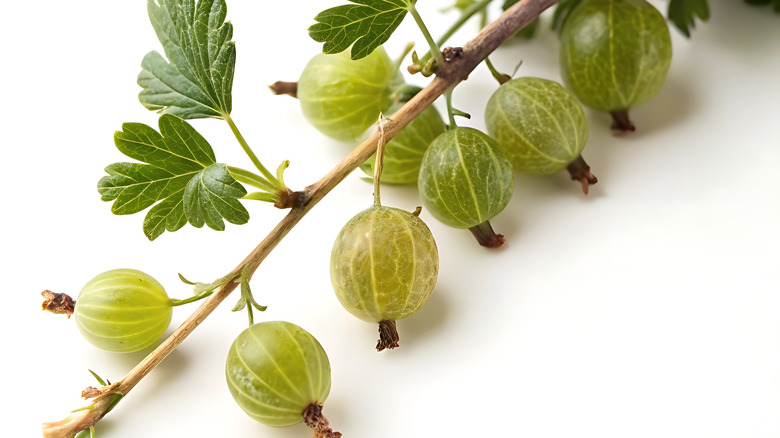
Based on a Brothers Grimm fairytale, Walt Disney's 1937 "Snow White And The Seven Dwarves" was the first American full-length animated movie. Disney's production was influenced by a 1916 silent film, and although there's a "pie man" in it, gooseberries aren't mentioned. The Grimm version doesn't include gooseberries or pie, and neither do the German folk stories behind it. However, gooseberry pie serves as a key plot point in the Disney edition, as the titular princess is making it (a bowl of green berries is even shown as she rolls dough) when the evil queen comes with a poison apple.
In Germany, where the tale is based, gooseberries, or "stachelbeere," were very popular when the Brothers Grimm were writing, despite the authors not mentioning them. Covered in thorns, gooseberries take a long time to pick and prep. And, as Snow White was making pie, she would've had to also bake the dough. This would've been very time-intensive, as reflected in gooseberry's other German name: "klosterbeere."
"Kloster" is German for "monastery," and those who live in them are known for manual, time-intensive, and meditative practices (any of these words could describe the picking and prepping of gooseberries). And, "monastery" comes from the Greek "monachos," which, like Snow White, means "solitary person". At the gooseberry pie point in the story, that's what she is: Hiding and waiting on dwarves who work all day. While gooseberries might just have been added into the 1937 version because Walt Disney loved fruit pies and gooseberries sounded nice, perhaps they were actually a symbol of Snow White's lifestyle of loneliness. With that mindset, it's suddenly very easy to see why she welcomed the evil queen's company rather than erring on the side of caution.
Tangled: Hazelnut soup
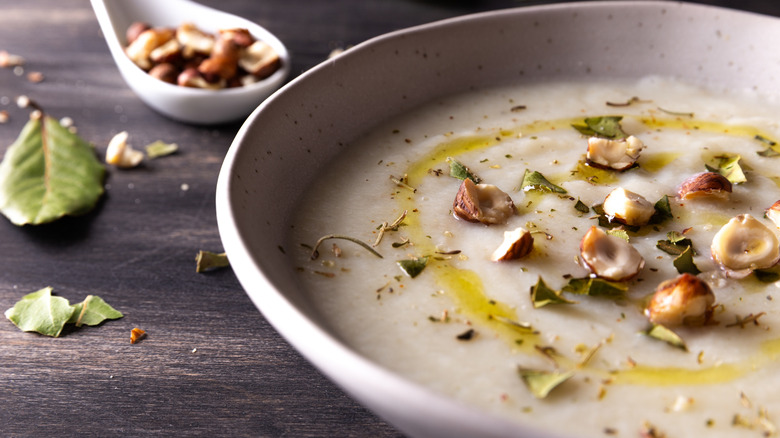
According to Disney's 2010 film, "Tangled," hazelnut soup is Rapunzel's favorite food. Based on the Brothers Grimm fairytale written in Germany during the 1800s, the original story doesn't feature the dish. Instead, as the title character's name suggests, the Rapunzel plant is famously eaten by her biological mother — as it was stolen from the witch's garden, this crime is what led to the character being given to the witch in return (though in the Disney version, she is stolen and the plant seems to be replaced by a magic, glowing flower). The Italian folktales (some of which were written as early as the 1600s) that are similar to the Grimm version do feature gallnuts, a type of growth found on certain trees like oaks, but that's as close as it gets.
So why hazelnut soup? It could be a nod to Germany, as hazelnuts and dishes that include them, including hazelnut soup, are very traditional pieces of the foodway. Or, as Anglo-Saxons used hazel lichens as a wound salve, it could instead be a nod to Rapunzel herself, since her hair can heal injuries by being wrapped around them. As the hazel is symbolic of death, rebirth, and life, it could also be a hint at the true power of Rapunzel's hair. Historically in Europe, the hazel is also symbolic of the patience needed while undergoing a mystical experience, so it could be a nod to where Rapunzel was in her own tale.
Turning Red: Bao buns
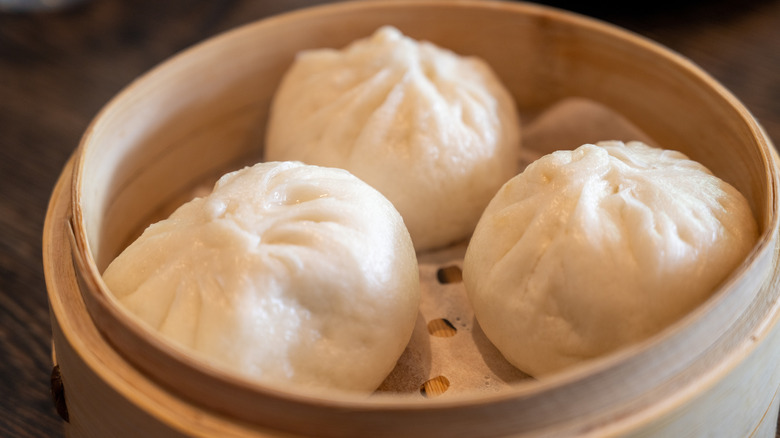
"Turning Red," the 2022 animated film, is one of the most underrated Disney films of all time, in my opinion. Food is given a spotlight throughout the plot, as the main character and her parents craft traditional Chinese dishes together. Among the concoctions are steamed bao buns. This makes sense — tradition is emphasized throughout the film, and bao has been around since the Three Kingdoms period between A.D. 220 and A.D. 280. This dumpling of sorts can be filled with all kinds of goodies, from savory fish to sweet red bean paste.
Director Domee Shi also directed "Bao," a Pixar short featuring the namesake treat. The creative has shared her mother's dumpling recipe that they used to make together, similar to the "Turning Red" family. Her mom served as a cultural consultant for "Bao," bringing a level of authenticity to the production. This spirit carries over into "Turning Red," with the dish and Domee Shi's own life serving as inspiration once more — just like the main character of "Turning Red," Domee Shi is also Chinese-Canadian.
Maybe "Turning Red" included bao to add to the world-building and continue Shi's tradition of turning to her own childhood in her art. But, bao's appearance could also signal the importance of family or how closely this value is held in this household. After all, "bao" can mean "treasure" in Chinese.
Brave: Empire biscuits
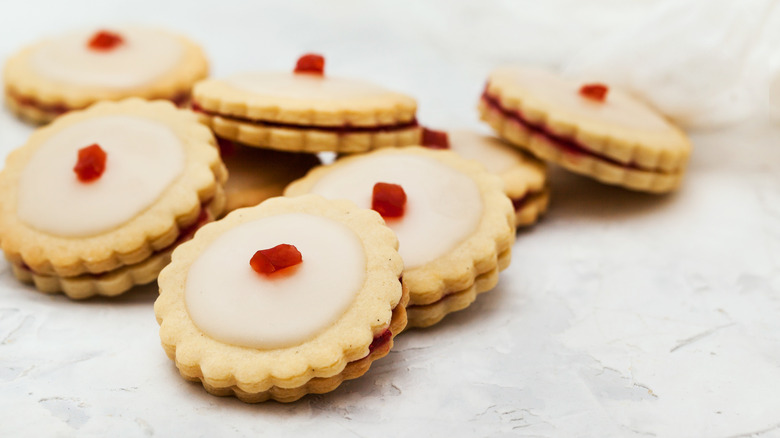
Disney Pixar's 2012 movie, "Brave," highlights many aspects of Scottish culture, from kilts to bagpipes. The food is likewise deeply Scottish, piles of empire biscuits among them. These shortbread cookie sandwiches are iced and slathered in jam, making them one of my favorite Scottish foods. "Empire biscuit" is a relatively new name for these treats. Before World War I, they were called Linzer biscuits (named after the Austrian Linzer Torte on which they're based), and Deutsch biscuits.
As "Brave" takes place in medieval Scotland ( between A.D. 400 and A.D. 1500), shortbread in general fits into the world, and would have been served during special occasions like weddings during the period. At the time, it would have been called "biscuit bread," made with dried leftover bread dough ("biscuit" does mean "twice cooked," after all). However, it wouldn't have been until Mary, Queen of Scots's reign in the mid-1500s that shortbread cookies like those needed for empire biscuits evolved. So we can assume the inclusion of the dish in "Brave" is more to emphasize the Scottish-ness of the setting than the time period in which it's set.
Raya And The Last Dragon: Tom Yum
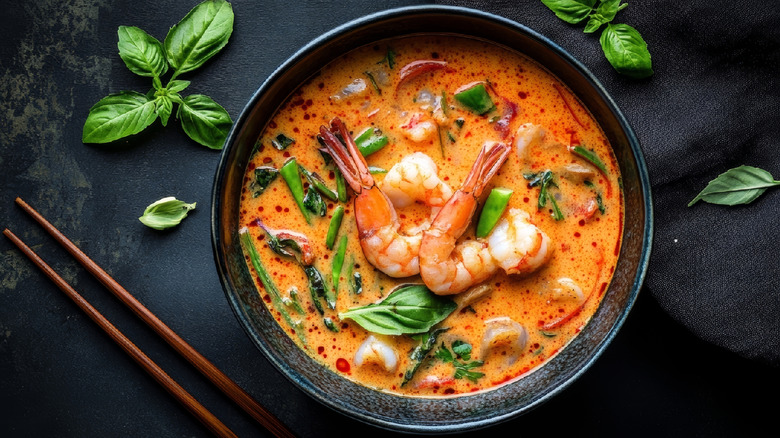
Disney's 2021 film, "Raya And The Last Dragon," takes place in the fictional ancient land of Kumandra, which is modeled after Southeast Asia. Turns out, so is the food – the region's dishes, while given different names, are put in the spotlight. Adele Lim, the Malaysian-born writer behind the movie, has shared that a signature soup in the film is similar to Tom Yum.
This Thai hot and sour soup was chosen to represent the weight traditional food holds in the culture's expression, according to those behind the film. With believability and authenticity in mind, everything from the chili oil pour to the fresh ingredients needed to make it was given some serious study pre-production. Tom Yum is traditionally made with fragrant goodies like lemongrass, bamboo shoots, shrimp, and red chilis, and the animators brought this regional combination to the big screen.
Meaning "boiling" and "mixing," "tomyam," as the dish was called, comes from central Thailand. The oldest recipe goes back to King Rama V, who reigned from 1868 to 1910, so it's not a very old dish. But, although Tom Yum doesn't align with the movie's ancient time period, it does a great job of expressing the landscape and culture at play.
Robin Hood: Blackberry pie
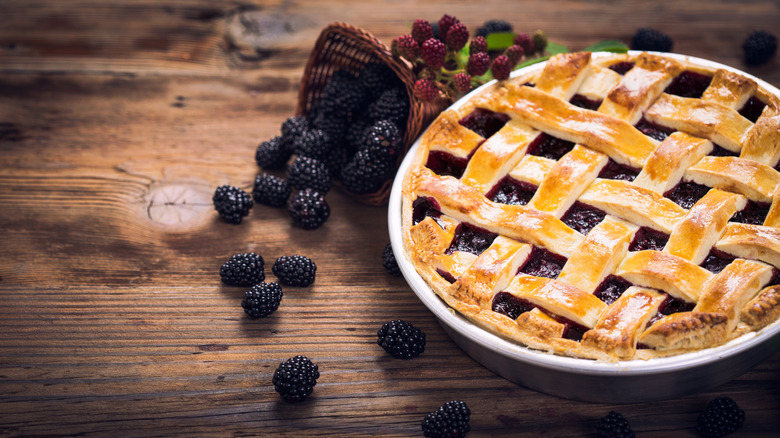
Looking closely at Disney's 1973 film, "Robin Hood," you'll spot a pile of blackberry pies during the archery tournament scene. Trigger, one of Prince John's guards, hides in the stand selling the treats as arrows fly around him, but before this moment, the "pies for sale" sign suggests that attendees of the event were buying the blackberry pies.
Based on the legends surrounding outlaw Robin Hood, who famously stole from the rich to give to the poor in Nottingham, the movie paints a picture of life during the Middle Ages. The time period in which the antihero lived is something few can agree on, but most historians place him sometime between A.D. 1190 and A.D. 1307. First mentioned in "The vision of William concerning Piers Plowman," William Langland's 1377 poem, Robin Hood was a champion of the people and the Medieval communities who were, largely, poor. Though he's shrouded in English folklore, parts of his story are very real and rooted in Medieval England, but is blackberry pie?
Known as "bremelberies" in Old English, blackberries do grow in Sherwood Forest, Robin Hood's well-known stomping grounds, and have been relied on for many centuries across the United Kingdom. But as for the crust, that's tricky. Butter and lard weren't being added to pastries and pies until the 16th century in the region, which is well after both Robin Hood's time and the Medieval period. With just flour and water, pie crusts during this time in history would have been rock hard and used just for transportation as a vessel. And these "coffyns," as they're called in 15th-century cookbooks, wouldn't have been combined with blackberries until fruit pies appeared in England during the 1500s. This is well after Robin Hood would have lived and after the Medieval period.