

Almost 5 Million Pounds Of Hormel Chicken Is Being Recalled Over A Serious Contaminant

Hormel Foods is recalling 4,874,815 pounds of ready-to-eat frozen chicken due to a possible metal contamination, the U.S. Department of Agriculture's Food Safety and Inspection Service (FSIS) has announced. The affected products are all part of the company's Fire Braised brand, which is sold only to foodservice clients, not directly to consumers. The official FSIS announcement says that the agency "is concerned that some products may be in the freezers of hotels, restaurants and institutions," but Hormel Foods stated in its press release that all customers have been notified about the recall. No illnesses or injuries have been reported so far.
The company issued the recall after being notified of several customers finding metal pieces inside the meat. It was later determined "that the metal originated from the conveyor belt used in production," per FSIS. This recall is classified as Class I, which means that consuming the product could have dangerous consequences for the person's health and life. As such, all food service customers who have Fire Braised chicken in stock are urged to throw the product away and not serve it. The affected products are packages of frozen, ready-made boneless chicken breast, boneless chicken thigh, and boneless chicken breast with rib meat.
In 2024, Hormel Foods recalled deli meat due to misbranding
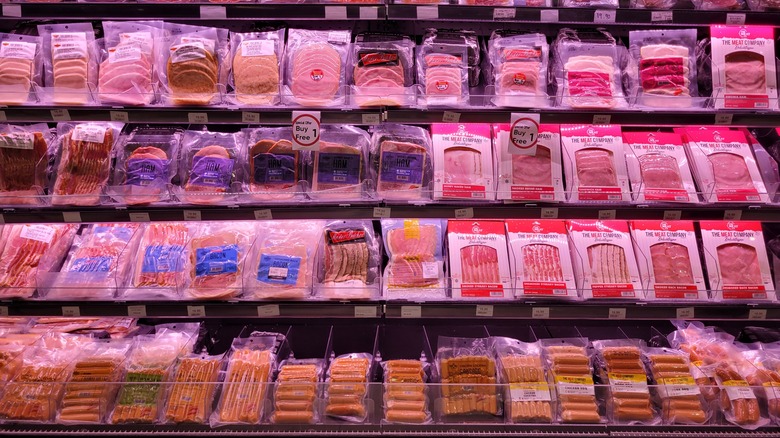
In February 2024, the FSIS issued a Class I recall on nearly 1,000 pounds of Hormel deli ham over misbranding and allergen concerns. The product in question was the Hormel Spiced Ham With Natural Juices, which was potentially cross-contaminated with milk, a common allergen that wasn't listed on the declaration. The ham was sold directly to retailers in Pennsylvania and served at the deli counter in grocery stores. It was there that the employees noticed cheese in the product and notified FSIS. No illnesses were reported.
A few months earlier, in September 2023, FSIS also issued a Public Health Alert regarding one of Hormel Foods' most beloved products, the classic canned Spam. By the time the public was notified, the product was believed to have been pulled from shelves. Those who had already purchased it, however, were urged not to eat it, due to the meat being under-processed. No adverse effects were reported, and the alert was only relevant for the customers who purchased the Spam at H.E.B. stores in Texas.