

The Old-School Southern Condiment That Was Overshadowed By Maple Syrup
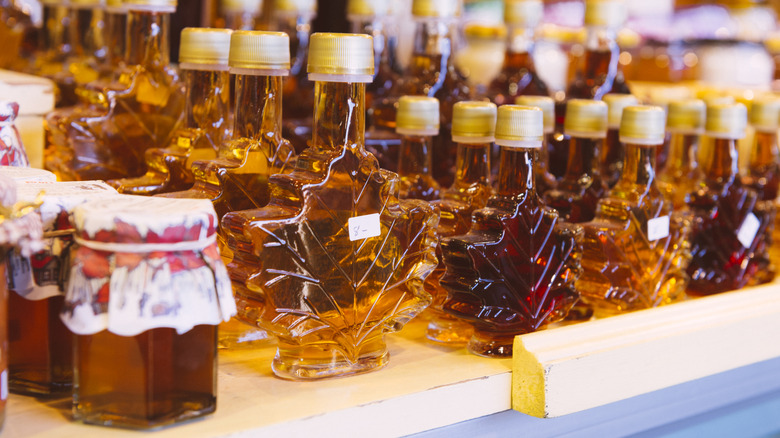
Before maple syrup found its way onto stacks of Southern hot cakes, there was cane syrup. Made from pressed sugarcane juice cooked down in iron kettles, cane syrup was the South's table staple. Cane syrup is similar to, but distinct from, molasses, the dark, strongly flavored by-product of sugar refining often called blackstrap molasses. Cane syrup is pure sugar cane juice concentrated just once, slightly retaining the green-gold sweetness and the faint minerality that belies the grass plant that it comes from. On biscuits or sausage, it tastes warm, gentle, and less polished than maple.
On farms before industrial equipment and time clocks, food was fuel for labor. The day started before dawn, feeding stock, milking cows, mending fences, and hitching plows. It was heavy, backbreaking labor, and by sunrise, most people had already spent several hours in motion, sweating through their first calorie deficit.
Breakfast needed to restore that loss. Fat for stamina, protein for muscle strength and repair, and cane syrup's glucose for more energy and some electrolyte replacement. A drizzle over hot biscuits and fried salt pork or bacon could jump-start the blood after morning chores. This "farm breakfast" spread was a metabolic necessity. The syrup's simple sugars hit fast, pairing with butter or lard to keep the body going until midday break. Cane syrup was also popular as an accessible sweetener that could be made at home and stored through the winter to incorporate into recipes or pour over anything.
The history of sugar in the US
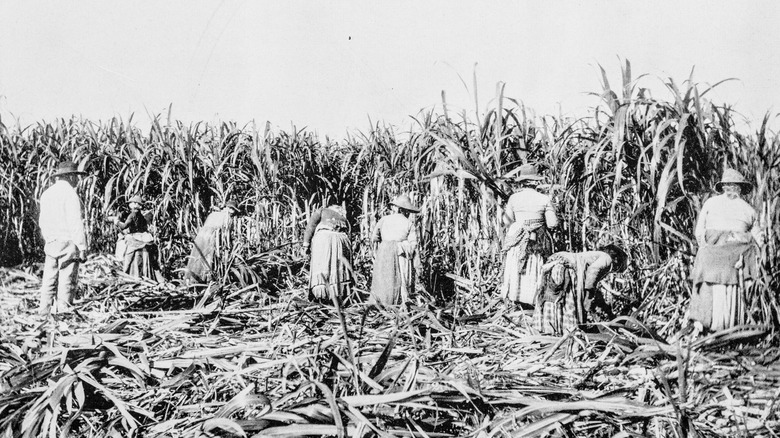
Cane syrup sits within the complexity of the history of Southern sugar, which grew from a landscape, culture, and economy shaped by slavery, and later systems of precarious and exploitive land-tending labor. Louisiana, coastal Georgia, and parts of Florida built massively profitable sugar economies on plantation agriculture. Sugarcane thrived in the humid Gulf states, and like cotton, it was labor-intensive and brutal work, requiring planting, cutting, crushing, and boiling. The economy of sugar relied on the brutalization of enslaved Africans and their descendants, and later tenant farmers, or sharecroppers, to sustain it.
The wealth that sugar generated flowed north through refineries and shipping routes, one side of the transatlantic triangle trade that linked slavery with Caribbean sugar, American cotton, and European capital. Sugarcane bound the Gulf and Atlantic coasts into a corridor of oppression and extraction, its profits fueling ports from New Orleans to New York. In that corridor, sugar was a crop and a currency. It was traded across oceans and inscribed into the global ledger, shaping Southern foodways and making sweetness synonymous with ill-gotten gains.
After the Civil War, sugar plantations and their small kettles declined, while steam-powered, industrial refineries scaled up. Sugar made from beets became easy to grow and produce in Europe and the American Midwest. By the 20th century, cheap refined sugar was everywhere. Maple syrup, a single-ingredient product with a distinct regional identity, had a more complex flavor and a cleaner story to sell. Eventually, corn and high-fructose corn syrup arrived with massive federal crop support subsidies and a rock-bottom price, filling bottles ambiguously labeled "pancake syrup." Cane syrup, local and seasonal, produced in smaller batches, slid off center stage.
Syrupy sweet nostalgia, or bitter history?
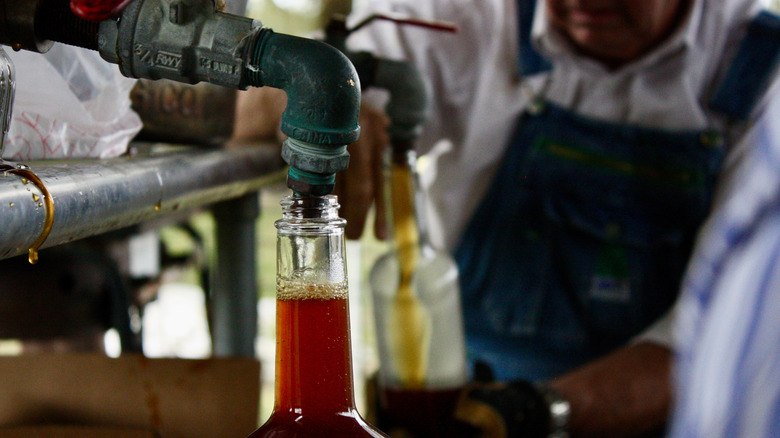
The story of cane syrup is the story of America itself — born of the plantation, reshaped by war, refined by industry, then boiled down into sweet nostalgia for something much of the nation would rather forget. Post-reconstruction, many Southern families grew sugar cane in small patches, and today, small-batch boilings and community "cane-grindings," part of church fund-raisers and family traditions, take place in the fall. Stalks are fed into a mule-driven mill, the bubbling juice stirred and reduced for hours. On Georgia's Sapelo Island, Gullah/Geechee descendant families still process cane by hand and share the finished syrup among neighbors. The project fills the air with steam and smoke, and serves as part historical reenactment, part communal gathering. It's designed as a way to make the work of preserving the harvest feel connected to history and community and to help the work go faster. The event reclaims the technique, but the dark, bitter undertones of the old economy remain; history trapped in amber.
Cane syrup is a sticky mirror of the nation's turn from forced labor to industrial power, from enslaved hands to mechanized progress. What vanished was infrastructure, with new rail lines and marketing budgets favoring the industrial North over the agrarian South. But cane syrup hasn't fully disappeared, and in pockets of the South, it still pours thick and bright from glass jars, used to glaze hams and sweeten cornbread. A handful of names, most famously Steen's in Louisiana, kept bottling the old-style syrup. But by mid-century, the national palate, laws, and food processing technology had shifted. Maple syrup had the wholesome branding, corn syrup had the subsidies, and cane syrup faded from the pantry.