

The Old-School Southern Salad Dressing That Came Before Ranch (And Tastes Even Tangier)
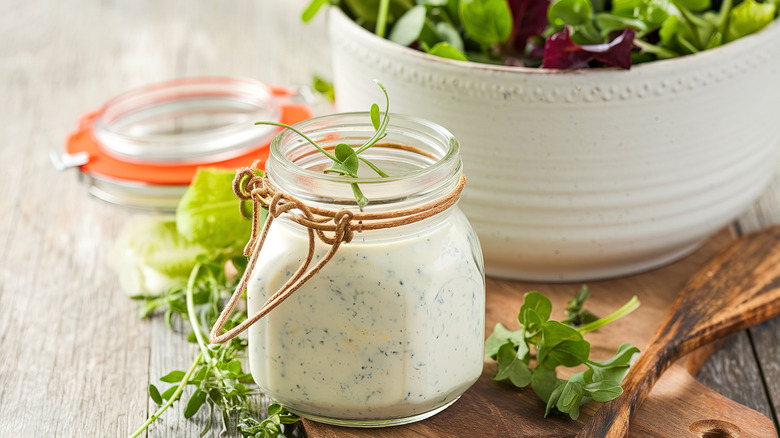
Before ranch slathered every salad bar in America, Southerners had a buttermilk dressing of their own. It's built on ingredients found in nearly every farmhouse kitchen: cultured buttermilk, mayonnaise, lemon juice, garlic, chopped chives and whatever other herbs are on hand. The main distinction between this dressing and the viscous, white emulsion we know (and love) as ranch is that the latter usually contains thickening components, like sour cream, or just a lot more mayonnaise. Store-bought versions also usually include onion powder and a bunch of stabilizers and preservatives. The OG buttermilk dressing is instead a little thinner, but a lot brighter and tangier.
Buttermilk dressing is great example of the thrift of using food byproducts smartly. Fresh milk is precious, and back in the day, nothing went to waste. So, leftover buttermilk (the liquid left after butter was churned) was a ready and obvious source of acidity. There's actually many different ways to use up leftover buttermilk. It famously gives biscuits a light and fluffy texture, tenderizes fried chicken, and, case in point, also brings depth and intrigue to salads — something people knew before bottled dressings were an option.
The sharp yet creamy flavor profile of old-fashioned buttermilk dressing comes across a little simpler than the buttermilk ranch we know today, but it's no less delicious. It might even be a bit more texturally palatable to some, akin to a vinaigrette than a gelatinous goo — sorry, Hidden Valley Ranch! Thanks to the union of two tart elements, lemon and cultured buttermilk, the Southern dressing tastes tangier, and is thin enough to adhere to lettuce without drowning it.
Churn back time with buttermilk
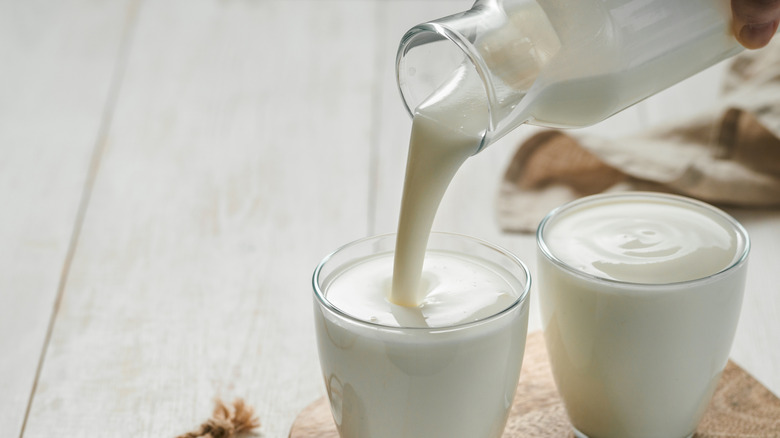
Buttermilk as an ingredient deserves more attention than it gets. In this day and age, you mostly see it in the carts of people buying Crisco and cake flour, or in the hands of fried chicken aficionados who know that nothing does it better. But it used to be a staple, especially in the South, poured into cornbread batter or sipped straight from the fridge on hot days. The balanced tanginess and low fat content makes it easy to consume, and the cultured acidity make it useful in almost any recipe that calls for milk, yogurt, or sour cream.
Unless you're looking down the wrong end of your own churn, the version you find now isn't the byproduct of butter making; it's just milk, in one of its many wonderful, fermented forms. A thick and cultured dairy product, it's somewhere between sour cream and yogurt in flavor. That tanginess comes from bacteria and lactic acid, the same compounds that give sourdough its eponymous note or yogurt its brightness. It's also why buttermilk is great for your gut, full of probiotics that modern shoppers are happy to pay triple for in pill (or gummy) form. Some commercial brands pasteurize after fermentation, which kills off bacteria, both good and bad. If you want the probiotic benefits, check the label for phrases like "contains live and active cultures," or pick a local dairy brand that doesn't pasteurize.
Nutritionally, buttermilk is high in calcium and protein, and often lower in fat than the creamy sauces it lends its name to. If you make it into a dressing (Southern or otherwise) just know that it'll taste great on everything!