

10 Iconic Food Writers Every Foodie Should Know

We may receive a commission on purchases made from links.
Food writing is as diverse as it is deep. The genre can encompass critiques of high-profile restaurants and expositions on little-known ethnic restaurants, but also includes examinations of the inequalities in our food system and propositions of how to make it more sustainable. Food writing can take the form of cookbooks, memoirs, newspaper columns, blogs, academic articles, and even novels. One thing becomes clear when considering the genre altogether: Food is never just a form of sustenance.
We have compiled this list of our favorite food writers every foodie should know about to help deepen your understanding of what food means to different people, as well as what it might signify to you on a subconscious level. By delving into the works of these celebrated writers, you'll discover exquisite recipes, insightful observations, and humorous quips that will keep you coming back for more. Just don't blame us if you get hungry.
Jonathan Gold
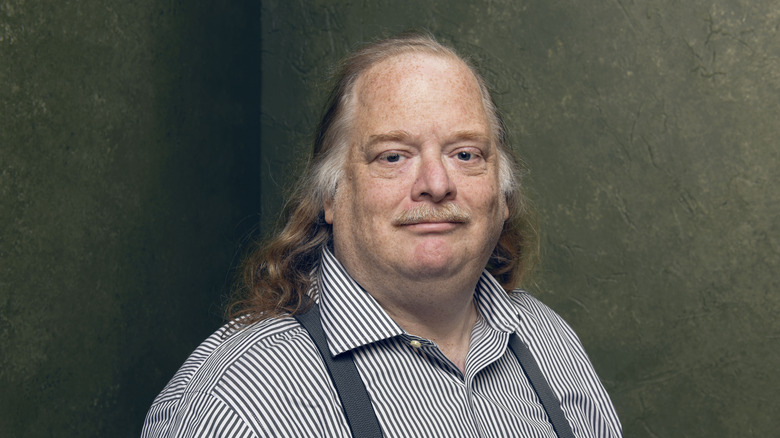
Jonathan Gold, winner of a Pulitzer Prize and several James Beard awards, exemplified the role food critics should strive to fulfill in society. Rather than using his position as a writer to flex his muscles and vehemently condemn restaurants that didn't meet his standards, he poetically enmeshed his experiences at eateries into the broader experiences of life itself. As Helen Rosner, a James Beard award-winning food correspondent for The New York Times, put it: "Gold was never cynical, always precise, but a precision that had a wildness in it."
Indeed, his work proved that food forms and binds communities, frequently when we are not consciously aware of it. Even if you are not from Los Angeles, his work will be deeply relevant to you because of the light it sheds on cultural norms and values. Just take his review of Native for the L.A. Times, in which he tried to parse out what the quintessential Los Angeles restaurant should serve and represent. He took into account the chef's cultural background and efforts regarding food waste, as well as the restaurant's casual, yet elegant vibe. This was not just a review of whether the food was good or bad; it was a deep dive into what eating at the restaurant meant to people.
If you need a break from the newspaper, or you just want to learn more about how Gold worked (yes, he struggled to meet deadlines, too), watch the 2015 documentary "City of Gold." It's a heartwarming exploration of how the ingenious food critic genuinely connected with restaurants' missions and cuisines and how he sought to support them through his work.
M.F.K. Fisher
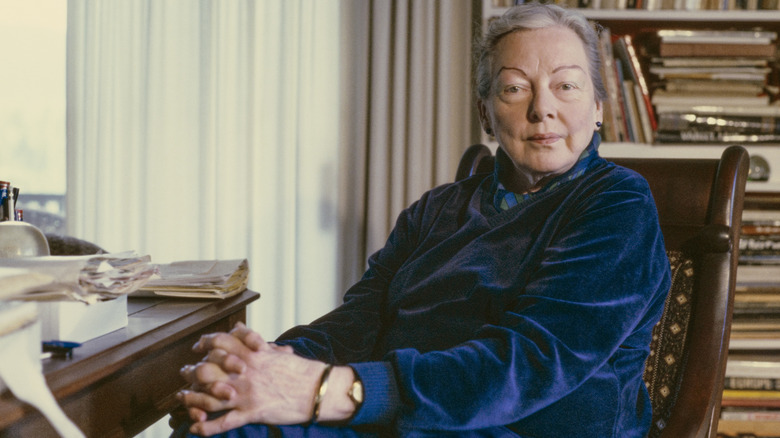
Believe it or not, there was a time before food writers were respected and celebrated. M.F.K. Fisher, with her work in the 20th century, helped usher in a new era where people began to think about food as more of a cultural signifier and a reflection of one's own personality and desires. In other words, when thought about critically, food became more than simply sustenance that may or may not taste good.
Though Fisher obviously loved the art of cooking and gave readers many recipes, food was never just food for her. Take her wildly popular cookbook, "How to Cook a Wolf," the vintage editions of which are worth a fortune today. This book will take you back in time to World War II, when rationing was in full swing. It's inevitably practical, and its recipes are best suited to times of scarcity, but the eloquence of her descriptions and musings is still pertinent to readers today. After all, it's a reminder that food should not be reduced to calories and nutrients and that the food norms surrounding each meal, including quantity and variety of food, should not necessarily be set in stone.
In "How to Cook a Wolf," as well as in Fisher's other work, it becomes remarkably clear that she believed food could satisfy not just a need for nutrition, but also the expression of cultural and personal longings. For instance, she described minestrone as "probably the most satisfying soup in the world for people who are hungry, as well as those who are tired or worried or cross or in debt or in a moderate amount of pain or in love or in robust health or in any kind of business huggermuggery."
Francis Lam
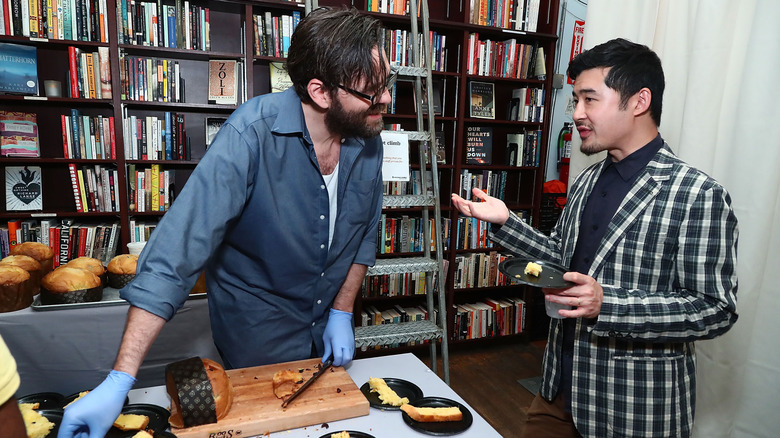
Francis Lam is perhaps best known as the host of The Splendid Table, a food podcast produced by American Public Media. In this role, he speaks with listeners, chefs, and cookbook authors to help folks brainstorm what they should put on the table each week, as well as understand the scientific underpinnings and cultural relevance of various cuisines. However, Lam's body of work spans well beyond that of a podcaster, and he has written for many prestigious publications like The New York Times Magazine, Saveur, Gourmet, Food & Wine, and Bon Appetít.
Lam's Chinese heritage informs his work, which often hits on the themes of immigration and assimilation. He examines how these phenomena intersect with uprooted and redefined cuisines — for instance, how gentrification is blooming in New York City's Chinatown in the form of heftier prices and a replacement of traditional dishes with avant-garde, Instagrammable ones. Lam once said in an interview with Eater that his "greatest calling is to help tell the stories of invisible people," a value he sought to uphold as a columnist for The New York Times. But he has also done superb work as a cookbook editor, where he has been able to elevate others' voices behind the scenes.
If you need any proof that Lam is indisputably one of the most influential food critics in history, just consider the fact that his prolific writing and editorial work have earned him multiple James Beard awards. From the history of African American cuisine to the homey connotations of Korean kimchi fried rice, you can rely on Lam for his thorough examinations of taste and culture.
Julie Guthman
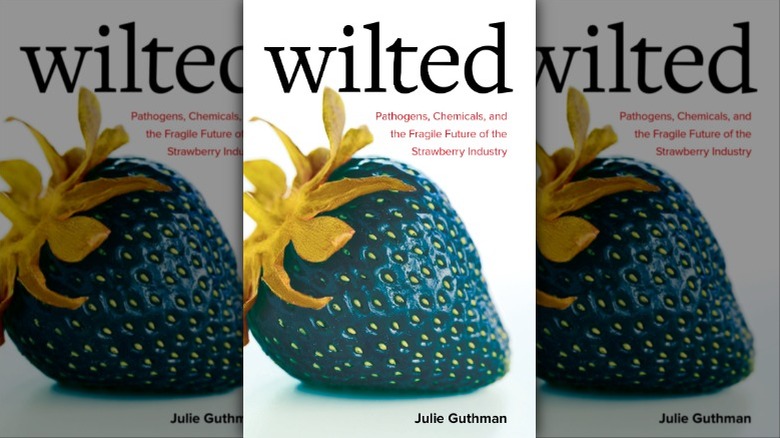
Many people will be surprised to learn that we have not included Michael Pollan on this list of notable food writers. While his writing may be deeply entertaining and some of his ideas are certainly worthy of consideration, we feel that Julie Guthman offers a more balanced and critical exploration of the food systems in modern-day America.
Guthman is a geographer and professor of social sciences at the University of California, Santa Cruz, where she conducts research on how capitalism influences the food choices different sectors of society have at their fingertips. While Pollan's work might pressure you to vote with your wallet by shelling out money on organic tomatoes and grass-fed beef, Guthman's work proves that we need to spend as much time worrying about how to rectify the political and economic side of the equation. She shows how access to food and choices in food are deeply intertwined with factors like racial, socioeconomic, and bodily identities.
Guthman is the author of four books, each of which is worth a read. "Weighing In" is an excellent place to start learning about how metabolic health is not as straightforward as reaching for a piece of fresh fruit rather than a bag of chips. It encourages us to think about how inequalities intersect with food choices and our ideas of good health. Meanwhile, her most recent release, "The Problem with Solutions," offers excellent insights into the technological advancements in food and whether they are viable.
Alicia Kennedy
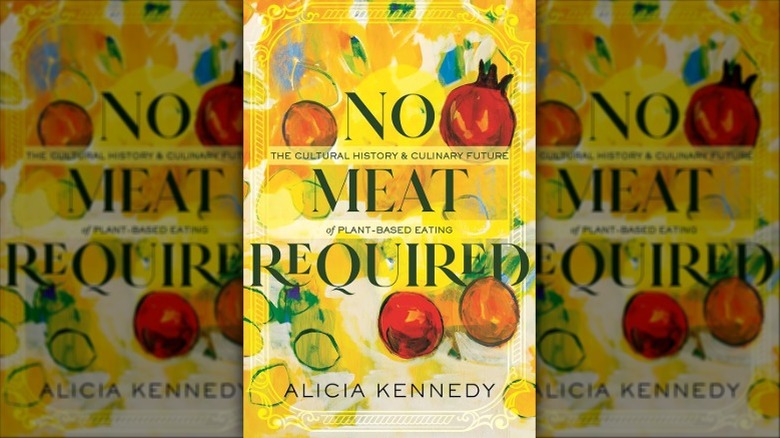
Alicia Kennedy helped carve out a space on Substack for food writers with her newsletter, From the Desk of Alicia Kennedy (though the publication has since moved away from the platform). A modern food writer who consistently incorporates references to fashion and music into her work, Kennedy draws upon her experiences living in both New York and Puerto Rico while writing about the intersections of food and culture.
Kennedy's work is what you want to read when you are in the mood to think intellectually, but don't want to parse through jargon while you are enjoying yourself. She often incorporates a light, self-deprecating tone, getting her point across by painting the picture with examples from her own life. For example, in her piece, "How Not to Choose a Restaurant," she describes how tourists falsely believe that piña coladas were first made at Barrachina, a popular restaurant in Old San Juan. She then clarifies that this is just a myth and that stunning views and Instagram reviews can be immensely misleading when it comes to understanding what is truly authentic and beloved by locals.
Of course, we would be remiss not to mention Kennedy's books, too. "No Meat Required: The Cultural History and Culinary Future of Plant-Based Eating" is a must-read not only for vegetarians and vegans, but also for anyone who wants to eat more intentionally. Her upcoming book, "On Eating: The Making and Unmaking of My Appetites," will be released in the spring of 2026, and it will cover how food conveys themes like love, desire, and a sense of homecoming.
Anthony Bourdain
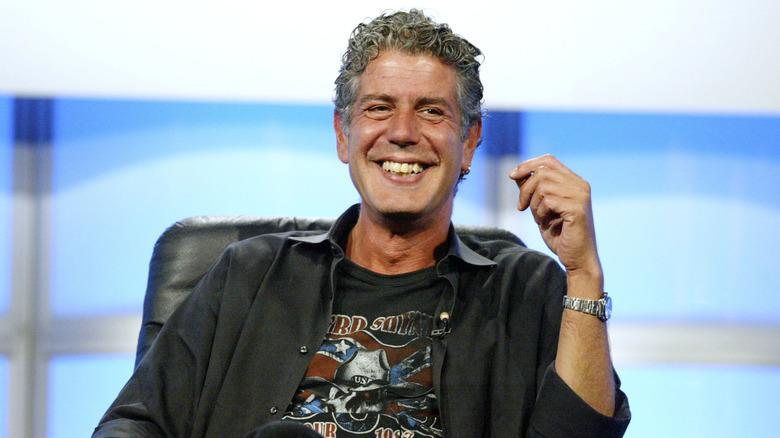
Anthony Bourdain is so beloved around the world that we could almost just tell you to read his work and leave it at that. But we are happy to help break down why he is worthy of your time, especially when it comes to his body of written work that sometimes gets overshadowed by his popular filmed programs like "Parts Unknown," "Anthony Bourdain: No Reservations," and "A Cook's Tour."
As a matter of fact, it was Bourdain's wildly successful book "Kitchen Confidential: Adventures in the Culinary Underbelly" that helped give him the platform to participate in any of these shows in the first place. That's why we suggest reading this Bourdain book before any other; it's humorous, it sheds light on the shenanigans that often occur at restaurants behind the scenes, and it helps give a sense of Bourdain's professional background before becoming a superstar. You might be surprised to discover that Bourdain penned a few novels, too. "Bone in the Throat," for instance, is an entertaining piece of crime fiction that revolves around — you guessed it — a restaurant kitchen.
Naturally, if you are a fan of Bourdain's shows, you must read books like "No Reservations," "The Nasty Bits," and "A Cook's Tour" to deepen your knowledge of the dishes Bourdain ate around the world. Filled with witty reviews and his signature no-holds-barred approach to describing food and travel, these books are page-turners even for those who may struggle with short attention spans.
Ruth Reichl
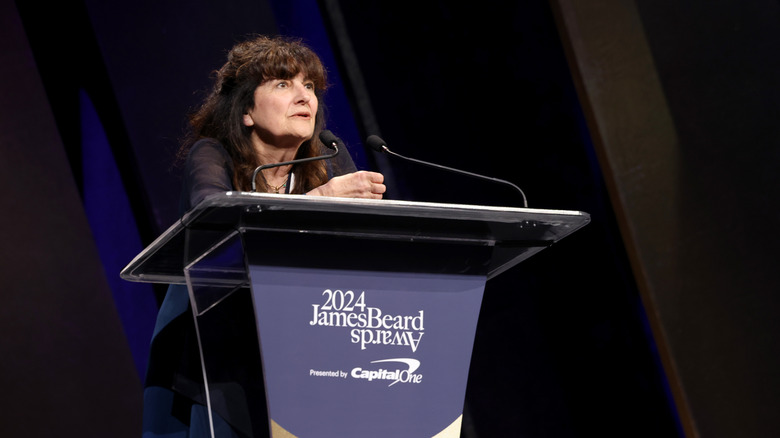
Ruth Reichl's background as a chef and restaurant co-owner in Berkeley, California, undoubtedly helped shape her writing in the decades to follow. Knowing the intricacies of the business, she has been able to fairly assess restaurants as a food critic, as well as write and edit numerous books, for over 40 years. She has worked for prestigious publications like The New York Times, the Los Angeles Times, and Gourmet.
To get a better sense of Reichl's life story and personal values, start by reading "Save Me the Plums: My Gourmet Memoir." It will help provide context to the rest of Reichl's work, including insights into how Reichl helped lead the way for women in a male-dominated field. After that, read "My Kitchen Year: 136 Recipes That Saved My Life," which documents how Reichl found solace in her home kitchen after being forced to watch Gourmet magazine (for which she was editor-in-chief) cease production. She also authored a few novels, like "Delicious!," which is a captivating story set in New York City that involves James Beard, a fictitious food magazine, and, yes, a whole lot of food. Meanwhile, "The Paris Novel" takes readers to Paris in the 1980s for a journey of self-discovery that, again, places a heavy emphasis on cuisine.
Unsurprisingly, Reichl has won several James Beard awards for her work, including a James Beard Lifetime Achievement Award in 2024. You can follow her publication on Substack, La Briffe, for regular musings on her day-to-day life, restaurants she supports, food culture, and other notable figures in the world of food.
Nigel Slater

Nigel Slater's weekly column in The Observer will keep you supplied with a steady stream of top-notch recipes. Though not a professionally trained chef, Slater has made a name for himself with his creative recipes and outstanding storytelling skills. It is only experience that can result in him so precisely adding an ingredient like grainy mustard to pasta, where its acidic nature complements cream. No stranger to desserts, either, Slater brings his own touch to timeless classics — for instance, with his pink grapefruit jelly and clotted cream ice cream.
When it comes to adding volumes to your bookshelf, look for Slater's memoir, "A Thousand Feasts." Each note, memory, and story is meditative and will lend new meaning to the next time you don an apron. Gardeners will also delight in his reflections on tending to soil, and jet setters will resonate with his thoughts on travel. Another Slater classic is "The Christmas Chronicles," which gives readers seasonal recipes that can be seamlessly integrated into feasts and community gatherings. As is often the case with his work, Slater's tales and recipes play off one another in this book, and his memories may crank up quite a bit of nostalgia in your own heart and belly.
As a companion to your readings, check out Slater's work on screen, too, including a handful of BBC documentaries and television series. After reading and learning about Slater, you'll have no trouble understanding why he was awarded an Officer of the Order of the British Empire (OBE) for his stupendous work and contributions to our dining tables.
Pete Wells
Pete Wells, who famously retired from being the restaurant critic at the New York Times, proved that even casual joints like a hole-in-the-wall pizza place can be worthy of diners' attention. However, he also set his sights on fine dining establishments and internationally celebrated chefs, allowing him to speak to a wider range of readers. In addition to working for the New York Times, Wells was once a senior editor and columnist at Food & Wine, as well as an editor at Details.
None of Wells' reviews are limited in scope or based on a small sampling of food or service. Rather, when feasible, Wells strove to order everything from a restaurant's menu, which frequently required repeat visits. And he did so incognito, without telling staff or owners that he would be swinging by for a visit. This helped ensure that his reviews were as unbiased as possible and representative of what the average diner would experience. His work ethic did take a toll, however, and he stated that the constant pressure to eat so much negatively impacted his health and was part of the reason why he decided to give up the job.
Wells has won six James Beard Awards, and his scathing 2019 review of Peter Luger Steakhouse was partly responsible for his recognition in 2020. If you have ever loved a restaurant, only to watch its quality deteriorate before your eyes, this article is a must-read. It demonstrates that Wells did not allow sentimentality to affect his work, which is always a hallmark trait of any good food writer.
Krishnendu Ray
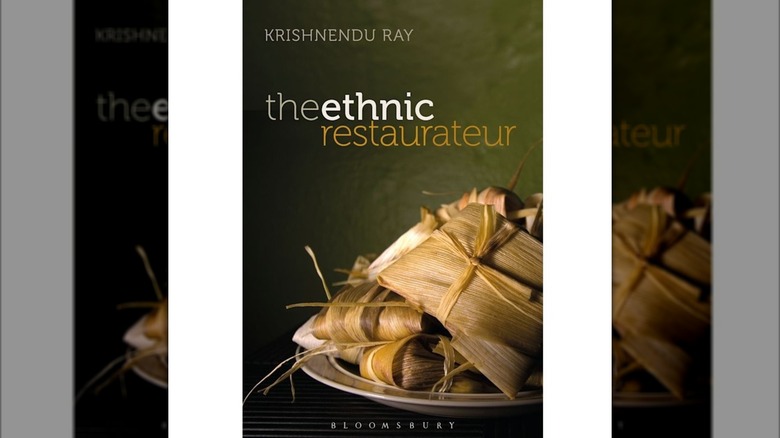
Last, but certainly not least, the works of food scholar Krishnendu Ray deserve a place on your bookshelf. As the director of the Food Studies PhD program at NYU, Ray is constantly in conversation with folks from around the world as he seeks to deepen our knowledge about how food shapes and conveys cultural affinities. He was also once an Acting Associate Dean at The Culinary Institute of America, so his position in academia has been longstanding and well-earned.
Ray specializes in writing about food and migration, particularly in regards to South Asian communities. His book "The Migrant's Table: Meals and Memories in Bengali-American Households" deals with themes of gender, identity, and globalization. Later, Ray gave us a second book, "The Ethnic Restaurateur," which he based on a comprehensive anthropological study of immigrant foodways. Additionally, he co-edited and contributed a chapter to "Curried Cultures: Globalization, Food and South Asia," an excellent primer on the subject that will help introduce you to other writers in Ray's realm of expertise.
In addition to his books, Ray's articles are highly regarded and integral to many food studies curricula around the world. For example, "Dreams of Pakistani Grill and Vada Pao in Manhattan" seeks to show that selling food is not just an economic strategy of immigrants, but one that means something to them on a visceral level that binds them to home. While indisputably academic in nature, even the casual reader can learn much from Ray's relatable and relevant research.