

Why Your Pumpkin Guts Belong In The Garden, Not The Garbage
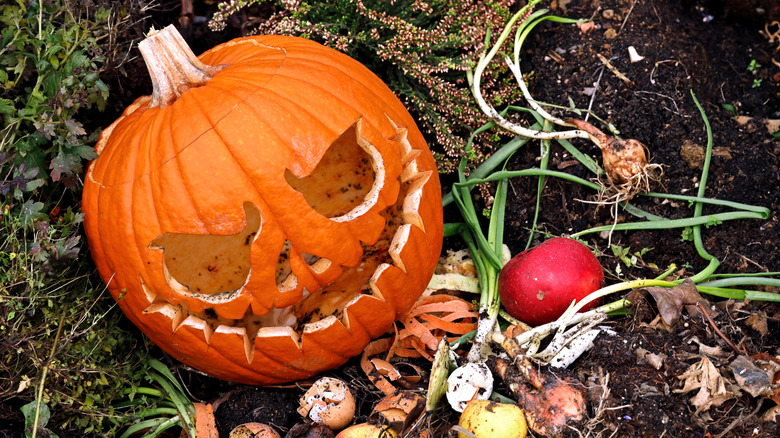
When we've made all of our fall pumpkin recipes, and our porch jack-o-lanterns start melting from spooky smiles into soft grimaces, seasonally-minded foodies start wondering what to do with those past-their-prime pumpkins. While (technically) jack-o-lantern pumpkins are safe to eat, we have a better idea. To enjoy those festive autumnal pumpkins year-round, use them as fertilizer for your garden.
This tip works for recycling both pumpkin flesh and the moist guts inside a jack-o-lantern. To do it, simply scoop out the interior stringy orange goo (harvesting and reserving those seeds for roasting) and add it to your compost bin, or bury it in the earth around your garden bed. Beyond enjoying a tasty roasted snack, it's particularly important to pick out those seeds because any buried seeds can sprout a new pumpkin. Alternatively, to use solid, decomposing pumpkin flesh as organic fertilizer, break up the pumpkin into small pieces using a sledgehammer, shovel, or large kitchen knife before burying or composting.
Rotting pumpkins are naturally packed with vitamin A, fiber, and beta carotene, beneficial compounds that can fertilize your garden plants and yield sturdier spring flowers. Add them to your compost pile for an effective (and cost-effective) soil booster, reaping the benefits of your favorite autumnal decorations all year long. As the fibers and moisture-rich pulp degrade, they release nitrogen, potassium, and phosphorus into the surrounding soil. It's a powerful punch to waste in a landfill (thereby also lowering greenhouse gas emissions by avoiding the dump).
Pumpkin guts and chunks enrich garden soil and compost
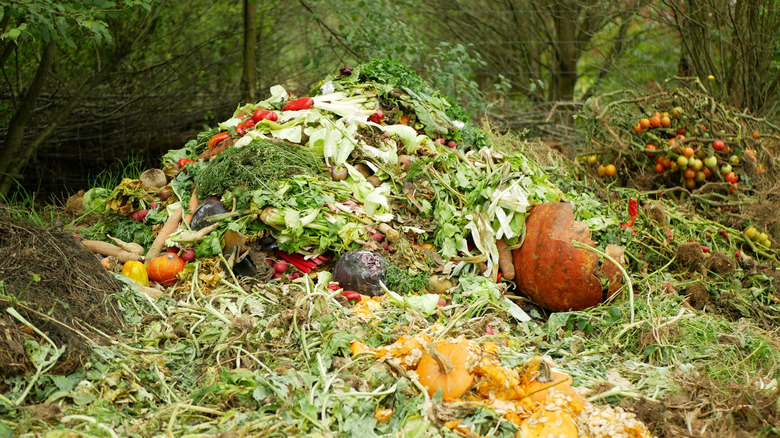
To execute this tip successfully, it isn't a good idea to throw a half-rotted pumpkin into a garden bed and forget about it (and not just because of those aforementioned seeds). One important note to remember about pumpkins: Insects and rodents like them as much as we do. The pulp is naturally sugary, which can lure fruit flies and other harmful pests. For this reason, when incorporating pumpkins into your compost pile, it can be helpful to use an enclosed composter or countertop bin to keep out unwanted guests. Also, decomposing pumpkins left out in the open tend to be pretty aromatic, and that aroma is a bad one (especially if you live in a warm climate).
Gardeners can also skip the compost altogether and simply bury their pumpkin pieces (or guts) in a hole in the ground. New plants and flowers can be planted directly in the pumpkin-enriched soil for a fertile boost. Plus — on the positive flip-side of that insect-attraction factor — buried pumpkin chunks will invite earthworms to join the party, further upgrading your garden soil. Incorporate the pumpkin matter in an even distribution across the soil, manually thinning out any large wet pulp clumps. This tip works best for growing flowers and veggies that thrive in rich, moist earth; pumpkins promote water retention and firmer soil structure. Skip it for plants like rosemary, which prefer dry, fast-draining soil.