

How Much Beef The US Really Imports Versus What It Raises At Home
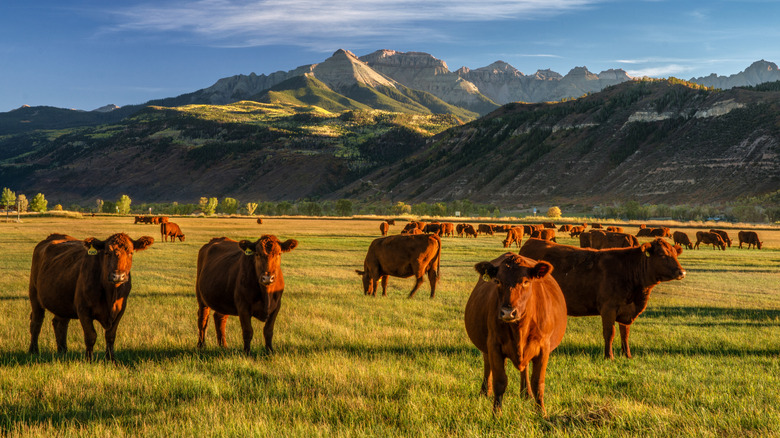
You know, considering how the U.S. is famous for our cowboys, cattle auctions, and New York strips, it probably doesn't come as much of a surprise that the U.S. has the rest of the world beat in terms of beef production. According to the USDA, last year, we alone produced 20% of the global supply, which translates to about 12.29 million metric tons (27.09 billion pounds). But while we often talk about our production and our beef exports (1.29 million metric tons, or 2.84 billion pounds in 2024, per the U.S. Meat Export Federation), what about our beef imports?
Since we produce quite a lot, you'd think we wouldn't need to import much at all. Well, not quite — we're the world's second-biggest importer of beef, just behind China. In 2024, the U.S. imported 4.38 billion pounds of foreign beef, according to TradeInt.
Despite American ranchers being very good at rearing high-quality beef, they aren't always able to supply what consumers want on their plate. For instance, while wagyu beef is indeed grown in the U.S., most wagyu is imported from its homeland, Japan or Australia (we imported $1.12 billion of beef from Australia in 2024, per USImportData). But when it comes to everyday eating, the most sought-after beef product that makes up a huge portion of our imports might not be what you think.
We need imported beef for our burgers
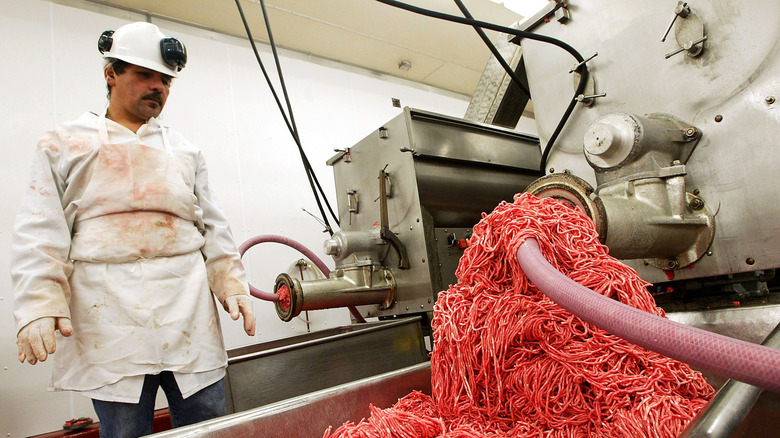
Outside of cowboys and steaks, the other thing we're probably most famous for is burgers. Ironically, we wouldn't have any burgers to eat if it weren't for imported beef. You see, American ranchers mostly focus on producing high-quality, marbled cuts like steaks and roasts, leaving the domestic market short on lean beef. And guess what sort of beef is most preferred for burgers? Those 80/20 (80% lean-20% fat) or 85/15 (85% lean-15% fat) blends — which American beef packers just can't reliably supply.
That's why, per Drovers, nearly 70% of our beef imports are lean beef trimmings from countries like Australia, where grass-fed beef is common. When they arrive stateside, they're blended with the fatty trimmings from domestic cattle, ground down, and there's your USDA-inspected ground beef for all your burger-grilling needs.
As a whole, it's a system that hands out wins for all parties involved: lean beef makers overseas have a buyer in the U.S., and domestic producers can improve the value of their fatty beef trimmings (which otherwise wouldn't be of much value). American ranchers can also focus entirely on producing quality beef for export or for domestic consumption. While things can get complicated with tariffs (you'll want to stock up on these cuts), droughts, and diseases, this delicate balance of export and import is what keeps both steaks and burgers on the tables of Americans today.