

Does Your Kitchen Island Need To Match The Rest Of Your Countertops Or Not?
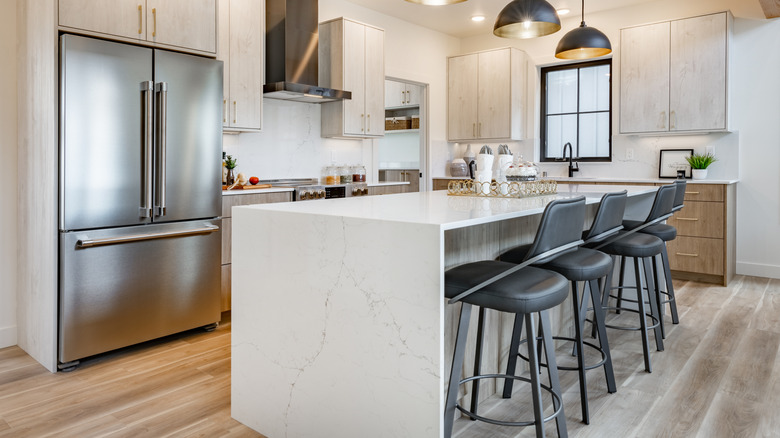
Choosing an island for the kitchen is a big decision. You have to consider the size, the shape, and the different countertop materials. There is also the question of whether you should be matching the island to the rest of the countertops, or going for a contrasting material instead. Tasting Table spoke to Geoffrey Zakarian during the New York City Wine & Food Festival, where he gave us his straight-to-the-point opinion on the matter. Should the countertops match? "Oh, yes. Of course," he said.
Matching the two kitchen elements creates an elegant interior that looks modern, cohesive, and very uncomplicated. Having an island in an entirely different style would be the main attraction of the kitchen, which might not be something you're going for, especially if you prefer minimalistic kitchens. You could also run into problems on the durability side of things, as two different countertop materials are unlikely to age in the exact same way. Over time, one of them will need to be replaced sooner than the other.
Even with matching countertops, how you plan to use the island should dictate the material you're going for. For example, you may absolutely love the rustic look of butcher's block, but it will age a lot faster around sink areas in comparison to stone. So, make sure your matching countertop material is a functional (not just aesthetic) choice for all of its intended uses on both sides of the kitchen.
Geoffrey Zakarian's go-to countertop material is an elegant classic
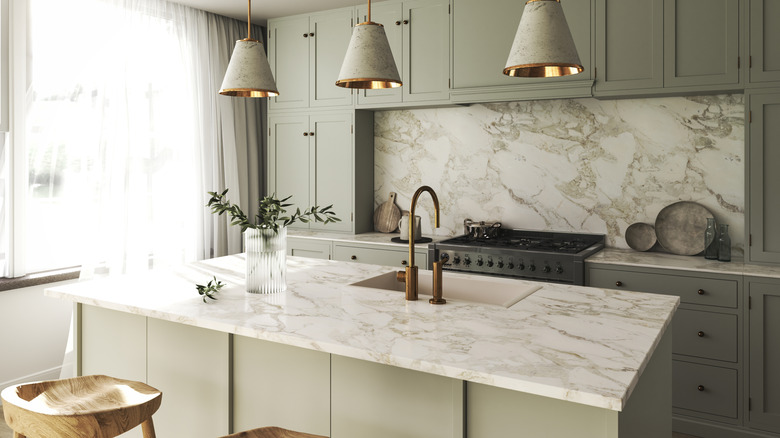
When asked about his favorite material for countertops, Zakarian simply told us, "marble." This natural stone is extremely popular in modern kitchens because it seamlessly fits in with the bright, minimalistic aesthetic while simultaneously looking quite glamorous. For Zakarian, the color needs to be "light," he told us. White kitchens are timeless, often acting as a blank canvas for the passing decor trends. Moreover, light countertops are not as committal as some bolder choices (such as concrete or dark wood) and are therefore a lot easier to pair with different, ever-evolving interior styles.
Marble countertops do have a few downsides, though. First is the price — marble is known as a very expensive material that's not in everyone's budget. There's also the significant upkeep you must consider before committing to marble countertops. This natural stone is very sensitive and can easily be cracked or stained with improper cleaning agents, acidic ingredients, or even casual spills. It doesn't handle heat very well and can develop discoloration over time. For those reasons, choosing a granite countertop over marble might be a better solution for some households.