

You Can Thank This Celebrity Chef For Making Kitchen Islands Cool
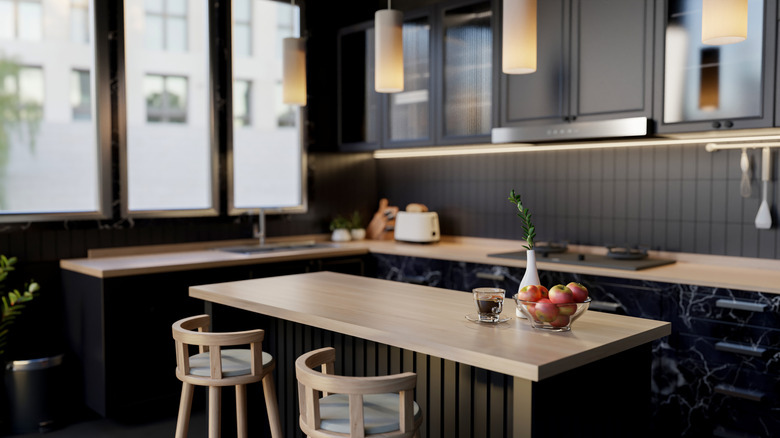
For many of us, it's hard to imagine our kitchens without their islands. These freestanding counters give us more cooking, baking, and prep space. Our families gather around them to eat breakfast in the morning; we host friends by serving wine and cheese on them in the evening. They're modern yet cozy, a space to further broadcast the aesthetics of our chosen kitchen design motifs. Islands have been a key kitchen fixture for so long that you might not even remember a time without them, and, depending on when you were born and what sorts of homes you've lived in, you may have never not had one. That's because there's one particular celebrity chef we have to thank for making them so popular: Julia Child.
Kitchen islands sprang up in American homes when Frank Lloyd Wright introduced the concept of open-plan living between kitchens, dining areas, and living spaces. Islands replaced the counters that might have lined the perimeter of a totally closed-off kitchen. But it's Child who really helped the average American imagine (and want one) in their own kitchens. When her iconic television show "The French Chef" debuted in 1963, Child did all her cooking and chatting with the viewers from her kitchen island. Suddenly, both the convenience and welcoming nature of kitchen islands crystallized for millions. Julia Child may have rarely used the grill top in her kitchen, but she made culinary history at her kitchen island, inspiring generations to follow suit.
Kitchen islands have long existed, but not as we know them today
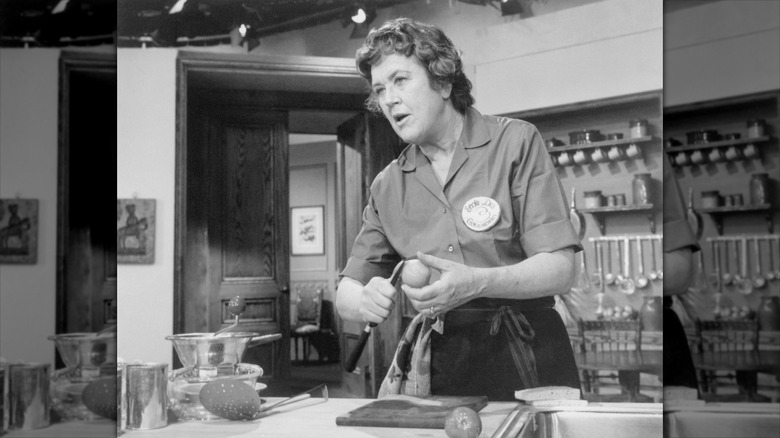
In theory, the notion of a kitchen island is much older than Julia Child's delightful lessons in French cuisine. In 19th-century kitchens, for example, massive tables were used as their "islands." That's why, if you're perusing cottagecore kitchen design inspiration, you might see hardy tables as islands, a nod to that rustic, traditional style. But these tables were strictly for preparation purposes and never for entertaining or socializing.
Now, we know there's so much more use we can get out of kitchen islands than extra counter space. That's because the contemporary kitchen is the heart of any household, one of the primary gathering spaces. That change came not only from Wright's open-plan designs but, even more importantly, from advancing kitchen technologies that made such design practical. Our modern ovens, stoves, and dishwashers ushered in a new age of families — housewives, in earlier decades — being able to whip up their own meals rather than having servants or spending hours making one dinner.
In all likelihood, Julia Child's use of an island was the most logical approach for being able to cook on camera. But that vision of the talented TV host chopping and stirring at the central counter opened Americans' minds to the possibilities of an island. Today, we can do everything from cooking and playing mahjong to doing our taxes and serving up holiday desserts on our kitchen islands, thanks to "The French Chef."