

The Ordering Mistake You Should Avoid At A Thai Restaurant
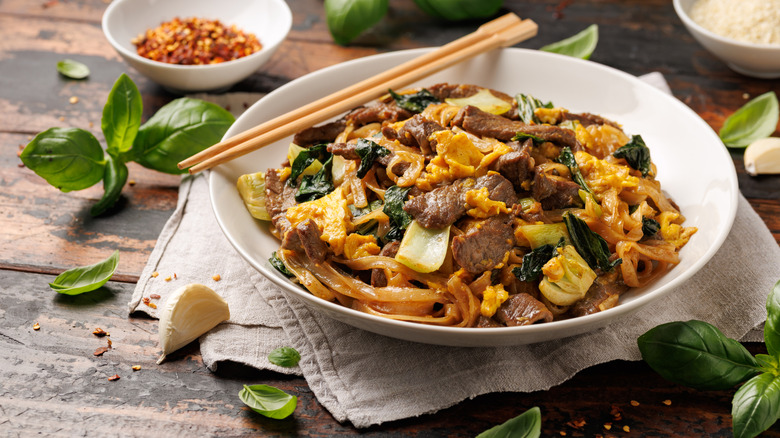
When eating-out at a Thai restaurant, one of the biggest ordering mistakes that foodies can make (and often do) is sticking to their comfort zones. Don't get us wrong, dishes like pad Thai and pad see ew are both delicious. But, sticking to familiar noodle dishes and stir-fry is a surefire way to box yourself in — or worse, as BKK New York head chef, Ann Thanthicha Piwatsuwan, put it, miss out on "the full spectrum of Thai flavor — not just what became popular abroad." Piwatsuwan sat down with Tasting Table to share her top tip for getting the most out of your Thai restaurant visit.
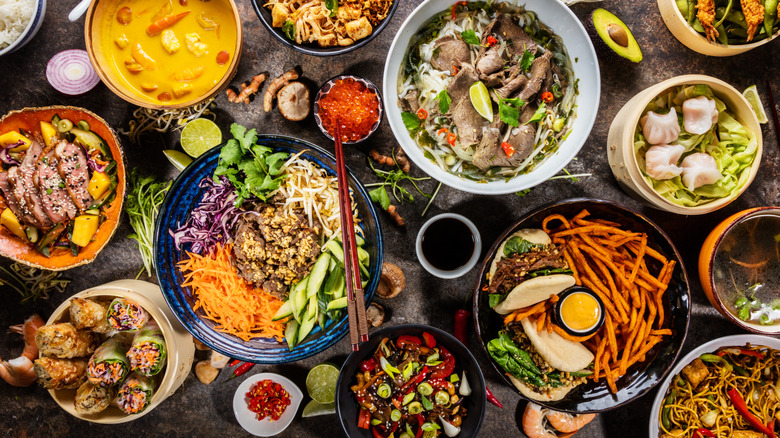
According to Piwatsuwan, a "misconception is that Thai food is only noodles or stir-fries. In reality, it spans fresh herb salads, fermented dishes, slow-simmered curries, and grilled favorites." Thai cuisine is all about vibrant flavors blended harmoniously. This fusion happens via staple ingredients such as curry paste, bird's eye chilies – but another misconception that Piwatsuwan pointed out is that Thai cuisine is not just about extreme heat. "While spice is a vital part of our cooking, true Thai cuisine is about balance — spicy, sour, salty, and sweet working in harmony. Even heat has a rhythm," she said.
From lemongrass, turmeric, Kaffir lime leaves, and galangal to peppercorns, shrimp and fish paste, oyster sauce, coconut, cardamom, Thai basil, tamarind, and more — Thai cuisine leans on many ingredients to create balance across a diverse array of dishes. If a few of those ingredients sound unfamiliar, rejoice! The most effective (and often most pleasurable) way to transition them to the familiar is by tasting them. Broach your comfort zone and watch the world open to you.
Branch out beyond familiar noodles and stir-fry -- not everything is spicy
Even the Michelin Guide writes that "Thailand might well be the country most famous for its spicy dishes." Countries with hot climates are often best-known for their spicy dishes, as eating ultra-spicy foods physically cools off the body through the production of sweat. Thailand's tropical climate sees warm temperatures for most of the year, with annual highs hitting and staying at 90 to 100 degrees across the country. It's also home to a seaside town known as Si Racha — the birth place of the original sriracha sauce. Still, to write off Thai food as universally spicy is to unfortunately box it in.
As Piwatsuwan notes, in the Thai culinary tradition, a single dish typically contains all five flavor elements: salty (kem), sweet (wan), sour (priao), bitter (kom), and spicy (phet). A dish is not complete unless it contains all five elements, and the trick is to showcase and balance them. Spiciness is just one of five factors — and it can range from mildly creamy, nutty tom kha gai soup to moderately-spiced panang curry to the notoriously-spicy gaeng kua kling. Got a low spice tolerance? Don't be shy about asking your server how spicy something is before you order! Traditional Thai dishes come in many forms that are worth exploring.