

The Type Of Water You Should Avoid For Your Sourdough At All Costs
We may receive a commission on purchases made from links.
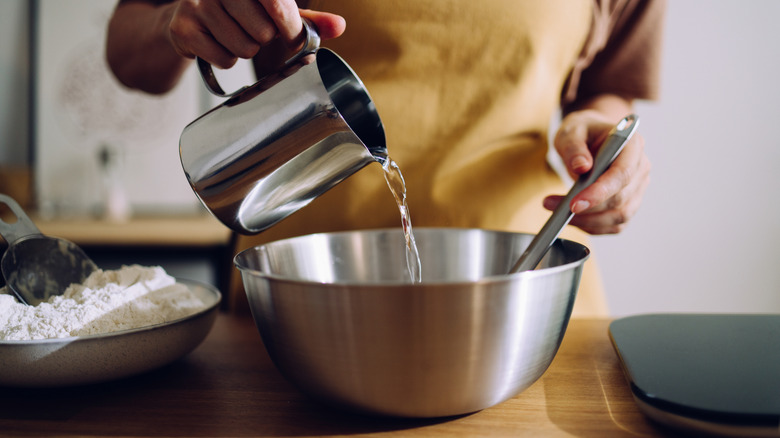
Everyone talks about the best flour or starter when it comes to making their fresh-baked sourdough bread recipe, but water — a just as vital ingredient — is often left out of the discussion. Many home bakers, especially beginners, naturally assume there's nothing to discuss. After all, water is water, right? That's exactly why some are using the worst possible water for sourdough: straight from the tap.
Your water does a lot more than just hydrate your dough and starter. It activates the yeast and bacteria that create all those tangy flavors and airy bubbles. The issue is that most tap water contains chlorine or chloramine — disinfectants designed to kill bacteria, so your starter takes a hit. You'll get a weak rise if you're lucky, or start to notice the tell-tale signs of a dead starter if you're not.
So what's the fix? First, figure out whether your tap water contains chlorine or chloramine. It won't be visible, but you should be able to notice a faint or strong odor resembling bleach or a swimming pool. If you're unsure, there are helpful drinking water test kits that can confirm once and for all. If chlorine is present, you can boil the water for around 20 minutes or leave it out at room temperature for 24 hours to evaporate. This might not remove all traces of chlorine, but it will make it appropriate for sourdough baking. Note that this also doesn't work for chloraminated water, which requires a filtration system to remove.
The best kind of water to use for your sourdough
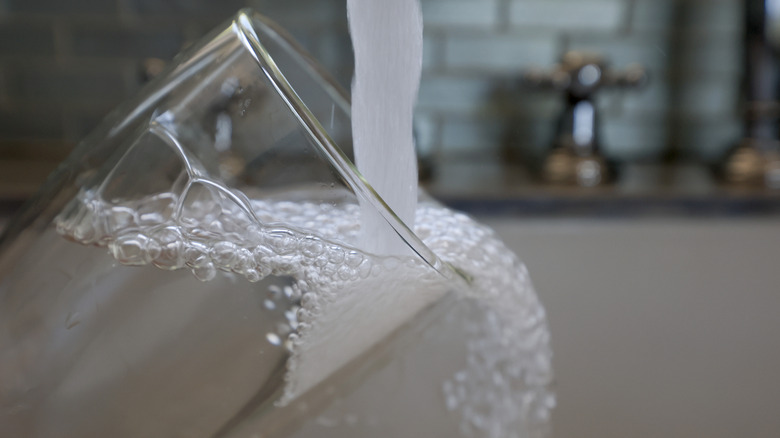
So what kind of water should you use for your sourdough instead? Filtered water is your safest bet. A pitcher filter, faucet attachment, or bottled spring water will give your starter the chlorine-free environment it needs to flourish. Distilled water also works in a pinch, though some bakers swear it's too stripped down — those trace minerals in spring or filtered water can actually give your starter a little boost.
When your starter gets the right water, the difference is obvious. A healthy one should roughly double within 12 hours of feeding, developing a bubbly, honeycomb texture throughout. The smell should be pleasantly tangy and sour (if it smells like nail polish remover or anything weird, that's a red flag) and you should also see a nice dome on top when it peaks.
A healthy starter means better bread. With it, your dough ferments more effectively — developing that complex, tangy flavor sourdough is famous for. The crumb turns out airier with those signature irregular holes, and the crust will form so beautifully, it'll crackle when you press on it. Changing up the water sounds like a minor tweak, but as you can see, it can genuinely make the difference between a decent loaf and one that makes you swear off store-bought sourdough for good!